



Reading time: 16 min
Table of Contents
- Key Takeaways
- Can You Take Too Much Collagen? Yes — Here’s What ‘Too Much’ Actually Means
- Can You Overdose on Collagen?
- What Happens to Extra Collagen in Your Body?
- Collagen Side Effects: What Actually Happens at High Doses
- Digestive Symptoms
- Skin Reactions and Sensitivities
- When to See a Doctor
- How Much Collagen Per Day Is Safe? The 2.5–15g Rule
- Collagen Dosage by Goal
- Collagen Dosage by Supplement Form
- What If I Take 20g a Day?
- Can Too Much Collagen Affect Your Kidneys or Liver?
- Kidney Function and Protein Load
- Liver Metabolism of Collagen Peptides
- Who Should Not Take High Doses of Collagen? Allergies and Precautions
- Bovine and Marine Collagen Allergies
- Medical Conditions That Require Caution
- Before Taking High-Dose Collagen — Checklist
- How to Tell If Your Collagen Dose Is Too High — and How to Fix It
- Signs Your Dose Is Too High
- A Step-by-Step Reset Protocol
- Collagen Dosage Chart: Safe Upper Limits at a Glance
- How to Read This Chart
- Frequently Asked Questions
- The Bottom Line on Safe Collagen Daily Intake
Key Takeaways
- Safe collagen daily intake sits between 2.5 and 15 grams. More does not mean better — it means more protein to process and a higher chance of digestive discomfort.
- Collagen overdose is not a toxicological event. Collagen is a protein, not a drug. Excess amino acids are oxidized or excreted, which is why side effects are mostly gastrointestinal, not systemic.
- Collagen side effects at high doses are real but usually mild and reversible: bloating, nausea, loose stools, or a heavy full feeling. Symptoms typically resolve within days of lowering the dose.
- Kidney and liver concerns are rare in healthy adults. Clinical studies have used 15–20g daily without significant adverse effects, but people with chronic kidney disease, hypercalcemia, or a history of kidney stones should talk to a doctor first.
Can You Take Too Much Collagen? Yes — Here’s What ‘Too Much’ Actually Means
Yes, you can take too much collagen. The evidence-based daily range is 2.5 to 15 grams. Above that, more does not mean better — it usually means wasted protein and a higher risk of digestive issues like bloating, nausea, stomach discomfort, or loose stools. Serious side effects are rare, but people with allergies, kidney disease, or hypercalcemia should be cautious.
“Too much” is a slippery phrase. For a drug, too much means overdose — a dose that overwhelms your system and produces toxic effects. Collagen is not a drug. It is a protein made of amino acids like glycine, proline, and hydroxyproline. Your body treats it the way it treats any protein: it breaks it into amino acids, uses some for tissue repair, and handles the rest through oxidation or excretion.
Can You Overdose on Collagen?
The word “overdose” is clinically inaccurate here. Collagen does not accumulate like a drug. There is no known lethal dose, no emergency-room scenario triggered by a big scoop of peptides, and no case report of collagen toxicity in an otherwise healthy person. What exists is a digestive tolerance threshold.
According to RenewSkin Co, taking excessively high doses above 30–40g per day may cause mild digestive discomfort such as bloating (2026). That is the number to keep in mind when someone tells you they “overdosed” on collagen. What they usually mean is they took 40 grams, felt bloated, and spent the afternoon regretting it.
The kind of “overdose” you should actually worry about? Chronic, extreme overconsumption over many months — not a single generous scoop. Even then, the evidence points to gut discomfort, not organ failure.
What Happens to Extra Collagen in Your Body?
Let’s walk through the biochemistry in plain English. After you swallow hydrolyzed collagen peptides, stomach acid and enzymes dismantle them into amino acids and small peptides. Those compounds enter the bloodstream through the intestine. From there, they are delivered to tissues that need collagen — skin, tendons, ligaments, bones, cartilage.
If you consume more collagen than your body can use, the surplus amino acids are not stored as “extra collagen waiting for a rainy day.” Instead, they enter amino acid oxidation pathways. The nitrogen is converted to urea and excreted through urine; the carbon skeleton is used for energy or converted into other molecules. That is why the most common consequence of excess collagen is not toxicity — it is waste.
Take a concrete 70kg adult example. They eat 120 grams of food protein daily — chicken at lunch, Greek yogurt at breakfast, protein pasta at dinner. Add a 30-gram collagen scoop to their smoothie, and total protein jumps to roughly 150 grams. That is two to three times the recommended dietary allowance for protein. The body can handle it, but it must work harder to deaminate and excrete the surplus nitrogen. The result? A heavier feeling, sometimes bloating, sometimes loose stools, and a lot of expensive amino acids flushed down the drain.
Overdose vs. excess: Collagen is not a drug, and the word overdose is clinically inaccurate. Excess collagen means you have consumed more protein than your digestive system comfortably processes. The consequences are digestive, reversible, and very different from a toxicological emergency.
Understand the difference now? Good. The next question is what those digestive consequences actually feel like — and how common they are.
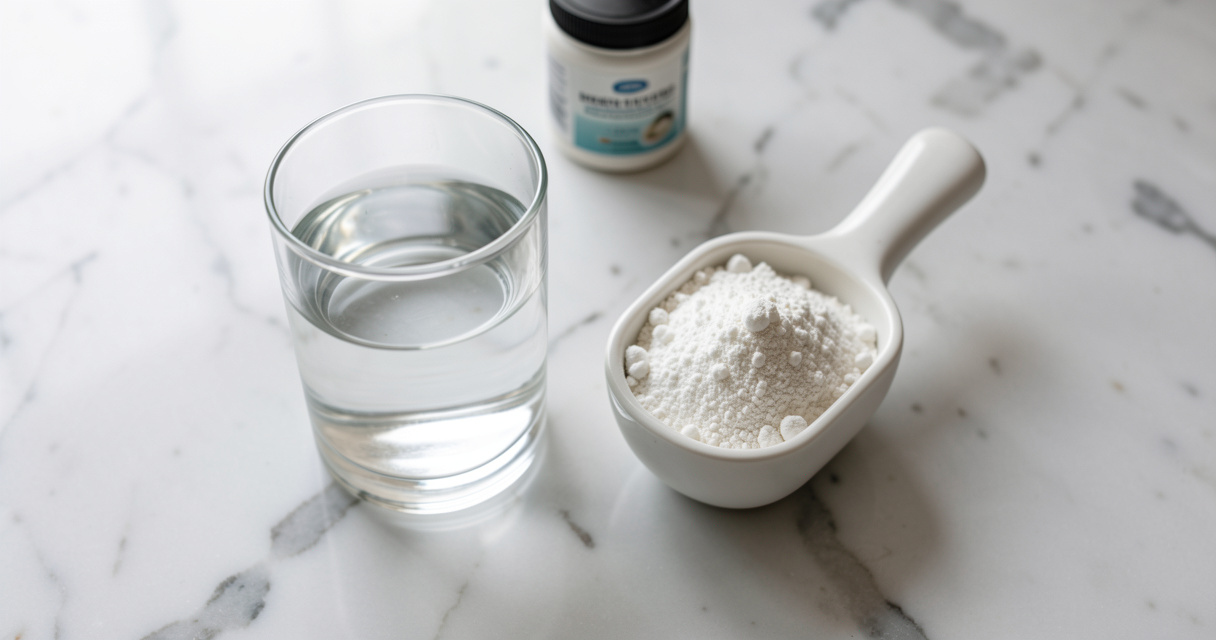
Collagen Side Effects: What Actually Happens at High Doses
Collagen side effects are real, but they are not mysterious. At high doses, the most frequently reported symptoms are digestive: bloating, nausea, stomach discomfort, loose stools, and a heavy or full feeling. Some people also notice skin reactions such as mild rash or itchiness. None of these are life-threatening, and all of them are reversible.
Digestive Symptoms
Digestive issues top the list of collagen side effects, especially when people take more than the recommended dose. The gut is not designed to absorb a 40-gram bolus of protein powder in a single sitting. It can handle it, but not gracefully.
- Bloating — the most common complaint. Collagen peptides increase amino acid concentration in the gut, which can draw water into the intestinal lumen and produce a distended feeling.
- Nausea — more likely when collagen is taken on an empty stomach or mixed into plain water.
- Loose stools or diarrhea — a sudden high protein load can overwhelm absorption and accelerate transit time.
- Heavy or full feeling — common when total daily protein already exceeds 120g and collagen is added on top.
Here is a client example. A 42-year-old runner — otherwise healthy, already eating 100g of protein per day — added a 20g collagen serving to her post-run shake. Within three days she felt bloated, nauseous, and heavy after every dose. We dropped her to 10g taken with her regular breakfast, which already contained eggs and avocado. Symptoms resolved in 48 hours. The collagen was not “bad.” The dose was simply too large for her context.
Skin Reactions and Sensitivities
Collagen side effects can also involve the skin. Some people report itching, mild redness, or a rash after taking collagen. This is not a textbook allergy in most cases — it is a histamine-like reaction to certain peptides. Genuine allergic reactions are rarer.
According to Moon Juice, approximately 2–4% of the population may have preexisting sensitivity to bovine collagen, and 1% may react to collagen in general (2026). That means the vast majority of people tolerate collagen without any skin response. If you are in that small percentage, switching from bovine to marine collagen may help, because the protein structure differs.
When to See a Doctor
Most collagen side effects disappear within a few days after reducing the dose or taking the supplement with food. See a doctor if you experience persistent vomiting, diarrhea that lasts more than 48 hours, widespread hives, facial swelling, difficulty breathing, or joint pain accompanied by fever. These could indicate a true allergy or an underlying condition unrelated to collagen — the kind of thing that needs a proper diagnosis, not a Google search.
| Side Effect | Why It Happens | What To Do |
|---|---|---|
| Bloating | High amino acid load draws water into the gut | Reduce dose to 10g or less; take with food |
| Nausea | Collagen on an empty stomach or overly concentrated mix | Mix into a larger volume of liquid; take with a meal |
| Diarrhea / loose stools | Protein overload accelerates intestinal transit | Lower the dose; check total daily protein intake |
| Skin rash / itchiness | Histamine-like response or bovine sensitivity | Stop; try marine collagen; consult a doctor |
| Rare: joint stiffness | Possibly related to immune response at very high doses | Stop supplement; seek medical advice if persistent |
| Rare: hypercalcemia signs | Collagen products with added calcium or extreme overuse | Discontinue; check blood calcium; ask a doctor |
Now that you know what side effects look like, let’s talk about the dosage that actually makes sense for each goal.
How Much Collagen Per Day Is Safe? The 2.5–15g Rule
Collagen dosage is the question I get most often. Readers want one number, but the honest answer is that the right collagen dosage depends on your goal. Skin, joints, bones, and muscle recovery each respond to a slightly different range.
According to Healthline, medically reviewed by Philip Ngo, PharmD, 2.5 to 15 grams of hydrolyzed collagen peptides per day may be safe and effective (2026). That broad range exists because researchers have studied collagen for many different outcomes. Beauty studies typically use lower doses; joint and bone studies use higher ones.
Collagen Dosage by Goal
| Goal | Effective Daily Dose | Studied Max |
|---|---|---|
| Skin elasticity and hydration | 2.5–5g | 10g |
| Hair and nails | 2.5–5g | 10g |
| Joints and osteoarthritis | 10–15g | 15g |
| Bone density | 5–15g | 15g |
| Muscle recovery | 15g | 20g |
| General wellness | 10g | 15g |
The most versatile daily target is 10 grams. It is high enough to support skin, joints, and recovery, yet low enough to avoid the digestive discomfort that appears near 30–40 grams.
Collagen Dosage by Supplement Form
Collagen comes in several forms, and “how much collagen per day” changes depending on which one you hold in your hand.
- Hydrolyzed collagen peptides (powder) — most research uses 2.5–15g. The powder dissolves in hot or cold liquids.
- Gelatin (powder or sheets) — gelatin is partially hydrolyzed collagen. The same gram doses apply, but gelatin forms a gel in cold liquids, so people usually dissolve it in warm drinks or soups.
- Capsules — usually 500mg–1g per capsule. You need 5–15 capsules per day to reach a studied dose. That is why capsules are more convenient for low-dose skin goals than for joint protocols.
- Undenatured collagen type II (UC-II) — for osteoarthritis, the studied dose is 40mg once daily. This is a completely different form of collagen, taken on an empty stomach, and it should not be confused with collagen peptides powder.
What If I Take 20g a Day?
Nothing catastrophic happens if you take 20g per day. Clinical studies have used up to 15g to 20g per day without significant adverse effects, according to Love Life Supplements (2026). You might notice minor bloating or a feeling of fullness, especially if your diet already contains enough protein. But 20g is not the “too much collagen” danger zone — 30–40g is where digestive discomfort becomes likely.
The real mistake is doubling up. If you take a scoop of collagen plus a whey protein shake plus a meal-heavy protein diet, your total protein can sky-rocket. Most healthy adults require around 45–55g of protein each day, according to For the Ageless (2026). Many readers are already eating double that. Collagen on top can push the digestive system past its comfort zone.
Protein math warning: Do not double up on collagen and whey/plant protein without adding up your total daily protein. Most adults need 45–55g per day. Collagen is not a replacement for whole-food protein — it is a targeted supplement.
Dosage matters, but so does the question on every reader’s mind: is collagen hurting my kidneys or liver? Let’s address that anxiety directly.
Can Too Much Collagen Affect Your Kidneys or Liver?
This is the question that sends people down a rabbit hole of late-night panic reading. Type “collagen kidney damage” into a search engine and you will find forum threads mixing collagen supplements with fibrosis, scleroderma, and kidney transplants. The truth is far less dramatic.
Can too much collagen affect your kidneys? For healthy adults, the answer is: not in any way observed in clinical research. A daily intake of 15–20g of collagen has not been shown to damage kidney tissue or reduce kidney function. Your kidneys filter and excrete the excess nitrogen from protein metabolism. They are built for that job.
Kidney Function and Protein Load
The concern is not collagen itself — it is total protein load. A healthy adult’s kidneys can handle a wide range of protein intakes, from 45g to 200g per day. But in people with pre-existing chronic kidney disease, high protein intake increases the renal workload and can accelerate disease progression. That is true for steak, chicken, whey protein, and collagen alike.
Collagen is also an incomplete protein. It contains glycine and proline in abundance but is low in tryptophan and other essential amino acids. That means it should never replace your main protein sources. Think of it as a functional supplement that occasionally contributes protein, not as your primary protein strategy.
Liver Metabolism of Collagen Peptides
Is collagen hard on the liver? No. The liver metabolizes amino acids like any other protein source. Hepatitis, fatty liver disease, and cirrhosis are not caused by collagen supplements. In severe liver disease, a doctor may limit total protein intake, but that is a general medical protocol, not a collagen-specific warning.
One rare concern is hypercalcemia — blood calcium levels above 11 mg/dl, as defined by Ostrovit (2026). Some collagen products are fortified with calcium or calcium phosphate. Taking extreme doses alongside calcium supplements could theoretically push blood calcium too high. Symptoms include nausea, vomiting, constipation, and heart rhythm disturbances. This is not a normal supplement scenario, but it is worth knowing if you are prone to high calcium levels.
Can collagen cause kidney stones? There is no direct causal evidence. However, calcium-fortified collagen products could be a concern for people prone to calcium oxalate stones. Anyone with a history of stones should check the label and talk to a doctor.
Medical advice callout: If you have chronic kidney disease, a history of kidney stones, or an elevated calcium level, check with a nephrologist before taking collagen supplements.
Kidneys can usually handle collagen. But what about allergies and underlying conditions? That is the next layer of caution.
Who Should Not Take High Doses of Collagen? Allergies and Precautions
Collagen safety is not identical for everyone. Most people tolerate it beautifully, but some should avoid high doses or skip collagen entirely.
Bovine and Marine Collagen Allergies
Bovine collagen comes from cows, marine collagen from fish skin and scales. If you have a known beef allergy, bovine collagen could trigger a reaction. If you have a fish allergy, marine collagen is the more obvious risk.
According to Moon Juice (2026), approximately 2–4% of people may have preexisting sensitivity to bovine collagen, and 1% may react to collagen in general. The most common symptoms are skin rashes, itching, and mild swelling. True anaphylaxis is extremely rare.
Medical Conditions That Require Caution
- Chronic kidney disease — high protein intake, including collagen, can increase renal workload.
- Kidney stone history — especially calcium oxalate stones, if the collagen product contains added calcium.
- Hypercalcemia — extra collagen plus calcium fortification may worsen elevated blood calcium.
- Autoimmune disease — some experts advise caution with supplements that modulate inflammation, though direct contraindication is not well established.
- Pregnancy and breastfeeding — safe upper limits are not well studied. Stick to food-based collagen and ask your obstetrician before supplementing.
Why not simply take the highest dose to get faster results? Because collagen safety is not dose-dependent in a linear way. High doses do not translate into proportionally more collagen in your skin or joints. They translate into more amino acids circulating in your blood and, eventually, more side effects. The body uses what it needs and discards the rest.
Before Taking High-Dose Collagen — Checklist
- 1) Check the source: bovine, marine, or vegan builder.
- 2) Review your total daily protein intake.
- 3) Ask your doctor if you have kidney, liver, or calcium issues.
- 4) Start with 2.5–5g per day.
- 5) Increase only if you tolerate it comfortably.
What if you are already experiencing collagen side effects? Here is how to reset.
How to Tell If Your Collagen Dose Is Too High — and How to Fix It
The most common reason people quit collagen is not that it doesn’t work — it’s that they start with a dose too high for their digestion. You can fix that in three days.
Signs Your Dose Is Too High
- Bloating within 30–60 minutes of taking collagen.
- Nausea or a queasy stomach after your morning coffee.
- Loose stools or sudden urgency.
- A heavy, overfull feeling that lasts for hours.
- Skin itchiness without any new skincare products.
Here is a common case study: a 38-year-old woman reported feeling overly full and heavy after taking 20g collagen in water on an empty stomach. She was not allergic to collagen — her body simply received a 20g protein bolus with zero food buffer. Dropping to 10g, mixed into her usual protein-rich breakfast, resolved symptoms in four days.
A Step-by-Step Reset Protocol
- Day 1–3: Stop all collagen supplements. Let your digestive system return to baseline.
- Day 4–10: Resume with 5g per day, always with food, never in plain water on an empty stomach.
- Day 11–14: If you feel good, increase to 10g per day. Still with food.
- Ongoing: If any symptom returns, drop back to your previous comfortable level. That is your effective dose.
The kind of consistency that matters most comes from the person who actually takes their supplement every day. As Sarah Law of Love Life Supplements puts it, “The dose that works is the one you actually take every day.” That single sentence captures the entire philosophy. A 5g dose you tolerate for a year will outperform a 20g dose you abandon in two weeks.
Should you take collagen with food or on an empty stomach? With food, especially if you are sensitive. Food slows gastric emptying, dilutes the protein concentration, and gives your gut time to handle the amino acids. An empty stomach often amplifies nausea and bloating.
How long does it take for collagen side effects to disappear? Most digestive symptoms improve within a few days of lowering the dose or taking collagen with food. If bloating, nausea, or rashes persist beyond a week, stop the supplement and consult a healthcare professional.
Adaptation window: A little fullness during the first few days can settle as your digestion adjusts. Real discomfort means reduce, don’t push through.
Now let’s consolidate the numbers so you can print this article and put it on your fridge.
Collagen Dosage Chart: Safe Upper Limits at a Glance
The FDA has not set an official upper limit for collagen. This chart is built from the 2026 clinical evidence and side-effect thresholds reported by multiple sources.
How to Read This Chart
| Goal | Effective Dose | Studied Safe Max | Side-Effect Threshold |
|---|---|---|---|
| Skin elasticity and hydration | 2.5–5g | 10g | 30–40g |
| Hair and nails | 2.5–5g | 10g | 30–40g |
| Joints and osteoarthritis | 10–15g | 15g | 30–40g |
| Muscle recovery | 15g | 20g | 30–40g |
| General wellness | 10g | 15g | 30–40g |
Clinical studies have used up to 15g to 20g per day without significant adverse effects, according to Love Life Supplements (2026). Above 30–40g per day, mild digestive discomfort becomes increasingly likely, as RenewSkin Co notes (2026). The safest upper limit is not the maximum your body can tolerate — it is the lowest dose that achieves your goal.
Stick to the effective dose, not the theoretical maximum. Consistency, not heroics, is what makes collagen work.
Frequently Asked Questions
Can you take too much collagen in a day?
Yes, if you go above roughly 30–40g per day. The evidence-based daily range is 2.5–15g. More than that usually causes digestive issues like bloating, nausea, or loose stools rather than a true overdose.
Can collagen cause weight gain?
No direct evidence shows collagen causes weight gain. However, collagen powder has calories, and very high doses add extra caloric intake. Weight gain would come from total calorie surplus, not from collagen itself.
Can too much collagen cause kidney stones?
There is no direct causal evidence linking collagen to kidney stones. If a collagen product contains added calcium, people prone to calcium oxalate stones should be careful. Anyone with kidney disease should ask a doctor first.
What is the maximum safe amount of collagen per day?
Studies have used 15–20g per day without significant side effects. The practical upper limit is 15g for most people, while digestive discomfort becomes more likely above 30–40g.
Can collagen cause heart palpitations?
Heart palpitations are not a common collagen side effect. In rare cases, extreme excess could contribute to hypercalcemia — blood calcium above 11 mg/dl — which may affect heart rate. That is not a normal supplement scenario.
Can collagen affect blood pressure?
Collagen is not known to directly affect blood pressure. Some marine collagen products may contain sodium as a processing residue, so check the label if you follow a low-sodium diet. If you notice unusual heart or blood pressure symptoms, stop and ask a doctor.
Is it bad to take collagen every day?
No, daily collagen intake of 2.5–15g is generally considered safe. Consistency matters more than dose. Taking a reasonable serving daily is better than taking a large dose that causes digestive problems.
How long does it take for collagen side effects to disappear?
Digestive symptoms usually improve within a few days after reducing the dose or taking collagen with food. If bloating, nausea, or rashes persist, stop the supplement and consult a healthcare professional.
The Bottom Line on Safe Collagen Daily Intake
Here is what the evidence actually supports: the safe collagen daily intake range is 2.5 to 15 grams. Side effects are mostly digestive and reversible — bloating, nausea, loose stools, and a heavy feeling. People with allergies, kidney disease, or hypercalcemia need extra caution. And consistency always beats high doses: a realistic dose you stick with will outperform a big dose you can’t tolerate.
The kind of collagen routine that earns its place in your morning coffee is the kind you don’t overthink. Ten grams, with food, every day. That’s the recipe — no heroics required.
So, before you double your scoop, ask yourself: are you adding collagen for your health, or just adding stress to your digestion? Worth every mile only if you can actually digest it. Book it — or rather, scoop it — at the dose that works for you.