


Reading time: 16 min
Table of Contents
- Key Takeaways
- Houses for Sale with Acreage Near Me: The 2026 Buyer’s Guide to Finding Hidden Listings
- How to Find Houses with Acreage for Sale Near Me (Without Missing Listings)
- What ‘acreage’ and ‘on acreage’ mean in real estate listings
- Five portal filters that reveal hidden acreage listings
- Houses on Acreage: What 2026 Market Data Says About Price per Acre
- Wichita, Kansas: affordable acreage at $29,003 per acre
- Janesville, Wisconsin: premium acreage at $112,397 per acre
- Phoenix, Arizona: high inventory and buyer competition
- Hidden Costs When You Buy a House with Land: The Real Price Tag
- Septic systems, wells, and perc tests
- Property taxes, rural insurance, and access issues
- House with Acreage vs. Land with House: Which Should You Buy?
- Wooded acreage, pasture, and ranch-style properties
- Which property type is easier to finance?
- Financing an Acreage Property: What Banks Look For
- Land-to-value ratio and down payment requirements
- Conventional, USDA, and farm loan options
- The 7-Point Acreage Inspection Checklist Before You Make an Offer
- Septic, well, and water quality checks
- Boundary lines, easements, and zoning verification
- Houses for Sale with Acreage Near Me: Frequently Asked Questions
- Minimum acreage for different lifestyles
- Taxes, insurance, and mortgage questions
- The Acreage Buyer’s Last Question
Key Takeaways
- Portal labels hide inventory: The same parcel can be tagged On Acreage, Wooded Acreage, or On 2 Acres depending on the site. Use lot-size filters, not keyword searches.
- Price per acre shifts by market: Wichita averages $29,003 per acre while Janesville averages $112,397 per acre. Compare both listing price and land price.
- Inspections matter more than photos: Septic systems, private wells, boundary lines, easements, and zoning approvals can turn a scenic purchase into a costly one.
- Financing follows the land: The land-to-value ratio determines whether a conventional mortgage works or whether you need USDA, FHA, or farm financing.
Houses for Sale with Acreage Near Me: The 2026 Buyer’s Guide to Finding Hidden Listings
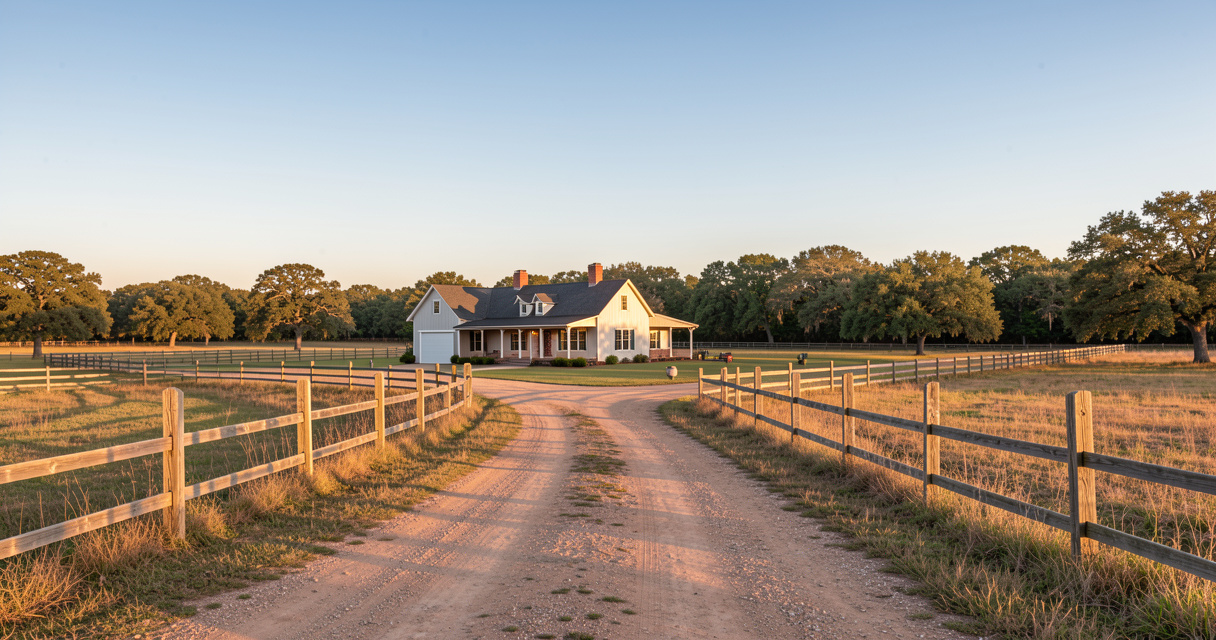
The same house-and-land package can cost $372,475 near Wichita, Kansas, or $652,467 near Janesville, Wisconsin in 2026. The difference is not just the house. It is how the market prices land. Buyers typing houses for sale with acreage near me into a portal often conclude that nothing exists. More often, they are searching against a category that the portal renamed, hid behind a filter, or buried in agent remarks.
This guide moves from the search screen to the county records, from average price per acre to septic system age. The goal is not to show you more listings. It is to show you the listings the portals forgot to surface, and the costs they never display.
How to Find Houses with Acreage for Sale Near Me (Without Missing Listings)
- Open the advanced filters on Zillow, Homes.com, or your local MLS and set Lot Size to 1+ acres.
- Add the category On Acreage, Wooded Acreage, or Homes with Land when the portal offers it.
- Search nearby towns and the whole county because map boundaries often hide relevant parcels.
- Check the listing disclosures to confirm the house and the land are being sold as one property.
- Contact the listing agent and ask: does the sale include the acreage as one legal parcel?
What ‘acreage’ and ‘on acreage’ mean in real estate listings
Real estate portals do not share one data standard. The same legal parcel can be tagged On Acreage in one database because the listing agent chose it, Wooded Acreage in another because the aerial photo shows trees, and simply listed with a lot size on a third. Zillow, for example, treats On Acreage, Wooded Acreage, and On 2 Acres as separate category labels. Homes.com groups similar inventory under with Acreage. Realtor.com often leaves the term out entirely and relies on the lot-size field.
This is why the phrase houses for sale with acreage can feel scarce even when the market is full. By 2026, Zillow showed 47 homes in Overland Park, Kansas under the On Acreage category, 293 homes in Kansas City, Missouri under Wooded Acreage, and 31 homes in Lawton, Oklahoma under On 2 Acres. Those are not comprehensive counts of available acreage. They are counts of one category on one portal.
Five portal filters that reveal hidden acreage listings
- Set the lot-size filter to 1 acre or more. This single action bypasses the language problem almost entirely.
- Open the property type or category dropdown. Look for On Acreage, Wooded Acreage, Homes with Land, or On 2 Acres.
- Use the keyword field for lifestyle terms. Hobby farm, horse property, pasture, wooded, and rural retreat often pull up listings that the word acreage misses.
- Filter by outbuildings. Barn, shop, stable, or guest house filters frequently identify larger parcels even when the acreage category is inaccurate.
- Widen the map to the county level. Many acreage homes sit outside municipal boundaries but inside the same search radius when the filter is set to county.
Insider note: In many MLS systems, the word acreage appears only in the agent remarks, not in the listing headline or public keyword fields. A buyer who never messages the agent will never see those properties.
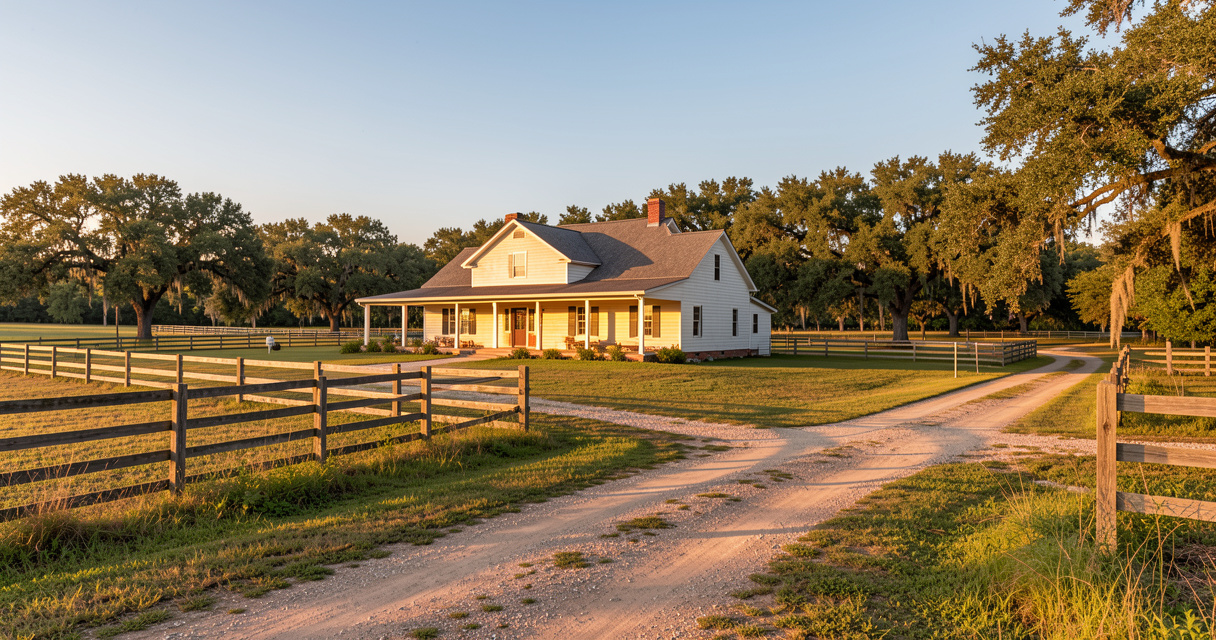
Once the filters work, the prices still surprise. A five-acre parcel near one city can cost less than one acre near another. The 2026 data makes that clear.
Houses on Acreage: What 2026 Market Data Says About Price per Acre
According to LandSearch data from 2026, the difference between an acreage purchase in Kansas and one in Wisconsin is not small. It is the kind of spread that changes budgets, loan amounts, and property tax bills. The table below compares three markets where active acreage inventory is meaningful.
| Market | Active listings | Average listing price | Average cost per acre |
|---|---|---|---|
| Wichita, KS | 46 | $372,475 | $29,003 |
| Janesville, WI | 25 | $652,467 | $112,397 |
| Phoenix, AZ | 355 | No public average | No public average |
Wichita, Kansas: affordable acreage at $29,003 per acre
Wichita is the affordability benchmark for acreage buyers in 2026. LandSearch counted 46 houses with land for sale in the area, with an average listing price of $372,475 and an average cost of $29,003 per acre. For buyers who care less about topography and more about square footage, outbuildings, and room to spread out, this is where the search should begin.
Yet a low per-acre price should never be read alone. Kansas acreage can hide access questions, mineral rights complications, and wells with marginal water quality. The homes with acreage for sale near Wichita are affordable because the land is flat and available, not because rural infrastructure is free.
Janesville, Wisconsin: premium acreage at $112,397 per acre
Janesville tells a different story. LandSearch data from 2026 shows only 25 houses with land for sale, an average listing price of $652,467, and an average cost of $112,397 per acre. The premium reflects what acreage buyers in southern Wisconsin are actually paying for: glacial terrain, mature trees, reliable water, and proximity to both Madison and Chicago.
Inventory this thin does not reward patience; it rewards preparation. A buyer searching for homes with acreage for sale in Janesville should have financing pre-approved before the right property appears. The market will not wait for a septic inspection contingency to be written from scratch.
Phoenix, Arizona: high inventory and buyer competition
Homes.com listed 355 acreage homes for sale in Phoenix in 2026, making it one of the higher-volume markets in the country. High inventory, however, does not mean uniform value. The Phoenix acreage market includes desert parcels, mountain lots, horse properties, and homes on irrigated farmland, each with a different cost structure for water, power, and road maintenance.
Because no clean average price exists yet, the buyer advantage lies in search strategy. Use the lot-size filter, check the flood zone, and ask about water rights before comparing one house with land for sale to another.
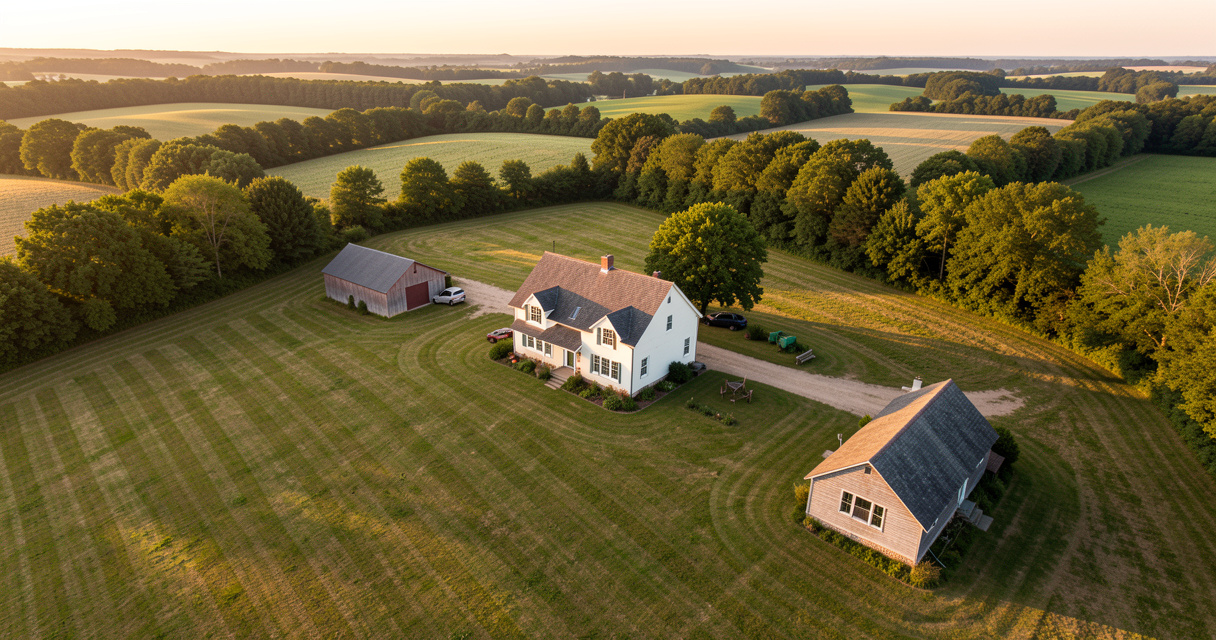
After the price comparison comes the part listings never show: what it costs to keep the land and its systems running.
Hidden Costs When You Buy a House with Land: The Real Price Tag
Acreage buyers compare list prices, but the list price never includes the cost of making rural systems function. A suburban buyer inherits city sewer, municipal water, maintained roads, and clear boundary lines. An acreage buyer inherits septic tanks, private wells, gravel drives, drainage, and legal descriptions that need verification.
Septic systems, wells, and perc tests
The standard home inspection does not certify a septic system. It does not test well water quality, measure well recovery rate, or verify that the drain field has reached the end of its useful life. Those checks require licensed specialists and can be scheduled before an offer is finalized.
A failed septic system is not a repair; it is a replacement project. The same is true for a low-yield well. When you search for houses for sale with acreage near me, ask the listing agent for the age of the septic system and the well pump. If those numbers are missing, add the inspection cost to your budget.
Property taxes, rural insurance, and access issues
Because the assessor adds taxable land value on top of the house value, property taxes usually rise as acreage increases. Some counties offer agricultural, timber, or open-space exemptions, but those exemptions must be applied for and maintained. The seller’s current tax bill is not a reliable forecast of your future tax bill.
Insurance is another line item that surprises buyers. Outbuildings, fences, liability exposure, and distance from fire services all push premiums higher. If the property has only a recorded access easement rather than a deeded road, some insurers will not quote at all.
Warning: Ask for the septic, well, and zoning compliance records before making an offer. Seller disclosure documents are not a substitute for a septic system inspection or a site evaluation.
Hidden costs also change the wording of the purchase. Some buyers are looking for a house with land; others are really looking for land with a house attached. Those are two different transactions.
House with Acreage vs. Land with House: Which Should You Buy?
Portal searches tend to mix two listing models. A house with acreage usually means the home is the primary feature, and the land supports the lifestyle. Land with a house means the land is the primary asset, and the house may be outdated, undersized, or even secondary to the value of the parcel.
Understanding the difference changes how you search. Buyers looking for houses with land for sale should filter by lot size and ask whether the house is livable. Buyers looking for land with house for sale should focus on soil, water, zoning, and permitted use before worrying about curb appeal.
| Option | Best for | Search filter | Financing risk |
|---|---|---|---|
| Existing house with acreage | Immediate move-in | Lot size 1+ acres | Moderate |
| Land with house | Major renovation or homestead | Land value ratio | Higher if land value is large |
Wooded acreage, pasture, and ranch-style properties
Lifestyle dictates the right property shape. Horse owners need pasture, barn access, and fencing. Privacy seekers want wooded buffers and setbacks from neighbors. Hobby farmers need tillable soil and outbuildings. None of those priorities appears in a simple acreage search, but each narrows the field dramatically.
Which property type is easier to finance?
An existing house with acreage is generally easier to finance because the lender can point to a completed residence with immediate value. Land with a house becomes harder when the land-to-value ratio is high because the collateral sits mostly in dirt. That distinction leads directly to the mortgage conversation.
Financing an Acreage Property: What Banks Look For
Lenders underwrite acreage differently from suburban homes. They evaluate the house, but they also evaluate the land, the water system, the septic system, legal access, and whether the acreage produces income. The sooner you understand those criteria, the less likely you are to lose a property while waiting for your loan officer to figure them out.
Definition: The land-to-value ratio is the percentage of the property’s total value represented by the land itself rather than the house and other improvements. Lenders use it to calculate risk.
Land-to-value ratio and down payment requirements
When the house makes up most of the price, conventional financing tends to be available with a down payment in the 20 percent range. As the land share rises, banks see a riskier asset because land is harder to resell quickly and easier to divide or dispute. Some lenders will require 30 to 50 percent down when the land value dominates the transaction.
For that reason, the purchase price matters less than how much of that price is attached to the house. A $400,000 acreage property with a $350,000 house is easier to finance than a $400,000 property with a $150,000 house on $250,000 of land.
Conventional, USDA, and farm loan options
Most houses on parcels up to 10 acres can qualify for conventional financing when the residence is the primary source of value. USDA Rural Development loans are an option in eligible areas and can offer lower down payments, but the property must meet strict rural definition and condition requirements. If the land is used for farming or generates agricultural income, a farm loan or agricultural lender may be more appropriate.
Ask any lender three questions before making an offer: Is the parcel eligible for the loan program? Does the land-to-value ratio work? And is the property served by an approved water and septic system? If the answer to any one of those is unclear, get it in writing before you commit to the inspection phase.
The 7-Point Acreage Inspection Checklist Before You Make an Offer
The acreage inspection is not only about cracks in the foundation. It verifies land systems, boundaries, rights, and local approvals. A beautiful view will not protect you from an encroaching neighbor or an unrecorded easement that lets the public cross your driveway.
Septic, well, and water quality checks
Rural families live on private infrastructure. The septic system and well require separate inspections because neither is part of a standard home inspection. Water quality should be tested for bacteria, nitrates, arsenic, and any local contaminants. Well flow should be measured during dry conditions, not just after a rainy week.
Boundary lines, easements, and zoning verification
Boundary disputes are expensive, so order your own survey rather than relying on the previous owner’s sketch. Then confirm that the house, septic drain field, well, and outbuildings are all inside the legal parcel lines. Recorded easements can give road access to neighbors, utilities, or the county; some easements cross the best building site. Zoning determines whether you can keep horses, build a barn, or run a home business.
Run these seven checks before writing an offer:
- Verify the septic system: Confirm its age, location, and function with a licensed septic inspector.
- Test the well: Measure water flow and water quality through a certified laboratory.
- Order a boundary survey: Use a licensed surveyor to confirm every improvement sits inside the property lines.
- Check recorded easements: Request the title commitment and read the exceptions carefully.
- Confirm zoning: Ask the county to confirm your intended use is permitted.
- Inspect outbuildings separately: Barns and shops are not included in the residential home inspection.
- Ask for proof of legal road access: A deeded road is better than an easement, but a recorded easement is better than an unrecorded promise.
The checklist answers the questions that ruin acreage deals. If every item comes back clean, you can move from browsing to buying with confidence.
Houses for Sale with Acreage Near Me: Frequently Asked Questions
Minimum acreage for different lifestyles
How many acres do you need for a house with acreage?
One acre is the common floor in listings labeled acreage, but your intended use matters more. Septic setbacks, zoning rules, horses, privacy, and recreation needs can make 5 or 10 acres necessary.
What inspections are needed before buying acreage?
Beyond the normal home inspection, you need a septic system inspection, well water flow and quality test, boundary survey, and sometimes a perc test for future septic expansion. Zoning verification and road access checks are also essential.
Taxes, insurance, and mortgage questions
Can I get a conventional mortgage on a house with acreage?
Many homes with up to about 10 acres qualify for conventional financing if the house is the primary value and the land is not agricultural income property. Larger parcels may require USDA, FHA, or farm loans; confirm the land-to-value ratio early with a lender.
Does buying a house with acreage increase property taxes?
Usually yes because the assessor adds taxable land value on top of the house value. Agricultural, timber, or open-space exemptions can lower the bill in some areas, so check with the county assessor before making an offer.
Are houses with acreage more expensive to insure?
Insurance can cost more because you are covering outbuildings, more liability exposure, possible farm equipment, and higher rebuilding access costs. Quotes vary widely by county and distance from fire services.
Is buying a house with acreage a good investment?
Acreage offers lifestyle value, privacy, and potential resale premium, but it also brings higher maintenance and more complex inspections. The land is often more resilient in value than the house, but location and permitted land use still determine the long-term result.
The Acreage Buyer’s Last Question
Use the exact acreage category and lot-size filters on every real estate portal so hidden listings come into view. Compare average listing prices and the average price per acre in your target region because the market data is stark. Inspect the septic, well, zoning, access, and outbuildings before the view makes the decision for you. And match the financing structure to the parcel size and land-to-value ratio rather than assuming a standard mortgage will work.
Before you scroll another listing, ask one question: Would this land still make the home worth buying if the house needed major repairs tomorrow? That is exactly where prepared acreage buyers win.