


Reading time: 9 min
Table of Contents
The Edit: What Matters
- Pacific network: United’s Guam-centered web reaches Palau, Micronesia, the Marshall Islands and Asia — including the legendary Island Hopper.
- Business Class: The old 737-800 recliners feel dated, but a warm crew and a $250 upgrade rescued the journey.
- New fleet: The Boeing 737 MAX 8 now flies this route with modern cabins, seatback screens and Bluetooth.
Out over Palau, the water turns a silvery turquoise that no photograph quite captures, and the old limestone islands slide below like crocodile tails. From seat 2A on United’s Boeing 737-800, I watch the archipelago recede before the cabin crew come down the aisle with a simple amenity kit and a blanket. The aircraft is old, the screen is tiny, but the scene outside is worth every mile.
The discerning traveler knows that United operates one of the most intriguing airline networks in the Pacific, connecting remote islands most carriers ignore. Much of it revolves around Guam, a US territory in Micronesia that acts as United’s regional hub. That was the real reason I flew this route from Palau to Tokyo Narita — not excitement about the Business Class product itself, but curiosity about a little-known corner of global aviation.
With the flight now operated by the Boeing 737 MAX 8, here is the full review of the experience I had on the older 737-800, the state of United’s Pacific operations, and the details that matter if you book this route.
The Flight at a Glance
Route: Palau International Airport (ROR) to Tokyo Narita International Airport (NRT)
Airline: United Airlines
Aircraft: Boeing 737-800 NG (since replaced by the 737 MAX 8)
Departure: On time, 11:30 am
Arrival: On time, 4:30 pm
Distance: 1,979 miles (3,185 km)
Flight time: 4 hours and 30 minutes
Class: Business Class
The Cost of My Ticket
Airfares on the Palau–Tokyo route are astonishingly expensive. A one-way Business Class ticket, booked months in advance, cost more than $3,000 USD — an eye-watering sum for a four-hour flight on a narrow-body aircraft with conventional recliner seats. The one-way Economy fare was also extraordinary at $1,575 USD. United holds a monopoly on this market, so passengers traveling between these remote destinations have no convenient alternative.
Then came the surprise: immediately after booking my Economy seat, United offered an upgrade to Business Class for just $250 USD. I accepted, of course. It turned an already expensive ticket into a chance to review the cabin for a relatively modest supplement — and it was a useful reminder that airline pricing is highly dynamic. The value of an upgrade depends on remaining seat inventory, demand and the airline’s revenue-management strategy. For anyone on this route, check the upgrade offers after booking; it was worth questioning why anyone would pay the full Business Class fare in advance.
United’s Little-Known Pacific Network
United is best known for its domestic US network and long-haul transatlantic and transpacific flights. Yet beneath that surface lies a fascinating web across the Pacific, centered on Guam. Its roots go back to Continental Micronesia, established in the 1960s, which linked Guam with island communities that often had few alternatives. After the 2010 United–Continental merger, those operations were integrated into United’s network, preserving a crucial role in regional aviation.
Today United connects Guam with Palau, the Federated States of Micronesia and the Marshall Islands, as well as major Asian cities. These services are essential given the vast distances, tiny populations and scarce alternative flights. The most remarkable example is the Island Hopper, a United service linking Guam and Honolulu via Majuro, Kwajalein, Kosrae, Pohnpei and Chuuk — a roughly 14-hour journey that is one of the most distinctive scheduled commercial flights in the world.
For almost two decades, United’s Guam-based fleet relied on the Boeing 737-800 NG. The airline is now replacing these with ten Boeing 737 MAX 8 aircraft, with the transition due by the end of 2026. The new aircraft bring seatback entertainment screens at every seat, larger overhead bins, Wi-Fi for purchase, Bluetooth connectivity, more extra-legroom seating and a brighter cabin. They also take over the Island Hopper. My flight used the older 737-800, but the route has since switched to the MAX 8, so travelers today should expect a more modern cabin.
Palau International Airport
Palau International Airport, officially Roman Tmetuchl International Airport (ROR), is the country’s main gateway. It sits in Airai State on Babeldaob, Palau’s largest island, near the former capital Koror. The terminal is small, reflecting the country’s modest size, but it connects Palau to the Pacific and Asia: United operates flights to Guam, Manila and Tokyo, while China Airlines links the island to Taipei.
Before the flight, I checked the departure facilities, including the 680 VIP Lounge on the second floor beyond security. It was closed during my visit. My assumption was that United had no agreement with the lounge, while premium China Airlines passengers appeared to have access — though this remains an assumption rather than a verified policy.
The Business Class Cabin
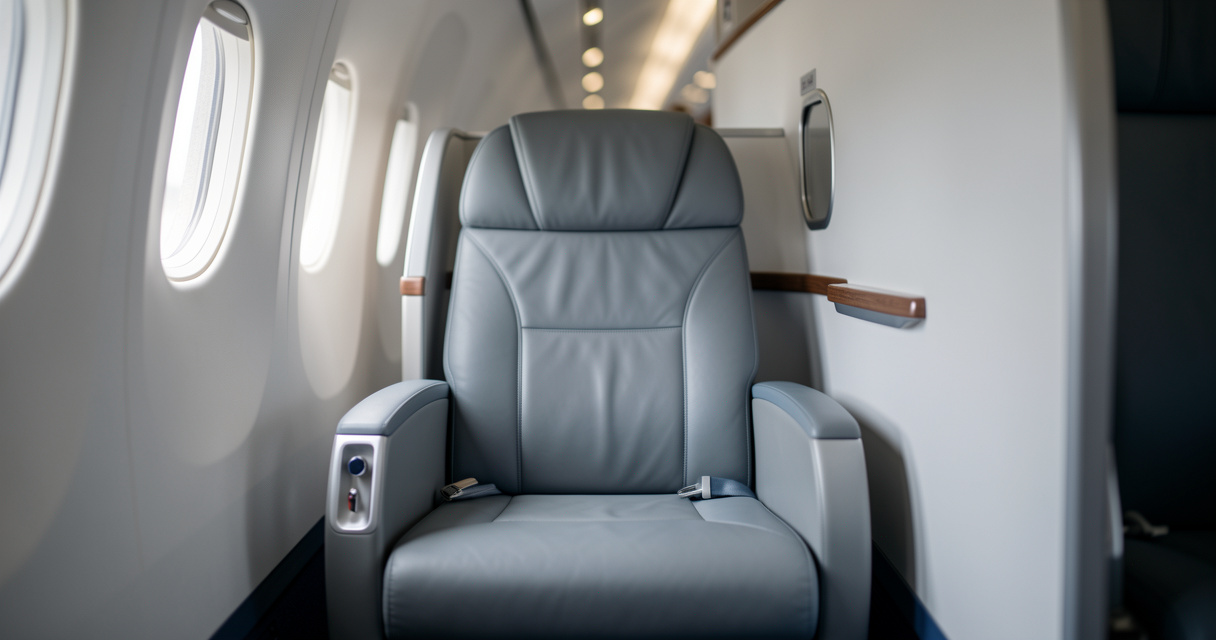
Stepping into the old Business Class cabin felt like traveling back to an earlier era of premium air travel. There are just four rows of four seats, 16 seats in total, arranged 2-2 with two on either side of the aisle. Unlike Economy’s 3-3 layout, Business Class removes the middle seat entirely. Couples will find the paired seats convenient; solo travelers, however, do not have the privacy of a single seat away from a neighbor, as on some modern narrow-body Business Class products.
The design is functional and does not feel luxurious. The seats were designed to provide extra personal space and comfort over Economy, but the overall environment lacks the contemporary styling of newer premium cabins. For a flight of about four hours, a recliner can certainly be adequate: you have more room to settle in, relax and enjoy the journey. But it is difficult to associate it with the more than $3,000 fare originally quoted.
The Business Class Seat
The United Airlines Boeing 737-800 Business Class seat measures 20.4 inches (52 cm) wide and offers a seat pitch of 38 inches (97 cm), providing considerably more personal space than Economy. The seat reclines to a comfortable angle, but it does not convert to a fully flat bed. The seat controls are in the center armrest, while the aisle-side or window-side armrest houses a reasonably sized bi-fold tray table. The power outlets are tucked away in the shared armrest, positioned surprisingly close to the floor, requiring a bit of bending to locate. A small personal entertainment screen is mounted on the back of the seat in front.
Onboard Service, Amenities and Meals
Although the aircraft and cabin felt dated, the onboard service was a bit better, though still nothing to write home about compared with the Asian airlines in the region. The experience began with a simple amenity set of earplugs, an eye mask and a dental kit. A blanket was also provided.
Lunch was served on one tray: a salad, beef with mashed potatoes, and cheesecake for dessert. It was a conventional airline meal format — a starter, a main and something sweet. It was not particularly elaborate, but a welcome opportunity to eat and relax during the journey.
While the seat, cabin, food and amenities did little to impress, the hospitality made the journey considerably more enjoyable. The crew members were exceptionally friendly, approachable and welcoming throughout the flight. The purser on this flight was only on her third flight in the role, yet she was already incredibly charming and handled the service with impressive warmth. She made passengers feel welcome without the interaction feeling forced or overly formal.
Inflight Entertainment and Wi-Fi
The inflight entertainment system was another reminder that this Boeing 737-800 belonged to an earlier generation. Each seat had a disappointingly small personal screen, not touchscreen-enabled, so passengers had to use a separate control panel in the armrest rather than simply tapping the display. The selection was limited, and browsing lacked the convenience of a modern system. It was not entirely unusable: if you wanted to watch a film and pass time, it served its basic purpose. But the experience felt like a snapshot of airline entertainment from years gone by. There was no Wi-Fi on this flight.
The Verdict
The flight from Palau to Tokyo was an interesting journey, mainly thanks to United’s unusual Pacific network and its long-standing operations centered on Guam. The onboard experience felt dated, with old recliner seats, basic entertainment and a mediocre meal, although the genuinely warm cabin crew made a positive impression. With a one-way Business Class fare exceeding $3,000 USD, the product was difficult to justify, but upgrading from Economy for just $250 USD made it more appealing. United has since upgraded the route to the Boeing 737 MAX, a significant improvement in aircraft and overall passenger experience.
Scores (old 737-800 Business Class):Lounge experience: 0/10
Seat comfort (upright): 6/10
Seat comfort (bed position): 3/10
Food (quantity): 7/10
Inflight entertainment: 2/10
Overall experience: poor — 4/10
Book the MAX 8, and watch for the upgrade.