


Reading time : 15 min
Table of Contents
- Key takeaways
- Reimagining the Classics: Mediterranean Luxury Icons in Summer 2026
- Mykonos: Seclusion and Private Beach Clubs
- Amalfi Coast: Winding Roads and Walled Terrace Gardens
- Saint-Tropez: Curated Riviera Lifestyles
- The Rise of Ultra-Luxury Resorts: Where Architectural Design Meets Intimacy
- Aman Venice: Historic Splendor Meets Modern Minimalist Restraint
- Four Seasons Resort Mykonos: Oceanfront Privacy Redefined
- Cheval Blanc St-Tropez: Intimate Riviera Seclusion
- The 2026 Luxury Shift: Autonomy, Bespoke Yacht Charters, and Staffed Villas
- Floating Residences: Customizable Yacht Charters
- Walled Sanctums: Staffed and Architecturally Significant Villas
- Emerging Luxury Enclaves: Destinations Shaping the Summer Season
- Tulum: Eco-Conscious Architecture and Beachfront Escapes
- Mallorca: Countryside Estates and Uncharted Coves
- Dubai: Innovation, Scale, and Meticulous Curation
- The ‘Coolcation’ Phenomenon: Escaping the Heatwaves in High-Altitude and Northern Havens
- Scandinavia: Fjords, Lakes, and Private Lodge Retreats
- Alpine Luxury: High-Altitude Escapes in Switzerland and Austria
- Culinary Journeys: Michelin-Starred Dining as the Ultimate Destination Driver
- Michelin Stars and Waterfront Glamour
- Conscious Cuisine: Storytelling and Ancestral Ingredients
- Holistic Longevity and Slow Travel: The Wellness Sanctuaries of 2026
- Advanced Longevity: Tailored Clinical and Sensory Therapies
- Slow Travel: Multi-Generational Retreats and Extended Stays
- Looking Ahead: The New Horizons of Global Leisure
- Frequently asked questions
Key takeaways
- Discerning travelers in 2026 are shifting from high-visibility hotspots to secluded clifftop villas and private superyacht charters that guarantee absolute privacy.
- The 'coolcation' phenomenon has seen bookings in Scandinavia and the Alps surge by 74%, driven by climate mindfulness and summer heatwaves.
- Modern wellness retreats are pivoting to scientific longevity therapies, sensory body work, and mindfulness rituals like 'dusking' during extended stays.
With Booking.com revealing that 74% of global travelers now factor extreme weather risks into their summer plans, luxury summer travel 2026 has officially entered an era of deep intention and climatic mindfulness. Discerning travelers are no longer satisfied with crowded traditional hotspots; they demand absolute privacy, climate resilience, and hyper-personalized experiences that standard luxury itineraries fail to deliver. Finding the best luxury resorts 2026 means looking past generic five-star amenities to discover sanctuaries of true privacy and design. The shift is unmistakable: the modern traveler prioritizes quiet luxury summer vacation destinations that offer sensory restoration and isolation.
Our collective definition of exclusivity has undergone a profound transformation. Luxury is no longer about visibility or performing status on sun-drenched beach clubs. It is about control over one’s environment. High-net-worth individuals are rejecting the loud, over-saturated spectacles of the past, opting instead for spaces that offer a psychological and physical buffer from the world. Whether that buffer is a custom-chartered superyacht slicing through the Aegean, a walled stone villa on the cliffs of Amalfi, or a Scandinavian forest lodge overlooking a glacial fjord, the choice is driven by a desire for quietude.
In this new landscape, travel has become a conscious exercise in curation. We look for the kind of experience that leaves a lasting trace on the spirit—one where every hour is designed, every meal tells a regional story, and every space is crafted with architectural integrity. Welcome to the new era of high-end travel.
Reimagining the Classics: Mediterranean Luxury Icons in Summer 2026
The Mediterranean has always been the playground of the elite, but the nature of that play has shifted. Those seeking the top luxury summer vacation destinations in the Mediterranean for 2026 are no longer clustering in the center of the action. How is quiet luxury transforming classic Mediterranean travel? The answer lies in a deliberate retreat from the spotlight. Destinations that once thrived on loud publicity are now investing heavily in architectural seclusion and private enclaves, transforming the classic European summer into an exercise in high-end isolation.
Insight Box: Defining the 2026 Mediterranean Shift
The transition from spectacle to absolute discretion is the defining trend of the season. Classic hotspots are no longer selling access to crowds; they are selling shields against them. Ultra-luxury properties are redesigning their layouts to ensure that guests can move from suites to private coves without ever crossing paths with the public. Success in 2026 is measured by what—and who—you can avoid.
Mykonos: Seclusion and Private Beach Clubs
Mykonos, once famous for its raucous beach parties, has repositioned its offering for the high-net-worth individual who demands solitude. The island’s premier beach clubs now feature private cabanas that are fully walled, equipped with independent sound systems, private plunge pools, and dedicated butler service. Guests arrive via private tenders directly to the cabana docks, bypassing the main entrances entirely. It is the kind of curation that turns a public beach into a private sanctuary.
Amalfi Coast: Winding Roads and Walled Terrace Gardens
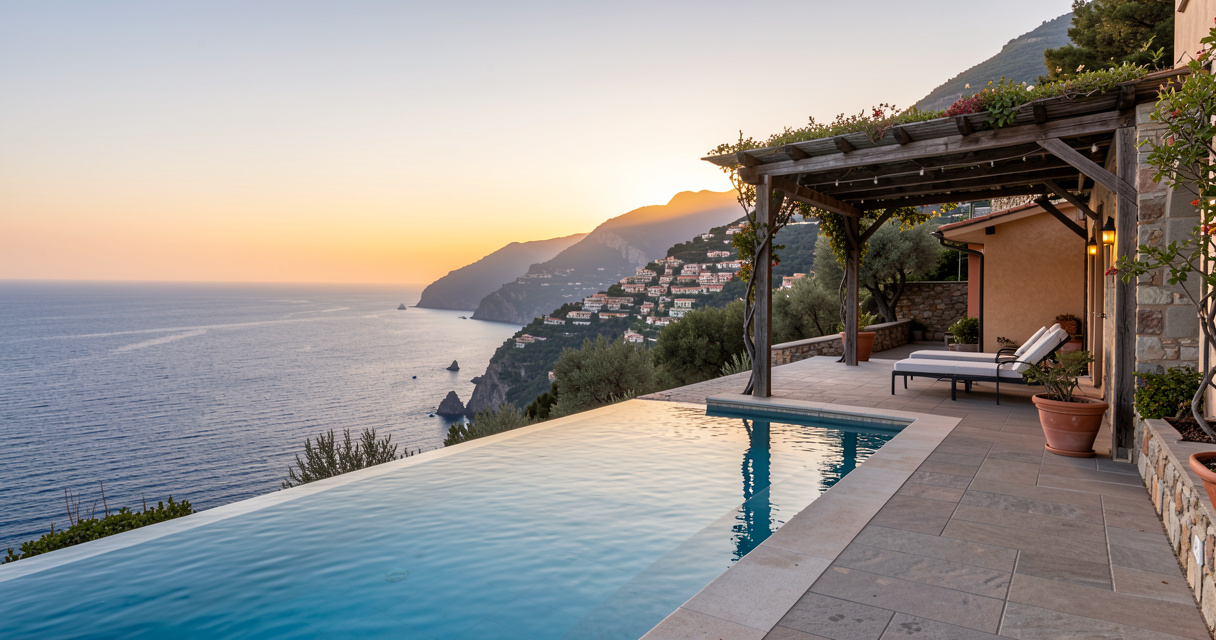
Along the vertical cliffs of the Amalfi Coast, privacy is enforced by geography. In summer 2026, the demand for historic clifftop estates has surged, proving that this dramatic shoreline remains one of the premier luxury summer vacation destinations. Travelers are choosing walled terrace gardens that look out over the Tyrrhenian Sea, far above the congested coastal road. These estates feature subterranean lifts carved directly into the limestone, leading down to private jetties. The focus has shifted from being seen in the cafes of Positano to enjoying the silent dusk on an isolated stone terrace perfumed by wild lemon groves.
Saint-Tropez: Curated Riviera Lifestyles
In Saint-Tropez, the shift toward quiet luxury is evident in the quiet residential quarters of Ramatuelle. During my mid-June inspection of the Riviera’s newest hideaways, I observed that the most sought-after villas are those tucked away in the pine forests, offering complete visual isolation from both the harbor and the crowded beaches of Pampelonne. High-net-worth clients are no longer interested in VIP tables at the harbor-front clubs; instead, they commission private chefs to prepare meals within the confines of their landscaped gardens, enjoying the classic Riviera light in undisturbed peace. This season’s answer to the classic French holiday is a masterclass in elegant retreat. To truly appreciate how these coastal enclaves are executing this vision of seclusion, one must examine the properties where physical architecture has been redesigned to protect the guest.
The Rise of Ultra-Luxury Resorts: Where Architectural Design Meets Intimacy
When examining the best luxury resorts 2026, the defining criterion is no longer scale, but intimacy. What defines a modern ultra-luxury resort design? It is the deliberate layout that prioritizes low-density layouts, independent villas, and custom architectural details that shield guests from view. The world’s top developers are collaborating with visionaries to build structures that blend into their surroundings, using natural contours and local materials to create physical buffers. Which are the best luxury resorts for the 2026 summer season? The edit: the properties leading this movement combine historical reverence with uncompromising modernity.
| Resort Name | Location | Signature Architecture | Exclusive Guest Benefit |
|---|---|---|---|
| Aman Venice | Venice, Italy | Historic Renaissance Palazzo restoration with minimalist interiors | After-hours private access to the hidden canal-side gardens |
| Four Seasons Resort Mykonos | Mykonos, Greece | Low-slung Cycladic stone pavilions integrated into coastal rock | Access to a private cove accessible only by boat or cliff lift |
| Cheval Blanc St-Tropez | Saint-Tropez, France | Classic Tropezian villa styling with modern interior craftsmanship | Bespoke beachside butler service and direct pontoon boarding |
Aman Venice: Historic Splendor Meets Modern Minimalist Restraint
In Venice, a city defined by its dense history and heavy crowds, Aman Venice stands as a masterclass in spatial control. Situated inside the 16th-century Palazzo Papadopoli, the resort blends soaring gilded ceilings and historic frescoes with clean, minimalist Italian furniture. The architecture does not shout; it recedes, allowing the palazzo’s grand proportions to speak. The experience is centered around the private garden—a rare luxury in Venice—where guests can sit in total isolation, watching the boats pass on the Grand Canal. It is the kind of quiet retreat that makes the bustling city feel miles away.
Four Seasons Resort Mykonos: Oceanfront Privacy Redefined
For the 2026 summer season, the newly opened Four Seasons Resort Mykonos has redefined Cycladic hospitality. Eschewing the typical whitewashed plaster blocks that attract passing tourists, the resort features low-slung, dark local stone pavilions that blend seamlessly into the granite cliffs of the island’s quieter eastern shore. The layout is designed to prioritize oceanfront privacy, with every villa boasting its own deep infinity pool and wind-sheltered terrace. As one of the best luxury resorts 2026 has introduced, it channels the natural wind and topography, creating an environment that feels both protective and open to the sea. Book it. Now.
Cheval Blanc St-Tropez: Intimate Riviera Seclusion
On the edge of the Mediterranean, Cheval Blanc St-Tropez offers an ultra-exclusive haven under the shade of ancient pine trees. With only thirty-two rooms and suites, the property feels less like a hotel and more like a private residence. Quietly, this became the most talked-about hideaway for those in the know. The design, executed by architect Jean-Michel Wilmotte, emphasizes soft Riviera colors, custom-woven textiles, and direct views of the Gulf of Saint-Tropez. Every detail, from the private beach loungers to the signature spa therapies, is curated to provide a sensory reset. The discerning traveler knows that this level of intimacy is the ultimate luxury. While these resort sanctuaries offer exceptional shelter, true autonomy requires leaving the land behind or securing a fully independent estate.
The 2026 Luxury Shift: Autonomy, Bespoke Yacht Charters, and Staffed Villas
The desire for absolute control has driven a significant shift toward complete travel autonomy. Why are private yacht charters trending for summer 2026? Because a yacht is the ultimate mobile sanctuary, allowing travelers to rewrite their itinerary on a whim and avoid land-based crowds entirely. Similarly, the benefits of staffed private villas over five-star hotels lie in the total personalization of the environment. In a villa, the guest sets the schedule, the menu, and the level of security, turning their temporary residence into an impregnable fortress of leisure. Sourcing a reliable private yacht charter mediterranean represents the pinnacle of this movement, offering a dynamic alternative to stationary resorts.
- Staff Credentials: Verify that the household staff, including the butler and concierge, have formal training from accredited academies and strict discretion agreements.
- Security Protocols: Ensure the property features state-of-the-art perimeter security, thermal imaging cameras, and a dedicated room for security detail.
- Culinary Customization: Confirm that the private chef is capable of managing complex dietary programs, sourcing ingredients from hyper-local organic farms, and coordinating with nutritionists.
- Medical Support: Verify that the estate has rapid-response medical protocols, on-call doctors, and standard trauma-care equipment on site.
Floating Residences: Customizable Yacht Charters
Securing a private yacht charter mediterranean is this season’s ultimate statement of autonomy. Modern superyachts serve as floating luxury villas, complete with wellness spas, outdoor cinemas, and water-toy fleets. A custom itinerary in Greece or the Balearic Islands allows guests to anchor in uninhabited coves, dine under the stars on a private deck, and wake up in a new destination every morning. The logistical reality of coordinating a charter requires early booking, as shipyards and crew schedules are booked months in advance. The result, however, is worth every mile.
Walled Sanctums: Staffed and Architecturally Significant Villas
On land, the elite are seeking walled estates that offer the same operational control as a superyacht. These staffed villas are architecturally significant, often designed by renowned architects to maximize the natural landscape while ensuring complete privacy. A fully staffed villa includes a resident estate manager, butler, housekeeping, and a private chef. The benefit of this setup is the complete elimination of friction. Guests can enjoy a curated, hyper-personalized vacation where every whim is anticipated, free from the shared spaces and public interactions of even the most exclusive resorts. Beyond the established coastlines of Italy and France, new geographic territories are emerging where this philosophy of architectural isolation is being integrated into the soil itself.
Emerging Luxury Enclaves: Destinations Shaping the Summer Season
The global traveler is constantly searching for new frontiers that offer a fresh sensory experience. Where can I find eco-conscious luxury travel options in 2026? The answer is found in destinations that blend sustainable design with high-end luxury, proving that environmental responsibility does not require sacrificing comfort. These emerging enclaves are redefining modern travel by prioritizing low-impact architecture, local heritage, and preservation, creating sanctuaries that feel deeply connected to their natural setting and are championing the ideals of eco-conscious luxury travel.
A Vignette of Mallorcan Serenity
Consider a warm July afternoon in the interior of Mallorca. Far from the packed beach clubs of Palma, a traveler walks through the silent olive groves of a centuries-old countryside estate. The air is warm and heavy with the scent of wild rosemary and sun-baked earth. The only sound is the gentle hum of cicadas. Here, in the shelter of thick stone walls, they find a profound peace that crowded coastal resorts can no longer provide. This is the new luxury—a return to stillness, space, and local heritage.
Tulum: Eco-Conscious Architecture and Beachfront Escapes
Tulum has evolved from a rustic bohemian getaway into a sophisticated center for eco-conscious luxury travel. The beachfront properties of 2026 are architectural marvels, built using local limestone, sustainably harvested wood, and natural thatch. These structures are designed to consume minimal energy, utilizing passive cooling systems, solar arrays, and greywater recycling. The design philosophy is one of integration, where the boundary between the jungle and the suite is intentionally blurred. Guests can step directly from their private plunge pools onto the soft white sand, enjoying a guilt-free luxury experience that respects the fragile coastal ecosystem.
Mallorca: Countryside Estates and Uncharted Coves
How is Mallorca capturing the attention of luxury travelers? The island has pivoted away from mass tourism toward high-end, low-impact hospitality. Discerning travelers are bypassing the crowded coastal strips to rent restored fincas (historic farming estates) in the Tramuntana mountains. These properties combine historic stone facades with contemporary, minimalist interiors, offering large private estates surrounded by olive trees and vineyards. Mallorca’s quiet, uncharted coves remain accessible by private yacht, providing the perfect balance of land-based seclusion and maritime exploration.
Dubai: Innovation, Scale, and Meticulous Curation
In contrast to the historical charm of Europe, Dubai represents the pinnacle of ambitious modern architecture and human innovation. The emirate is redefining the summer season by offering highly curated, climate-controlled indoor sanctuaries and private island resorts. Properties like the ones on the World Islands offer absolute isolation just a short boat ride from the city center. The architecture is futuristic, featuring glass structures that reflect the desert sun and private beach villas with advanced cooling systems. Dubai’s focus on meticulous curation ensures that every aspect of the guest experience, from airport transfers to private shopping, is managed with absolute precision. Yet, as the heat of these southern enclaves intensifies, a growing segment of the elite is turning their sights entirely northward in search of cooler skies.
The ‘Coolcation’ Phenomenon: Escaping the Heatwaves in High-Altitude and Northern Havens
- Northern Europe: Destinations like Norway, Iceland, and Denmark are experiencing up to a 74% surge in luxury bookings to escape summer heatwaves.
- High-Altitude Alps: Swiss and Austrian mountain resorts are replacing coastal beaches for active, luxury outdoor retreats.
- Climate-Resilient Travel: 74% of affluent travelers now factor extreme weather risks into their summer trip curation.
- Private Wilderness Lodges: Exclusive, staffed remote chalets providing isolated comfort and cool mountain climates.
- Extended Stay Slow Travel: Multi-week itineraries focusing on slow travel pace and mental restoration.
What is a coolcation and why is it trending? The term refers to the deliberate practice of choosing cooler, northern, or high-altitude destinations to escape extreme summer heatwaves. Driven by climate awareness and a desire for comfortable temperatures, travelers are rejecting the sweltering coastal zones of southern Europe. Which cooler destinations are popular for luxury summer travel? The focus has shifted toward the dramatic landscapes of Scandinavia and the high-altitude valleys of the Alps, where clean air and moderate temperatures facilitate active outdoor lifestyles and restorative rest. Adapting to this new climate reality requires discovering new coolcation destinations summer travelers can rely on for thermal comfort.
Key Statistics Box: The Rise of Climate-Conscious Bookings in 2026
The climate-driven shift in travel habits is fully supported by recent booking data:
According to Booking.com, 74% of global travelers now factor extreme weather risks into their travel planning, with 25% explicitly seeking cooler destinations (2026).
According to Trip.com, searches for ‘coolcations’ and cooler destinations rose by 74% year-over-year in the first half of 2026 (2026).
Luxury wilderness lodges in Norway and Sweden report a 92% occupancy rate for July and August, a historic high for the region.
Scandinavia: Fjords, Lakes, and Private Lodge Retreats
Norway, Sweden, and Iceland have become the primary beneficiaries of the coolcation destinations summer trend. In Norway, glass-walled luxury lodges nestled in pristine fjords allow guests to connect with the landscape without exposing themselves to the elements. These lodges offer private boat tours, guided glacier hikes, and deep-fjord fishing, followed by evenings in wood-fired saunas and cold plunges. Iceland’s geothermal retreats offer a similar appeal, combining volcanic landscapes with private hot springs and advanced wellness therapies. The experience of breathing clean, cool morning air while watching the fog lift off a glacial lake is worth every mile.
Alpine Luxury: High-Altitude Escapes in Switzerland and Austria
In the European Alps, Swiss and Austrian resorts are transforming their summer offering. Towns like Zermatt, St. Moritz, and Lech are welcoming travelers who would have previously spent their summers in Saint-Tropez or Capri. High-altitude mountain hotels offer hiking, rock climbing, and mountain biking in cool, crisp air, far above the heat of the valleys. These resorts feature extensive wellness facilities, including indoor pools with mountain views, herbal saunas, and locally sourced spa treatments. The focus is on active rejuvenation, combining physical effort with alpine gastronomy. Whether in the northern fjords or high alpine valleys, these active outdoor days are invariably capped by a return to the table, where culinary excellence serves as the ultimate daily anchor.
Culinary Journeys: Michelin-Starred Dining as the Ultimate Destination Driver
Gastronomy is no longer a secondary consideration; it has become the primary driver of destination selection. How does dining affect luxury destination selection? High-net-worth individuals are planning their entire itineraries around reservation availability at specific restaurants. What are the major culinary travel trends for summer 2026? The shift is toward Michelin-starred culinary travel that emphasizes local seafood, hyper-seasonal ingredients, and ancestral cooking techniques that tell a story of the region.
| Restaurant Name | Region | Chef | Culinary Philosophy |
|---|---|---|---|
| La Vague d’Or | French Riviera, France | Arnaud Donckele | Poetic regional storytelling using local maritime herbs and fresh Mediterranean catches |
| Miramur | Amalfi Coast, Italy | Gennaro Esposito | Contemporary refinement of classic Campanian coastal recipes and garden-to-table dining |
| Under | Lindesnes, Norway | Nicolai Ellitsgaard | Hyper-local marine gastronomy served in an underwater architectural masterpiece |
Michelin Stars and Waterfront Glamour
Waterfront dining represents the ultimate fusion of luxury lifestyle and culinary art. In the Mediterranean, restaurants located on cliffs or private beaches offer stunning views alongside world-class food. Dining at these establishments is a sensory experience, where the sound of the waves and the sea breeze complement the flavors on the plate. Chef Arnaud Donckele at La Vague d’Or in Saint-Tropez is a prime example, creating complex sauces and delicate dishes that celebrate the local environment. Participating in this level of Michelin-starred culinary travel is the kind of experience that defines a summer.
Conscious Cuisine: Storytelling and Ancestral Ingredients
Beyond the glamour of the waterfront, there is a growing demand for conscious cuisine that focuses on storytelling and ancestral ingredients. Chefs are working closely with historians and local farmers to rediscover forgotten varieties of vegetables, grains, and herbs. In Norway, restaurants like Under offer guests a deep dive into the cold-water ecosystems of the North Sea, serving hyper-local ingredients that are sourced within miles of the kitchen. The focus is on preservation, sustainability, and education, turning a meal into a profound cultural immersion. This appreciation for clean, honest ingredients and deep cultural immersion naturally complements a broader commitment to long-term physical and mental well-being.
Holistic Longevity and Slow Travel: The Wellness Sanctuaries of 2026
The concept of wellness has evolved from simple pampering to a deep, scientific commitment to longevity. Why is slow travel becoming a core part of wellness? Because true rejuvenation cannot be rushed; it requires extended stays, a slow travel pace, and a complete removal of digital friction. What are the top luxury wellness retreats for 2026? They are sanctuaries that combine advanced medical therapies with ancient sensory rituals to offer complete physical and mental restoration, solidifying the importance of luxury wellness retreats 2026 in modern travel planning.
Focus: The ‘Dusking’ Trend in Luxury Itineraries
A significant mindfulness trend in 2026 is ‘dusking.’ This practice involves dedicating the hour between sunset and twilight to silent reflection, meditation, or breathwork outdoors, completely free from digital screens or social interaction. Luxury wellness retreats are designing specific outdoor pavilions—often situated on clifftops or deep in forests—to facilitate this quiet transition from day to night, allowing guests to ground themselves in the natural cycle of the day.
Advanced Longevity: Tailored Clinical and Sensory Therapies
Modern luxury wellness retreats 2026 are integrating clinical science with traditional healing. According to KAYAK, over 60% of travelers cited mental resets and well-being as their top travel priority in 2026 (2026). Retreats are responding with hyper-personalized programs that begin with cellular diagnostics and DNA testing. These results are used to create tailored clinical therapies, including IV nutrient infusions, hyperbaric oxygen therapy, and cryotherapy. These scientific treatments are paired with sensory body work, such as warm Neroli oil massages and Gua Sha facial treatments, designed to release deep tension and reset the nervous system. The result is a comprehensive restoration of both body and mind.
Slow Travel: Multi-Generational Retreats and Extended Stays
Simultaneously, the demand for extended stays is reshaping the luxury travel market. According to the European Travel Commission, the popularity of slow travel among long-haul travelers to Europe grew from 22% in 2025 to 26% in 2026 (2026). Affluent families are booking private retreats for weeks or even months, allowing multiple generations to gather in a shared, private space. These extended stays allow for a slow travel pace, where guests can truly integrate into the local community and lifestyle. Rail journeys, such as the Venice Simplon-Orient-Express, are also seeing a surge in popularity as travelers choose to enjoy the journey itself rather than rushing to their destination. This shift toward slow travel is the ultimate antidote to the fast-paced modern world. This commitment to longevity, slow travel, and intentional curation marks a permanent evolution in the way we choose to experience the world during the summer months.
Looking Ahead: The New Horizons of Global Leisure
The landscape of high-end travel has shifted permanently. Classic Mediterranean destinations are transforming their offering to provide absolute privacy and architectural seclusion for high-net-worth individuals who reject public spectacles. Simultaneously, the rise of coolcations in northern Europe and high alpine regions demonstrates a growing desire for climate-resilient, restorative travel. The modern journey is defined by the integration of advanced longevity therapies, slow travel, and Michelin-starred dining, all supported by an expectation of architectural brilliance and ecological sensitivity.
As we look ahead, the choices we make will reflect our desire for deeper connection and absolute control over our environment. The most exclusive luxury travel destinations for summer 2026 are those that offer a true sanctuary for the mind, body, and spirit. As you curate your next summer escape, will you choose the sun-drenched privacy of a Mediterranean villa, or the refreshing serenity of a northern coolcation?
Frequently asked questions
What are the most popular destinations for luxury summer travel in 2026?
Mediterranean icons like Mykonos, Amalfi Coast, and Saint-Tropez remain highly sought-after. However, emerging enclaves like Mallorca, Tulum, and coolcation destinations like Norway and Iceland are seeing massive surges in popularity.
What defines the 'coolcation' trend in luxury travel?
A coolcation refers to the practice of choosing cooler, northern, or high-altitude destinations to escape extreme summer heat. Driven by climate awareness, travelers are opting for places like Iceland and the Alps over crowded, heat-heavy coastal zones.
How is wellness travel changing in 2026?
Wellness travel is shifting from basic spa treatments to advanced longevity therapies, sensory resets, and slow travel. Rituals like Gua Sha, sensory massage, and 'dusking' are designed to foster deep mental resets.
Why is slow travel popular among high-net-worth individuals?
Slow travel encourages longer stays and meaningful connections with a location. Rather than rushing between sites, luxury travelers are prioritizing privacy, private yacht charters, and fully staffed villas to control their environment.
What should travelers look for in a staffed villa for 2026?
Key features include architectural significance, top-tier security protocols, custom culinary programs designed by private chefs, and intuitive, discreet butler services that guarantee absolute privacy.
Is sustainability an expectation in luxury travel?
Yes, in 2026, sustainability is a standard expectation. Ultra-luxury travelers demand eco-conscious architecture, zero-plastic operations, carbon-offset options, and dining that utilizes hyper-local, ancestral ingredients.