


Reading time: 4 min
Table of Contents
The Edit: What Matters
- Dahabiya — intimacy and silence; ideal for couples and independent travelers who want the Nile without the crowd.
- Nile cruise — structure and scale; best for families or groups who prefer pools, spas, and set excursions.
- Itinerary — dahabiyas access quieter moorings and smaller temples; cruises cover the headline sights with more ease.
The Nile at dawn is not silent. It is a low, steady murmur — water against reeds, the distant call to prayer, the creak of a wooden hull that has no engine to drown it out. You can describe the river all day and still not get across what it is like to be on it. But you can choose the vessel that lets you hear it properly.
The Contenders: Dahabiya vs. Cruise Ship
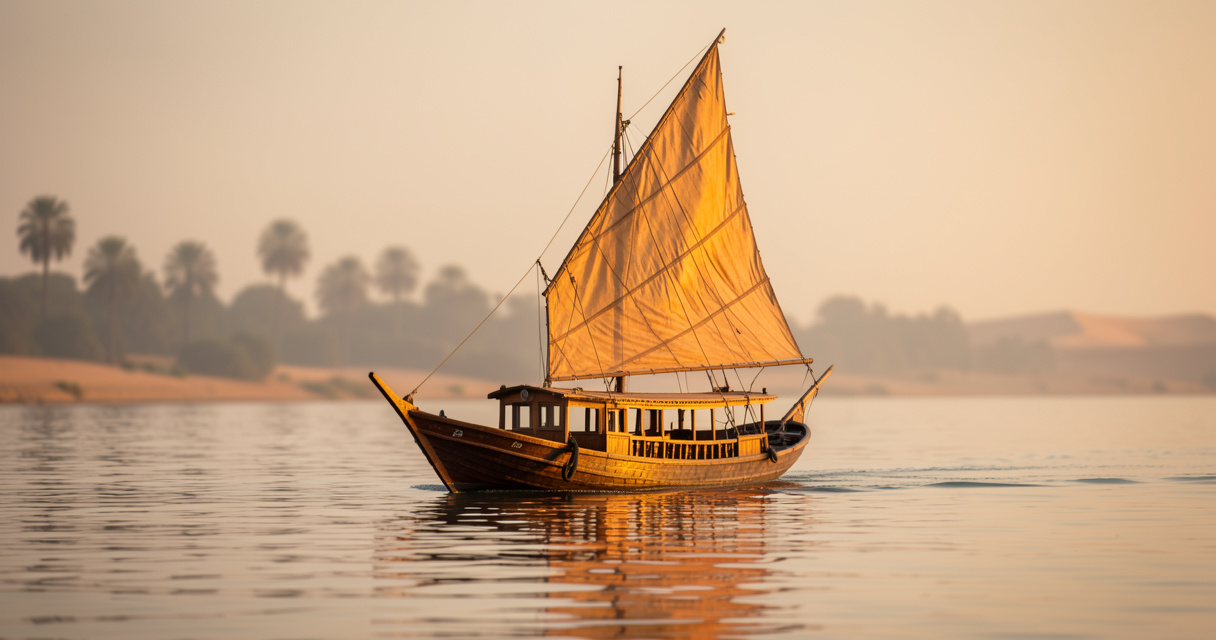
The Nile has two distinct personalities, and they are defined by the boat you board. The dahabiya is a traditional sailing vessel — lateen-rigged, shallow-drafted, and built for a handful of cabins. The Nile cruise ship is a floating hotel: multiple decks, a pool, a spa, and a schedule that runs to the minute. Neither is better. They simply serve different travelers.
When to Choose a Dahabiya
If you want the river to feel like a private discovery, a dahabiya is the answer. These boats carry between eight and twenty guests, which means dinner is a conversation rather than a buffet. Moorings are quieter — often beside a village rather than a dock — and the pace is dictated by the wind.
“On a dahabiya, you don’t visit Egypt. You slip into it,” says a senior guide who has worked the Luxor–Aswan stretch for fifteen years. “The silence is the luxury.”
Choose this boat if you are a couple, a solo traveler, or a small group who values intimacy over amenities. Be prepared to sacrifice the pool and the elevator — and gain the chance to swim off the stern when the wind drops.
When to Choose a Nile Cruise
A cruise ship makes sense when you want the Nile without the logistics. Cabins are larger, the itinerary is fixed, and everything from the Valley of the Kings to the Temple of Philae is handled by guides and coaches. If you are traveling with children or a group that spans generations, the predictability is a gift.
The trade-off is scale. You will share the river with hundreds of other passengers, and the moorings are often side-by-side with other ships. “The trick is to book a top-deck suite and rise early,” says a Cairo-based tour director. “At 6 a.m., the ship is still, and the Nile is yours again.”
The Insider Detail Others Miss
Most travelers compare boats by cabin size and price. The discerning traveler knows the difference lies in the itinerary. Dahabiyas can moor at smaller sites — the granite quarries of Aswan, the painted tombs of the nobles — that cruise ships skip because they cannot dock. Conversely, cruise ships offer more flexibility for day trips to Abu Simbel and Dendera, simply because they carry their own transport.
Quietly, the most talked-about boats this season are the refurbished dahabiyas — traditional hulls with contemporary interiors and a chef who shops at the Aswan market each morning. They offer the romance of sail with the comfort of a small hotel. Book well in advance; there are only a handful of cabins.
The Verdict
This season’s answer to the Nile question is not a single boat but a hybrid approach: a few nights on a dahabiya between Luxor and Aswan, then a short cruise extension if you want the pool. But if you must choose one, choose the dahabiya if you crave silence and the cruise if you crave structure. Both are worth every mile.
Book it. Now.