

Reading time: 16 min
Table of Contents
- Key takeaways
- Why Watch Tiers Matter – More Than Just Snobbery
- The Psychology of Ranking
- How Brands Use Tier Positioning in Marketing
- Our Methodology – Five Factors That Define a Watch Brand’s Tier
- Heritage & Prestige (Weight: 25%)
- Price & Accessibility (Weight: 20%)
- Movement & Finishing (Weight: 25%)
- Resale & Demand (Weight: 20%)
- After-Sales Support (Weight: 10%)
- Tier 1: Hyper Luxury – The Holy Trinity & Co.
- Patek Philippe: The King of Complications
- Audemars Piguet: Royal Oak Royalty
- Vacheron Constantin: Elegance Under the Radar
- A. Lange & Söhne: German Precision
- Tier 2: Premium Luxury – Rolex, Omega & Grand Seiko
- Rolex: Marketing Powerhouse
- Omega: The Moonwatch Legacy
- Grand Seiko: Zaratsu & Spring Drive
- Tier 3: Aspirational Brands – Tudor, Breitling, IWC, Zenith
- Tudor: Rolex’s Little Brother Comes of Age
- Breitling: Aviation Credentials
- IWC: Pilot & Portuguese Mastery
- Zenith: Chronograph Innovator
- Tier 4: Entry Luxury – Longines, Tissot, Hamilton, Seiko Presage
- Longines: Heritage and Classic Design
- Tissot & Hamilton: Swiss Accessible
- Seiko Presage: Japanese Artistry on a Budget
- Tier 5: Microbrands & Underdogs – Christopher Ward, Baltic, NTH, Serica
- Christopher Ward: The English Disruptor
- Baltic: Vintage Vibe with Modern Movements
- Addiesdive & Clones: Controversial Budget Options
- Tier 6: Brands to Avoid (or Approach with Caution)
- Hublot: Style Over Substance?
- Bremont: Struggling to Find Its Place
- Fashion Brands: MVMT, Daniel Wellington, Vincero
- Visual Decision Tree – Find Your Perfect Tier in 3 Questions
- Questions fréquentes
- Final Thoughts – The Best Tier Is the One You Love
Key takeaways
- Tiers simplify watch brand comparison, but model choice and personal taste often outweigh brand positioning alone.
- Rolex and Patek Philippe dominate the top tiers for prestige, while Grand Seiko and Tudor deliver exceptional value just below.
- Microbrands like Christopher Ward are shaking up the hierarchy with superior specs per dollar, challenging traditional gatekeepers.
- Resale value isn’t everything – many entry-level and microbrand watches offer outstanding craftsmanship without the flippers’ premium.
Why Watch Tiers Matter – More Than Just Snobbery
Over 44 different tier lists have been submitted to TierMaker alone, yet none agree on where brands like Breitling or Grand Seiko truly belong. Why is the watch hierarchy so controversial – and which ranking actually matters for your next purchase? The overwhelming number of subjective watch tier list posts on forums, YouTube, and social media creates confusion for buyers and enthusiasts who want an objective, data-backed ranking to guide their decisions.
Luxury watch tiers provide a shorthand for comparing brands by prestige, craftsmanship, and investment potential. But the real dispute lies in the gray areas: Is Grand Seiko as good as Rolex? Should Breitling be in the same tier as Tudor? These are not idle arguments – they affect thousands of purchasing decisions every quarter.
The Psychology of Ranking
Collectors love to rank because it brings order to a chaotic hobby with hundreds of brands and thousands of models. A tier list offers a mental shortcut: when you see a brand in the top tier, you immediately assume high finishing, strong resale and a certain status. But this simplification also creates watch brand ranking polarization – think of the heated Reddit threads over Tag Heuer’s placement.
Yet tier lists are not just about ego. According to 2026 data from TierMaker’s community ranking, the most upvoted lists award Rolex a solid S-tier, while microbrands like Christopher Ward now appear in A-tier on several user submissions. This signals a shifting consensus: value matters more than name alone.
How Brands Use Tier Positioning in Marketing
Brands themselves are acutely aware of where they sit. Patek Philippe’s “You never actually own a Patek” campaign reinforces its hyper-luxury mystique. Rolex spends billions on marketing to keep its place at the summit of Swiss iconography. Meanwhile, microbrands like Baltic explicitly position themselves as the anti-tiers – watchmaking for the discerning, not for the logo.
Understanding these dynamics helps you see past the marketing and choose the watch hierarchy that genuinely fits your lifestyle.
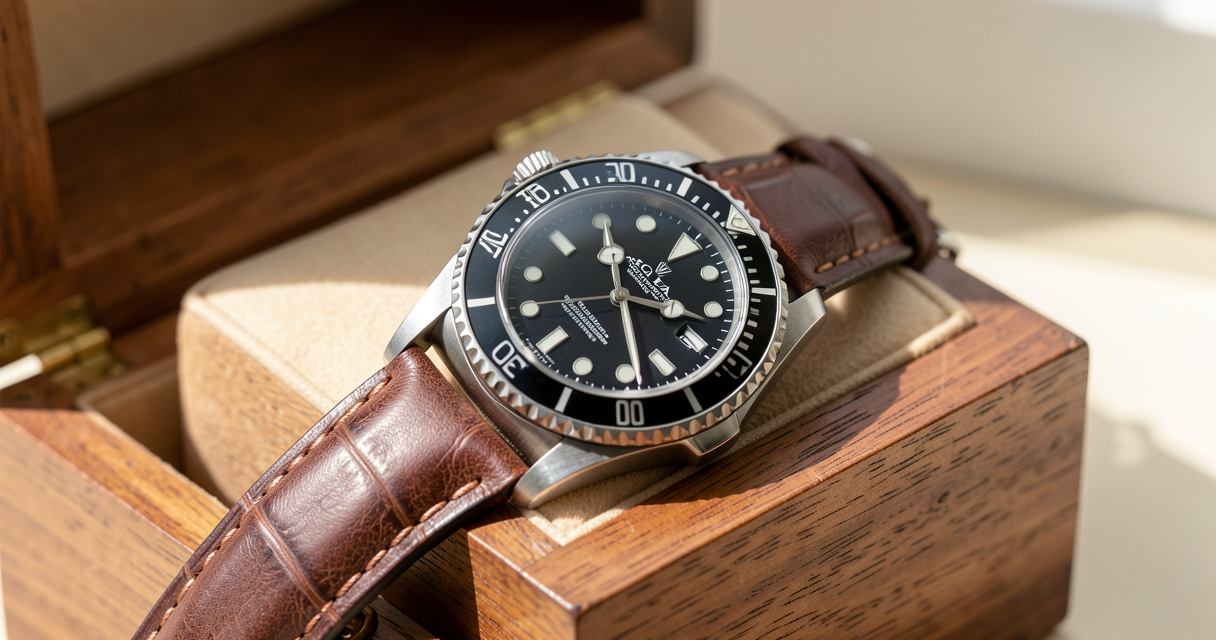
The kind of clarity that comes from a well-structured tier list is worth every mile – especially when it’s backed by real data instead of influencer bravado. So let’s build one that earns your trust.
Our Methodology – Five Factors That Define a Watch Brand’s Tier
To avoid the typical “I feel like Rolex is S-tier” subjective ranking, we designed a transparent, repeatable scoring system based on five measurable factors. Each criterion carries a specific weight, model examples, and public data where available. The result: a definitive watch brand tier ranking you can actually use.
Heritage & Prestige (Weight: 25%)
We evaluate a brand’s founding year, historical innovations (e.g., Patek’s perpetual calendars), and its reputation among serious collectors. A brand like Vacheron Constantin, continuously operating since 1755, scores higher than a 1990s fashion label.
Price & Accessibility (Weight: 20%)
Tiers are partly defined by price entry points. We consider not just MSRP but actual retail availability – a $50k watch you can’t buy for years (hello, Royal Oak) suggests a different tier than a $50k watch sitting in cases.
Movement & Finishing (Weight: 25%)
We analyze caliber types (in-house vs. modified ETA), finishing techniques (Zaratsu polishing, anglage, Geneva stripes), and accuracy metrics. Grand Seiko’s Spring Drive earns top marks here, as does A. Lange & Söhne’s hand-engraved balance cocks.
Resale & Demand (Weight: 20%)
We use aggregated resale retention percentages from platforms like WatchCharts and Chrono24. Rolex typically retains 90%+ after five years, while many fashion watches drop 70%+. Resale reflects real-world desirability, which is a key tier signal.
After-Sales Support (Weight: 10%)
Warranty length, service network, and cost of servicing matter. Brands like Rolex and Omega offer global service centers; microbrands often rely on local watchmakers. A long warranty (e.g., Christopher Ward’s 60-month) adds points.
| Criterion | Weight | How We Evaluated | Example Brand Scoring High |
|---|---|---|---|
| Heritage & Prestige | 25% | Founding era, historical innovations, collector consensus | Patek Philippe |
| Price & Accessibility | 20% | MSRP range, waitlists, availability | Grand Seiko |
| Movement & Finishing | 25% | Caliber type, decoration, accuracy | A. Lange & Söhne |
| Resale & Demand | 20% | 5-year retention % (WatchCharts data) | Rolex |
| After-Sales Support | 10% | Warranty length, global service network | Omega |
With this methodology in hand, we scored 60+ brands and placed them into six tiers. Let’s explore each, starting with the rarefied air of hyper luxury.
Tier 1: Hyper Luxury – The Holy Trinity & Co.
Hyper luxury is the cathedral of watchmaking. These are names that command waitlists longer than a novel, prices starting at $50,000, and finishing that elevates a wristwatch into a miniature sculpture. The Holy Trinity – Patek Philippe, Audemars Piguet, Vacheron Constantin – sits here, joined by German powerhouse A. Lange & Söhne and a handful of elite independents like F.P. Journe.
Nico Leonard’s ‘Brutal Watch Tier List 2025’ video, which achieved 695,448 views on YouTube (Source: YouTube, 2025), proved how divisive these brands can be. He spent 3.5 hours filming, only to have the files corrupted – a fitting metaphor for the painstaking process of grading perfection.
Patek Philippe: The King of Complications
Patek is the undisputed monarch. The brand’s Calatrava cross hallmarks, the Nautilus phenomenon, and incomparable grand complications set the benchmark. A Patek Calibre 89 remains the most complicated portable timepiece ever made. If you can get an allocation, you have already ascended.
Audemars Piguet: Royal Oak Royalty
Gerald Genta’s 1972 design saved the Swiss watch industry. Today, the Royal Oak’s octagonal bezel and integrated bracelet are icons. AP’s finishing – the frosted case, the ultra-thin calibers – keeps it firmly in the hyper elite. Recent price increases of 8% in 2025 only reinforced its scarcity.
Vacheron Constantin: Elegance Under the Radar
The oldest watch manufacturer in continuous production (since 1755). Vacheron’s Overseas collection rivals the Nautilus in design but with less hype and more artisan detailing. The brand offers extraordinary value for those who know – a phrase that sums up its discreet position.
A. Lange & Söhne: German Precision
Lange’s three-quarter plate, hand-engraved balance cocks and Glashütte ribbing are the pinnacle of Saxon watchmaking. The Zeitwerk, with its digital jumping hours, is a modern masterpiece. Lange sits on par with Patek in finishing but remains slightly less known – which collectors love.
This tier is about owning a piece of history that transcends fashion. But not everyone needs – or wants – a $100,000 watch. The next tier offers perhaps the best balance of prestige and daily wearability.
Tier 2: Premium Luxury – Rolex, Omega & Grand Seiko
Here we enter the sweet spot of the watch market: brands that are universally admired, widely available (with patience), and represent the gold standard for most collectors. Premium luxury is where the battle for consumer mindshare is fought – and where our featured snippet table below settles the debate.
| Brand | Avg. Price | Movement Type | Resale Retention % | Key Strength | Tier |
|---|---|---|---|---|---|
| Rolex | $10,000+ | In-house | 90%+ | Brand prestige & retention | Premium Luxury |
| Omega | $5,000-$15,000 | Co-Axial | 70-80% | History (Moonwatch) | Premium Luxury |
| Grand Seiko | $3,000-$10,000 | Spring Drive | 60-70% | Finishing & accuracy | Premium Luxury |
Best watch brands in this tier share a common thread: they have earned their reputation through decades of consistent quality and cultural relevance. Let’s break down each.
Rolex: Marketing Powerhouse
Rolex is the most recognizable watch brand on earth. The Submariner, Daytona, and Datejust are archetypes. But what truly puts Rolex in premium luxury – and not hyper luxury – is its production scale. Over a million watches per year, each one Superlative Chronometer certified. Resale is phenomenal, but waitlists are the price you pay.
The 2025-2026 price adjustments (an average 7% increase on steel models) have only strengthened its investment aura. Yet for the same money, Grand Seiko offers minute-level finishing that Rolex charges three times more for.
Omega: The Moonwatch Legacy
Omega’s Speedmaster Professional is the only watch certified by NASA for Extravehicular Activity – the Moonwatch. The brand’s Co-Axial escapement, Master Chronometer certification, and deep-rooted space heritage make it a formidable contender. Watch brand ranking purists often place Omega just below Rolex, but the gap narrows with each model iteration.
Grand Seiko: Zaratsu & Spring Drive
Grand Seiko challenges the Swiss establishment on two fronts: Zaratsu polishing that creates mirror-like finishes from a single piece of steel, and the hybrid Spring Drive movement that glides silently to an accuracy of ±1 second per day. For many collectors, Grand Seiko is the best value in luxury – a view supported by Adrian Barker’s 362,374-view tier list (2024 video, YouTube), where he placed Grand Seiko in A-tier for overall, S-tier for finishing.
If Rolex is the safe choice and Omega the historic choice, Grand Seiko is the connoisseur’s choice. Now let’s descend to the tier where many collectors spend their peak years: aspirational brands.
Tier 3: Aspirational Brands – Tudor, Breitling, IWC, Zenith
These are the brands that enthusiasts ‘graduate’ to after their first automatic. They offer strong heritage, robust in-house or high-grade movements, and pricing from $3,000 to $8,000. They are the backbone of the luxury watch industry – less ostentatious than Rolex, but infinitely more refined than entry-level Swiss.
Collectors often ask: “Is Breitling considered luxury?” The answer is yes – Breitling sits firmly in the aspirational tier, with its aviation pedigree, Navitimer slide rule, and pricing that tops $50,000 for certain models. Yet Reddit forums remain divided: some argue Breitling’s design language is too busy, others laud its chronograph history. The truth lies in the eye of the owner.
Tudor: Rolex’s Little Brother Comes of Age
Tudor has undergone a revolution since 2015. With in-house calibers (MT56xx series), ceramic bezels, and a design language that echoes Rolex but dares to be modern (think Pelagos 39 and Black Bay 58), Tudor now commands its own identity. Resale is solid, though not Rolex-level. For under $5,000, Tudor offers the most tool-watch credibility.
Breitling: Aviation Credentials
Breitling’s Navitimer is one of the most iconic pilot’s watches ever made. The brand has been struggling with identity in recent years – is it sporty? Retro? Modern? – but the 2023-24 revamp under Georges Kern has brought consistency. The Superocean and Chronomat are strong models. If you want a chronograph with genuine flight-ready functionality, Breitling is hard to beat.
IWC: Pilot & Portuguese Mastery
IWC Schaffhausen is synonymous with pilot watches (Big Pilot, Mark XX) and the dressier Portuguese line. Their in-house 52000 calibers with Pellaton winding are engineering marvels. IWC excels in design restraint – the kind of watch that whispers elegance. Pricing starts around $5,000 for entry models.
Zenith: Chronograph Innovator
Zenith’s El Primero automatic chronograph movement, debuted in 1969, still beats at 36,000 vph – the highest frequency of any series-produced chronograph. The Defy line offers modern skeleton designs, while the Chronomaster harkens back to Zenith’s glory days. Zenith is a favorite of true watch nerds because of its movement heritage.
Before you buy any aspirational piece, ask yourself: “Do I love the brand’s story, or just the look?” That question distinguishes a lasting collection from a fleeting purchase. Next, we meet the brands that introduced millions to the world of luxury horology.
Tier 4: Entry Luxury – Longines, Tissot, Hamilton, Seiko Presage
Entry-level luxury is the gateway drug to watch collecting. These brands offer Swiss mechanical movements (or in Seiko’s case, superb Japanese automatics) at price points from $300 to $2,000. They are the ‘first real watch’ for millions, and for many, that first piece becomes a lifelong companion.
The kind of watch that asks nothing of you but delivers everything – Longines is exactly that. Founded in 1832, Longines has the longest eagle logo trademark and a history of elegance (the Heritage collection is sublime). Models like the Longines Spirit Zulu Time offer GMT functionality with COSC certification for under $3,000 – a feat that Rolex charges $10k+ for.
Longines: Heritage and Classic Design
Longines occupies a unique space: it is undeniably luxury in the eyes of most buyers (price, brand history, Swiss made), yet watch snobs often dismiss it as a stepping stone. The truth? Longines offers the best value in Swiss heritage. The Heritage collection, with its box sapphire crystal and hand-wound movements, is a delight for vintage lovers.
Tissot & Hamilton: Swiss Accessible
Tissot’s Powermatic 80 movement (80-hour power reserve) is a modern marvel. The Tissot Gentleman Powermatic 80 is our pick for ‘best entry-level luxury watch’ – it punches above its $800 price with a clean design and Swiss pedigree. Hamilton, under Swatch Group, brings American spirit with Swiss execution; the Khaki Field Automatic is a military-inspired icon that costs under $600.
Seiko Presage: Japanese Artistry on a Budget
Seiko’s Presage line (especially the Cocktail Time series) delivers dials that rival Grand Seiko at a fraction of the price. The enamel dials, made by craftsman Mitsuru Yokosawa, are a $400 experience that feels like $4,000. Seiko’s 4R35 and 6R35 movements are robust, though not as refined as Swiss alternatives – but then, you aren’t paying for finishing, you’re paying for design and reliability.
One Reddit user asked which single luxury watch to buy under $2k: the consensus pointed to either the Tissot Gentleman or a Seiko Presage. We agree – both represent the best of their respective watchmaking traditions. But what about brands that offer even more per dollar? That leads us to the microbrand revolution.
Tier 5: Microbrands & Underdogs – Christopher Ward, Baltic, NTH, Serica
Microbrand watches are the disruptors of the horological world. By selling direct-to-consumer, cutting out retail margins, and partnering with top-tier movement suppliers (Sellita, Miyota, ETA), they offer specs that would cost three times as much from a heritage brand. This tier is where the enthusiast’s heart beats fastest.
Adrian Barker famously placed Christopher Ward in S-tier for value – a radical move that echoes the changing landscape. While traditionalists scoff, the numbers don’t lie: a Christopher Ward C60 Trident Pro 600 uses a COSC-certified Sellita movement, has a ceramic bezel, and costs $1,500. A comparable Swiss brand would charge $4,000+.
Christopher Ward: The English Disruptor
Christopher Ward has matured from a Kickstarter darling to a legitimate player. The brand’s ‘Light-catcher’ case design, twin-flags logo, and in-house movement (SH21) are proof of ambition. The C65 Super Compressor and the new The Twelve (integrated bracelet) are getting rave reviews. Warning: not all microbrands are created equal – check movement source, warranty, and customer reviews before buying.
Baltic: Vintage Vibe with Modern Movements
Baltic’s Bicompax chronograph and Aquascaphe diver capture the 1950s aesthetic perfectly, using Seagull ST1901 movements that are robust and affordable. The finishing on Baltic’s cases – brushed tops, polished chamfers – is remarkable for the $500-800 price. Baltic is a favorite for collectors wanting a diver that looks like an old-school Fifty Fathoms without the vintage maintenance.
Addiesdive & Clones: Controversial Budget Options
This corner of the market is polarizing. Addiesdive, Steeldive, and others produce ‘homage’ watches that mimic iconic designs (Submariner, Seamaster) at sub-$100 prices. While they sap profits from intellectual property, they also introduce tens of thousands of people to automatic watches. Are they a legitimate tier? We’d say they belong in a separate ‘budget alternative’ category – not true luxury, but a valid stepping stone for the curious.
The microbrand landscape is evolving rapidly. If you’re willing to research, you can get a watch that holds its own against $5k competitors for $1k. But beware of the hype train – some microbrands prioritize marketing over quality. Now, a word on the brands that often inspire caution.
Tier 6: Brands to Avoid (or Approach with Caution)
Watch brands to avoid is a sensitive subject. Some are here because of declining quality, others because they price perception far above reality. This tier is based on collector consensus, resale data, and objective movement analysis – not personal vendettas.
Hublot: Style Over Substance?
Hublot pioneered the ‘fusion’ of materials (rubber + ceramic + gold), but many purists argue its movements are heavily modified ETA/Unitas calibers, lacking the in-house pedigree of its $20k+ price tag. Resale is notoriously poor (often 40-50% after a year). That said, if you love the bold aesthetic and aren’t concerned with investment value, Hublot has its fans – including big celebrities.
Bremont: Struggling to Find Its Place
British brand Bremont earned early praise for its rugged aviation watches, but recent financial struggles and a lawsuit over its ‘manufacture’ movements (which were revealed as modified outsourced calibers) have damaged credibility. Nico Leonard placed them in a ‘dubious’ category. While the Supermarine and Alt1-C are well-built, the brand’s current tier is fragile.
Fashion Brands: MVMT, Daniel Wellington, Vincero
These are not watch brands – they are fashion accessories that happen to tell time. They use cheap quartz movements from China, marked up 1000% with aggressive Instagram marketing. Vincero, for example, was called out on Reddit for using $20 movements in $300 watches. Red flags: if the brand doesn’t disclose the movement, if it emphasizes ‘design’ over ‘specs,’ and if it launched in the last decade with no horological history – avoid.
Understanding which brands to skip saves you money and disappointment. The goal is to build a collection that brings you joy, not regret. Now, let’s wrap up with a tool that ties everything together.
Visual Decision Tree – Find Your Perfect Tier in 3 Questions
To make this guide truly actionable, we’ve created a decision tree that you can quickly use based on your budget and goals. No other watch tier list offers this – it’s our contribution to your buying journey.
Step 1: What’s your maximum budget?
- Under $500 → Look at Seiko 5, Hamilton Khaki, or microbrands like Timex and Citizen. These are not luxury but excellent quality for the price.
- $500 – $2,000 → Entry Luxury: Tissot, Longines, Seiko Presage, or microbrands like Baltic and Christopher Ward (entry models).
- $2,000 – $5,000 → Aspirational: Tudor, Longines Spirit, Breitling entry, or Grand Seiko quartz.
- $5,000 – $15,000 → Premium Luxury: Rolex (if you can get one), Omega, Grand Seiko automatic, IWC.
- $15,000+ → Hyper Luxury: Patek, AP, VC, Lange, or independent high-end microbrands.
Step 2: What matters most to you?
- Resale value → Rolex, Patek, Grand Seiko (certain models). Avoid fashion brands.
- Movement innovation → Grand Seiko Spring Drive, Omega Co-Axial, Zenith El Primero.
- Brand heritage → Patek, Vacheron, Longines, Omega.
- Value per dollar → Christopher Ward, Seiko Presage, Baltic.
Step 3: How often will you wear it?
- Daily beater → Tudor Black Bay, Omega Seamaster, or microbrand diver.
- Special occasions → Patek Calatrava, JLC Reverso, Grand Seiko dress watch.
- Travel companion → GMT models: Tudor Black Bay GMT, Rolex GMT-Master II, Longines Zulu Time.
Use this tree as a starting point – but remember, the best tier is the one that aligns with your taste. Now, let’s answer the most common questions about watch tiers.
Questions fréquentes
What is the best watch brand overall?
There is no single answer – it depends on your budget and taste. For timeless prestige, Rolex is hard to beat. For craftsmanship, Patek Philippe leads. For value, Grand Seiko and Tudor excel.
Is Breitling considered a luxury watch brand?
Yes, Breitling is firmly in the premium luxury tier – it has strong aviation heritage, high-quality chronographs, and pricing from $3k to $50k+.
How many tiers are there in a typical watch brand hierarchy?
Most expert lists use 5–6 tiers: Hyper Luxury, Premium Luxury, Aspirational, Entry Luxury, Microbrands, and Avoid. Gran Turismo Events defined six tiers from Consumer to Peak Industry.
Is Grand Seiko better than Omega?
They are comparable in price and quality but different in philosophy. Grand Seiko offers incredible finishing and unique movements (Spring Drive), while Omega has stronger brand heritage and the prestigious Moonwatch.
What watch tier is Seiko?
Seiko spans multiple tiers. Regular Seiko (5, Prospex) is in the consumer tier. Seiko Presage and King Seiko are entry luxury. Grand Seiko is premium luxury.
Are microbrands worth buying?
Yes, many microbrands offer great value with high-quality components (often Swiss or Japanese movements). Brands like Christopher Ward, Baltic, and Serica are respected by collectors.
Which watch brand holds its value best?
Rolex is famous for holding value, with many models appreciating. Patek Philippe and Audemars Piguet also retain value well. Lower-tier brands generally depreciate faster.
Final Thoughts – The Best Tier Is the One You Love
Tiers are a useful shorthand to quickly compare brand prestige, but model choice and personal preference often matter more. Rolex and Patek dominate top tiers for prestige, while Grand Seiko and Tudor offer incredible value just below. Microbrands are shaking up the hierarchy with better specs per dollar.
Ultimately, the best watch tier is the one that makes you look at your wrist and smile – but if you want a clear roadmap, start with our table and decision tree above, and let your budget and taste be your guide.
Book it. Now.
Victoria Hale is the founder of Alto Magazine, where she writes about luxury travel and lifestyle. She has been collecting watches for 15 years and once argued with a watchmaker in Geneva for an hour about the merits of Zaratsu polishing. She won.