

Reading time: 16 min
Table of Contents
- Key Takeaways
- What Is a Two-Tone Watch? (And Why It Works)
- The Classic Combination: Gold & Steel
- The Roaring Twenties Origins
- A Brief History of Two-Tone Watches
- The 1920s: Mixed Golds
- The 1980s: Steel Meets Gold
- Modern Renaissance (2020s)
- Two-Tone vs Solid Gold vs All-Steel: Which Is Right for You?
- Durability and Wear
- Cost Comparison: New vs Pre-Owned
- Style Versatility: Dressing Up and Down
- The Best Two-Tone Watches on the Market in 2026
- Luxury Icons: Rolex, Audemars Piguet, Bulgari
- Mid-Range Gems: Movado, Michele, Olivia Burton
- Budget-Friendly: Rosefield, Porsamo Bleu
- Durability and Maintenance: How Two-Tone Watches Age
- Gold Tone PVD vs Solid Gold Accents
- Bracelet Care and Polishing
- When to Service Your Two-Tone Watch
- Two-Tone Watches for Every Budget
- How to Style a Two-Tone Watch: Tips from Collectors
- Mixing Metals: The Modern Rule
- Two-Tone for the Office vs Weekend
- Men’s vs Women’s Two-Tone Styling
- Questions fréquentes
- Conclusion
Key Takeaways
- Versatile Investment – Two-tone watches combine the durability of steel with the warmth of gold, offering a style that transitions seamlessly from boardroom to weekend.
- History & Resurgence – Originating in the 1920s and booming in the 1980s, two-tone watches are experiencing a modern renaissance in 2026, driven by renewed appreciation for vintage aesthetics.
- Know Your Metals – Solid gold accents hold value best; gold-tone PVD offers affordability but may wear faster. Always check hallmarks on clasps and casebacks.
- Styling Flexibility – A two-tone watch is the ultimate bridge piece: it pairs effortlessly with both gold and silver jewelry, making it the most versatile accessory in any collection.
Are two-tone watches a stylish investment or a dated trend? Let’s settle the debate once and for all. You’ve seen them on the wrists of collectors and celebrities, but when you’re standing at the counter comparing a two-tone Rolex Datejust against an all-steel Submariner, the questions start piling up: Is the gold real? Will the bracelet scratch unevenly? Can I wear it with my wedding band? This two-tone watch buying guide cuts through the noise. We’ll walk you through the history, the craftsmanship, the real-world durability, and the models that are worth every mile in 2026. Whether you’re after an affordable first two-tone or a solid-gold investment piece, this is the only resource you need.
What Is a Two-Tone Watch? (And Why It Works)
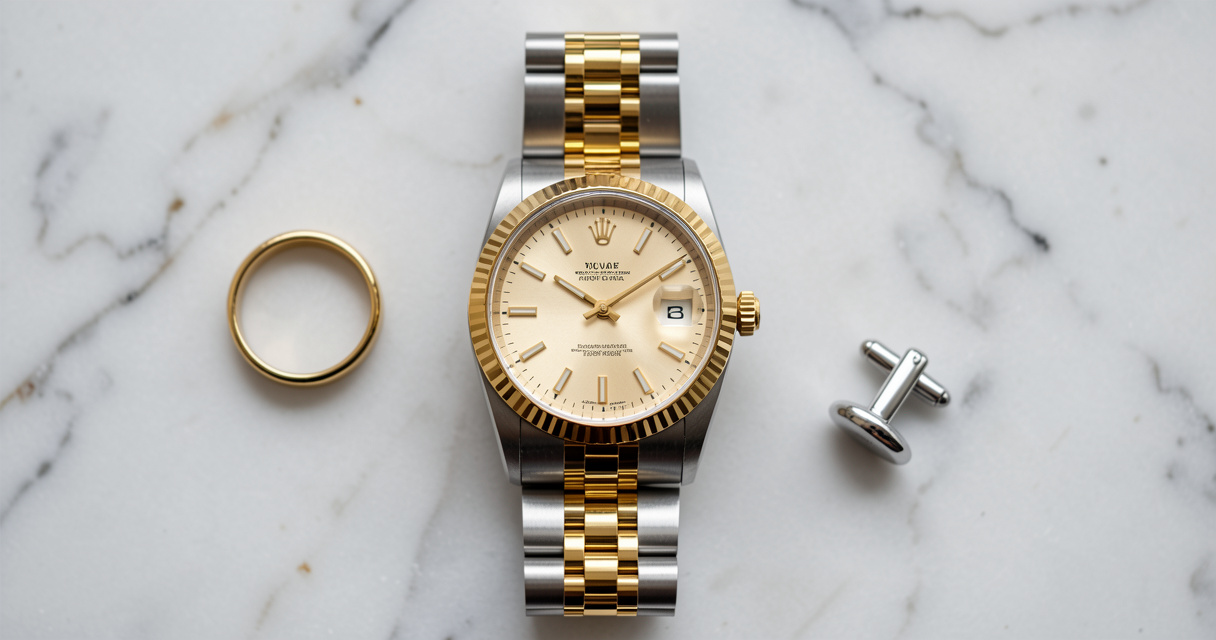
A two-tone watch combines two different metal colors, most commonly stainless steel and yellow or rose gold. The steel provides durability and everyday practicality, while the gold accents add warmth and luxury. This mix allows the watch to bridge the gap between casual and formal wear, making it one of the most versatile timepieces you can own.
Think of it as the golden mean of horology – not as flashy as solid gold, not as sober as all-steel. The result is a watch that feels equally at home under a cuff at a black-tie gala or peeking out from a rolled-up sleeve at Saturday breakfast. And because the case and bracelet marry two different alloys, the wearer gets the best of both worlds: the scratch resistance of steel where it counts, and the unmistakable glow of gold where it shows.
The Classic Combination: Gold & Steel
The archetypal two-tone watch uses 316L stainless steel for the majority of the case and bracelet, with 18K yellow gold (or occasionally rose gold) on the bezel, crown, and center links. This specific configuration – called “Rolesor” by Rolex – has become the industry benchmark. But two-tone doesn’t stop there: some manufacturers use gold-toned steel (PVD) for the accents, while others, like Audemars Piguet, experiment with tantalum and rose gold. The principle remains the same: a deliberate contrast of metals that enhances both strength and elegance.
The Roaring Twenties Origins
According to Time+Tide, “two-tone watches date back a century, to the Roaring Twenties, with case combinations of different gold tones” (2024). Back then, the two metals were often both gold – say, white gold and yellow gold – because stainless steel wasn’t yet a mainstream material in luxury watchmaking. The innovation came when steel replaced white gold as the primary metal, making two-tone both more durable and more affordable. That shift laid the groundwork for the explosion in popularity that would come sixty years later.
This versatility is why the two-tone watch remains a cornerstone of any serious collection. Now, let’s travel through the decades to see how it evolved.
A Brief History of Two-Tone Watches
Two-tone watches didn’t become an overnight sensation – they simmered for decades before boiling over in the 1980s. Understanding that trajectory helps you appreciate why a 2026 two-tone is both a nod to tradition and a thoroughly modern choice.
The 1920s: Mixed Golds
Our story begins in the Art Deco era, when watchmakers like Patek Philippe and Cartier experimented with multiple gold tones on the same case. These were often bespoke pieces for wealthy clients who wanted a watch that matched both white gold and yellow gold accessories. The concept was elegant, but the lack of a durable, contrasting metal kept two-tone from going mainstream.
The 1980s: Steel Meets Gold
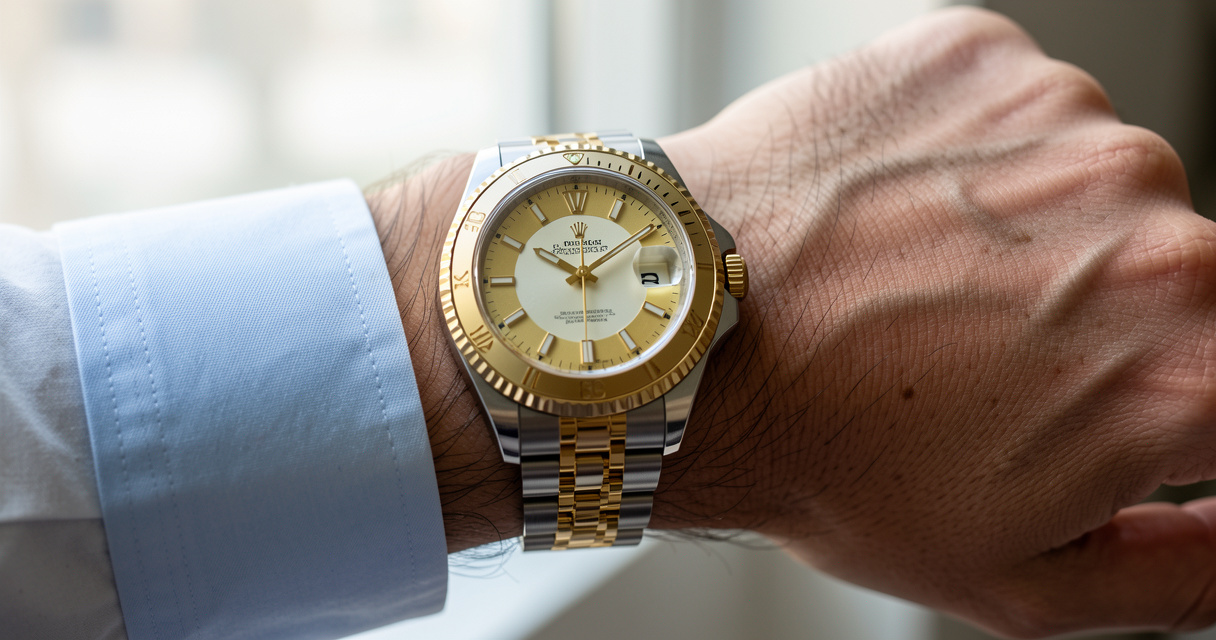
As Time+Tide notes, “the true boom of two-tone watches came in the 1980s” (2024). This was the decade of power dressing, of Madonna and Motorola, of the Wall Street warrior. Rolex introduced the two-tone Datejust (ref. 16013) and it became the unofficial badge of success. The watch said: I’ve arrived, but I’m not showing off. It was conservative enough for the office and impressive enough for dinner at the Four Seasons. Audemars Piguet also launched two-tone Royal Oaks, including the legendary ref. 25829TA in rose gold and tantalum.
Imagine the scene: a 1985 executive in a charcoal pinstripe suit, rolling up his sleeve to check the time on his two-tone Datejust. The gold center links catching the fluorescent office light, the steel outer links grounded and practical. It was the perfect accessory for an era of ambition.
Modern Renaissance (2020s)
After a brief dip in the 2000s, when all-steel and all-gold dominated fashion runways, two-tone watches began a quiet comeback in the mid-2010s. By 2026, they are firmly back in the spotlight. Major brands have reintroduced two-tone references – Tudor’s Black Bay line, Omega’s Seamaster in two-tone, and Bulgari’s Serpenti Tadao Ando edition – proving that the mixed-metal aesthetic is no longer a relic of the past. It’s a deliberate design choice that combines classic elegance with contemporary versatility.
This resurgence naturally raises the question: how does a two-tone watch stack up against the traditional alternatives? Let’s put them head-to-head.
Two-Tone vs Solid Gold vs All-Steel: Which Is Right for You?
Choosing between a two-tone watch, a solid gold model, and an all-steel piece is a matter of budget, lifestyle, and personal style. Each option has distinct trade-offs. Let’s break them down.
| Criterion | All-Steel | Two-Tone | Solid Gold |
|---|---|---|---|
| Price Range (new, luxury) | $5,000 – $15,000 | $7,000 – $30,000 | $20,000 – $100,000+ |
| Scratch Resistance | High (steel) | Medium (gold scratches easier) | Low (gold is soft) |
| Weight | Light | Medium | Heavy |
| Formality Level | Casual to smart-casual | Casual to formal | Formal to ultra-formal |
| Resale Value | Good (stable) | Very good (if solid gold accents) | Excellent (precious metal) |
Durability and Wear
All-steel watches are workhorses – they can take a beating and polish back to near-new condition. Solid gold, on the other hand, is soft; a single scrape can leave a permanent mark. Two-tone sits in the middle: the steel parts handle daily abuse, while the gold accents require a bit more care. “Improved toughness and lesser cost” – as one source puts it – are the core advantages of going two-tone. However, if you opt for a gold-tone PVD coating instead of solid gold, be aware that the plating can wear off over time, exposing the steel beneath. Solid gold accents, while more expensive, just need an occasional polish to look their best.
Cost Comparison: New vs Pre-Owned
If you’re budget-conscious but still want the look, pre-owned two-tone watches offer tremendous value. Brands like Rolex and Omega hold their resale value exceptionally well – a pre-owned two-tone Datejust from the 1990s can be had for $5,000–$8,000, whereas a new two-tone Datejust starts around $12,000. For solid gold, pre-owned can still be a bargain, but expect to pay at least $15,000 for a decent example. All-steel is the most affordable entry point both new and used.
Style Versatility: Dressing Up and Down
Here’s where two-tone truly shines. An all-steel watch looks sporty and understated; it’s perfect with jeans but can feel a little flat with a tuxedo. A solid gold watch is a statement piece that demands a certain level of formality – wear it with a tracksuit and it reads as overkill. Two-tone, with its balanced mix of metals, adapts to almost any context. Pair it with a navy blazer and chinos for a classic weekend look, or let it peak out from a French cuff at a wedding. It’s the watch that says you know the rules – and you also know when to bend them.
Now that you understand the landscape, let’s get specific. Which models are actually worth your time and money in 2026?
The Best Two-Tone Watches on the Market in 2026
This isn’t a lazy list of every two-tone watch ever made. We’ve curated nine models across three price tiers, each chosen for a specific reason: design integrity, durability, and the intangible feeling of wearing something special. The discerning traveler knows that the right watch isn’t about the logo alone – it’s about the story it tells and the way it sits on the wrist.
Luxury Icons: Rolex, Audemars Piguet, Bulgari
| Brand | Model | Price Range (approx.) | Metal Combination | Key Feature |
|---|---|---|---|---|
| Rolex | Datejust 41 (ref. 126333) | $12,500 – $15,000 | 904L steel + 18K yellow gold | Jubilee bracelet, fluted bezel |
| Audemars Piguet | Royal Oak (ref. 25829TA) | $40,000 – $60,000 (pre-owned) | Tantalum + 18K rose gold | Rare tantalum case, integrated bracelet |
| Bulgari | Serpenti Tadao Ando | $16,400 | Steel + 18K rose gold | Tubogas bracelet, architected dial (2024) |
The Rolex Datejust is the quintessential two-tone watch. The fluted bezel in 18K yellow gold catches light like a champagne flute, while the Oystersteel case keeps it robust. It’s the watch you buy when you want one piece that does everything. The Audemars Piguet Royal Oak with tantalum is a collector’s dream – the deep grey-blue hue of tantalum contrasts beautifully with rose gold, and the octagonal bezel is a design icon. Bulgari’s Serpenti Tadao Ando edition, released in 2024, wraps the wrist in a sinuous rose gold and steel coil, inspired by architect Tadao Ando’s minimalist geometry. It proves that two-tone can be avant-garde as well as classic.
Mid-Range Gems: Movado, Michele, Olivia Burton
Not everyone is ready to drop five figures on a watch, and you don’t have to. Movado offers the Museum Classic in two-tone (approx. $695) – a clean, iconic design with gold-toned bezel and crown. Michele’s Deco line (around $995) brings Art Deco flair with a two-tone bracelet and mother-of-pearl dial. Olivia Burton, known for British charm, has the Enchanted Garden two-tone watch for around $180 – a charming entry point with gold-plated details. These pieces prove that style isn’t proportional to price.
Budget-Friendly: Rosefield, Porsamo Bleu
For under $200, you can still get a well-made two-tone watch that looks the part. Rosefield’s Octagon collection offers a gold and silver mesh bracelet with a minimalist square dial for about $170. Porsamo Bleu – a name you might not know but should – produces two-tone watches with Swiss movements at surprisingly low prices (around $150–$250). They’re not pushing horological boundaries, but they bring the two-tone aesthetic to anyone who wants to try it without a huge commitment.
- Checklist for Choosing Your Two-Tone Watch
- Decide on metal finish: solid gold accents vs. gold-tone PVD
- Consider case size: 36mm–40mm is the sweet spot for daily wear
- Movement type: automatic for collectors, quartz for low-maintenance accuracy
- Warranty and service: solid gold accents may require specialist polishing
Once you’ve chosen your watch, you need to know how to keep it looking new for decades. Let’s talk about durability and maintenance.
Durability and Maintenance: How Two-Tone Watches Age
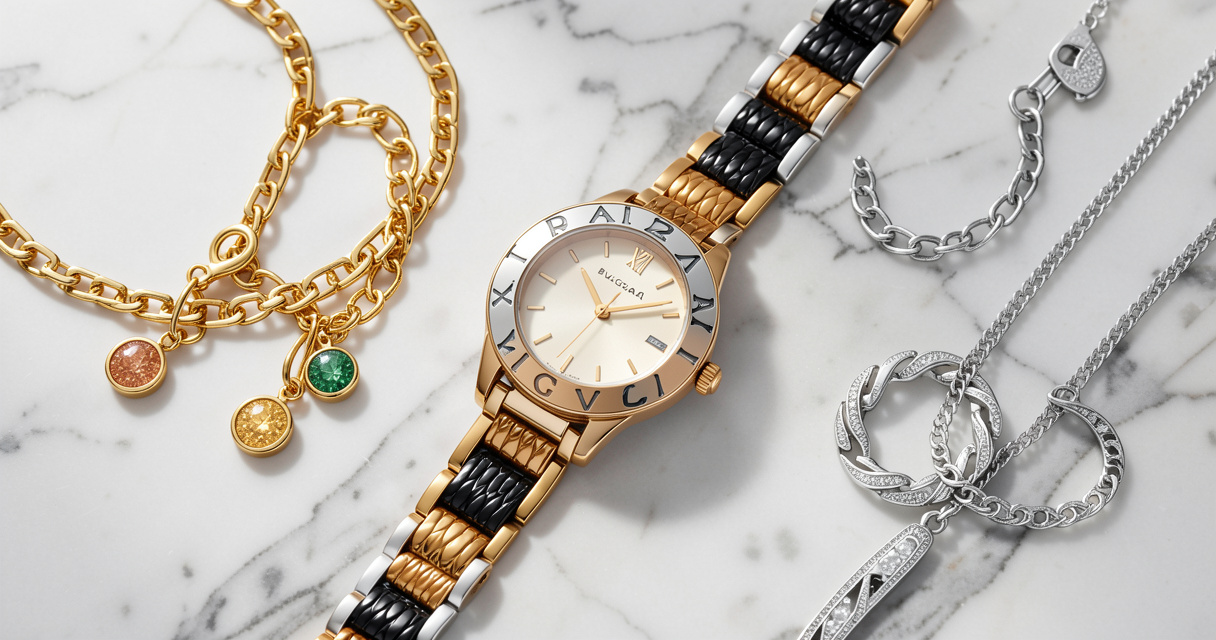
One of the most common questions we hear is: “Do two-tone watches scratch easily?” The answer is nuanced. The steel parts are just as tough as any all-steel watch. The gold parts – especially if they’re solid 18K – are softer and will accumulate fine scratches over time. This isn’t a flaw; it’s the nature of the material. Many collectors actually appreciate the patina that develops on gold bezels and centre links, as it gives the watch character. However, if you’re the sort of person who likes their watch to look mint forever, a two-tone watch requires a little more attention.
Gold Tone PVD vs Solid Gold Accents
This is the most important distinction. A watch with solid gold accents (like the Rolex Datejust) can be polished repeatedly without losing its gold layer – it’s solid all the way through. A gold-tone PVD watch, on the other hand, has a thin coating that can wear off with heavy use, particularly on the clasp and edges. If you plan to wear your watch daily for years, invest in solid gold accents. If you’re buying a fashion piece for occasional wear, PVD is perfectly acceptable – just take care of it.
Bracelet Care and Polishing
The bracelet is the part that takes the most abuse. For a two-tone bracelet, use a soft microfiber cloth to clean it after sweaty days. Avoid ultrasonic cleaners if your watch has gold-plated links, as the vibration can accelerate flaking. A gentle soap-and-water solution is safe for steel and solid gold. If the bracelet becomes heavily scratched, a professional jeweller can re-polish it, but note that repeated polishing will eventually wear down the gold if it’s plated. For solid gold, it’s not an issue.
When to Service Your Two-Tone Watch
Like any mechanical watch, a two-tone piece should be serviced every 5–7 years. The two-tone nature doesn’t change the service interval, but insist on a service center that specializes in your brand. An inexperienced watchmaker might over-polish the gold parts or use the wrong compounds, removing the fine satin finish. Always request that the two-tone bracelet be cleaned and lubricated without any aggressive abrasives.
Warning: Avoid harsh chemicals on gold-plated two-tone watches; use only a microfiber cloth. Chlorine and saltwater can accelerate tarnishing on both solid gold and PVD – rinse your watch with fresh water after swimming.
Durability concerns are real, but manageable. Next, we’ll help you find the perfect two-tone watch for your budget – whether you want to spend $200 or $20,000.
Two-Tone Watches for Every Budget
The two-tone market spans from accessible fashion pieces to serious investments. Here’s a breakdown with specific recommendations at each level.
| Price Segment | Brands & Models | Typical Features | Best For |
|---|---|---|---|
| Entry-Level (Under $500) | Rosefield Octagon, Porsamo Bleu, Olivia Burton Enchanted Garden | Quartz movement, gold-tone PVD, mineral crystal | First two-tone, fashion-focused, occasional wear |
| Mid-Tier ($500 – $2,000) | Movado Museum Classic, Michele Deco, Tissot Le Locle Two-Tone | Swiss quartz or automatic, sapphire crystal, some solid gold plating | Daily wear with style, better movement quality |
| Luxury & Investment ($2,000+) | Rolex Datejust, Omega Seamaster Two-Tone, Tudor Black Bay Two-Tone, Cartier Santos Two-Tone | Automatic movement, solid gold accents, Swiss Made, high resale value | Collectors, heirloom pieces, long-term investment |
If you’re considering the pre-owned market – and we encourage it – you can often find a Rolex Datejust from the 1990s for around $5,000–$7,000, which is a steal for a solid gold two-tone watch. Websites like Bezel and WatchGuys specialize in authenticated pre-owned luxury two-tone watches. Just ensure you get the original box and papers; it significantly boosts resale value.
So you’ve bought your two-tone watch – now comes the fun part: wearing it with confidence. Let’s talk styling.
How to Style a Two-Tone Watch: Tips from Collectors
One of the great myths about two-tone watches is that they’re hard to style. In reality, the opposite is true. The dual-metal design makes a two-tone watch the ultimate bridge piece – it harmonizes with both gold and silver jewelry, metals that otherwise can clash.
Mixing Metals: The Modern Rule
There is no rule that says you must match your watch metal to your belt buckle or wedding band. In fact, the most stylish looks in 2026 mix metals intentionally. A two-tone watch sits perfectly in that conversation. Wear it with a gold ring and steel cufflinks – the watch bridges the two. It’s the most flexible piece in your collection, and collectors know it. We spoke to one veteran collector who said, “I gave my nephew a two-tone Datejust for his graduation. He wears it with everything – suits, shorts, even to the gym. It just works.”
Two-Tone for the Office vs Weekend
For the office, a two-tone watch on a bracelet reads as professional without being ostentatious. Pair it with a white dress shirt, a navy suit, and a simple leather band – either gold or steel – and you have a look that says you understand nuance. On weekends, swap the leather band for the original two-tone bracelet and roll up your sleeves. The gold accents catch the sunlight during Sunday brunch, and the steel keeps it grounded. It’s the sartorial equivalent of a cashmere sweater – understated luxury.
Men’s vs Women’s Two-Tone Styling
While two-tone watches are inherently unisex, styling cues differ slightly. For women, a two-tone watch pairs beautifully with a stack of gold bangles and a silver cuff – the watch acts as the unifying element. For men, it works just as well with a leather strap on a steel bracelet watch. We recommend the Cartier Santos Two-Tone for women who love iconic design; the Rolex Datejust for men who want a classic. But honestly, the best two-tone watch is the one you never want to take off, regardless of whether it’s marketed to you or not.
We’ve covered history, buying, maintenance, and styling. But we know there are still lingering questions. Let’s answer the most common ones.
Questions fréquentes
Are two-tone watches out of style?
Not at all. Two-tone watches have seen a resurgence since the 2010s and remain popular in 2026 due to their versatility and vintage appeal. Major brands continue to release new models, from Rolex to Bulgari, proving that this aesthetic is far from passé.
Do two-tone watches hold their value?
Generally, two-tone watches from brands like Rolex and Audemars Piguet hold value well, especially if made with solid gold. Gold-plated two-tone models may depreciate more. Check the pre-owned market for the best deals on investment-grade pieces.
What is the difference between two-tone and bi-metal?
They are often used interchangeably, but “bi-metal” can refer to any two-metal combination, while “two-tone” specifically implies mixing gold and steel tones. Both describe a watch with two different metal finishes.
Can a two-tone watch be worn daily?
Yes, many two-tone watches are designed for daily wear. The steel portion adds durability while the gold accents provide elegance. Choose scratch-resistant coatings if you are hard on watches, or opt for solid gold accents for longevity.
Is it okay to wear a two-tone watch with silver jewelry?
Absolutely – the gold accents in a two-tone watch bridge the gap between gold and silver, making it the most flexible piece for mixing metals. It pairs just as well with all-silver as with all-gold jewelry.
How can I tell if a two-tone watch is real gold?
Look for hallmarks on the clasp or caseback: 18K, 14K, or 750 for solid gold. Gold-tone PVD or gold-plated watches won’t have such stamps. Always buy from reputable dealers or have it authenticated.
Conclusion
Two-tone watches offer a perfect balance of elegance and durability. They have a rich history dating back to the 1920s and remain relevant in 2026. Choose between solid gold accents for investment value and PVD for affordability. Styling a two-tone watch is easier than ever – it complements both gold and silver accessories. Whether you’re a seasoned collector or a first-time buyer, let your wrist tell a story of timeless craftsmanship and modern versatility. The only question left is: which mixed-metal timepiece will you choose to write your next chapter?