


Reading time: 18 min
Table of Contents
- Key Takeaways
- What Exactly Is a Two-Tone Watch?
- Two-Tone vs Bi-Metal vs Rolesor: The Terminology Decoded
- Two Metals, Three Finishes: What Actually Counts as Two-Tone
- Why Two-Tone Watches Are Back in 2026
- From 1980s Status Symbol to 2026 Wardrobe Staple
- The Nostalgia Factor: Heirloom Watches Driving Demand
- Two-Tone vs Full Steel vs Solid Gold: Which Should You Buy?
- Price and Depreciation: How the Three Tiers Compare
- Durability, Scratches, and Daily Wear
- Which One Matches Your Wardrobe and Lifestyle
- Materials and Metal Combinations: Yellow Gold, Rose Gold, Platinum, and Bronze
- Solid Gold Links vs Gold Caps vs Gold Plating
- Matching Metal Tone to Skin Tone and Wardrobe
- Bronze and Alternative Metal Pairings
- Best Two-Tone Watches and Brands to Know in 2026
- The Icons: Rolex Rolesor, AP Royal Oak, Patek Nautilus, Cartier
- The Accessible Tier: TAG Heuer, MICHELE, Olivia Burton, Kay
- Small-Wrist Picks: 29mm to 36mm Two-Tone Models
- How to Choose and Wear a Two-Tone Watch
- Sizing a Two-Tone Watch to Your Wrist
- Outfit Pairing: Tailoring, Denim, and Metal-Matching Rules
- Everyday Wear vs Special Occasion
- Ownership Reality: Value, Servicing, and Care
- Resale and Depreciation: What the Market Actually Does
- Servicing a Mixed-Metal Bracelet Without Losing the Gold
- Daily Care Routine and Storage
- Frequently Asked Questions
- Style and Trend Questions
- Buying, Value, and Maintenance Questions
- The Verdict on Two-Tone in 2026
Key Takeaways
- A two-tone watch combines two different metals — most often stainless steel with yellow gold, rose gold, or platinum — in a single case and bracelet, and Rolex trademarks its steel-and-18k-gold construction as Rolesor.
- Two-tone occupies the middle ownership tier: more visual warmth than full steel, far more attainable than solid gold, with resale behaviour that lands between the two rather than above either.
- Construction decides longevity. Solid gold center links, gold caps, and gold plating behave nothing alike over five years of daily wear — verify before you commit.
- Fit and metal tone matter more than the badge on the dial. Case size for the wrist and warmth of gold for skin tone decide daily satisfaction, not the brand name.
Is the 2 tone watch a relic of 1985, or the smartest metal pairing you can put on your wrist in 2026?
The answer sits between those two poles. The two-tone watch — what the trade calls a steel and gold watch — is neither nostalgia nor novelty. It is a pendulum that has swung back. The kind of object that quietly replaced a full-steel daily in the collections of buyers who wanted one piece to do the work of three: tailoring on Monday, denim on Saturday, and something in between on Friday.
Yet search for guidance today and you land on thin retail grids, forum threads split between devotion and dismissal, and product pages that never explain what the second metal actually is. No one tells you whether the gold is solid or plated. No one explains why a 36mm case reads classic while a 41mm reads dated. No one covers what a two-tone bracelet costs to service, or how it holds value next to steel and full gold.
This guide does. The edit: definition and terminology, the market cycle behind the revival, a three-metal durability and value comparison, a reference-specific model roundup, sizing and wearing rules, and the ownership realities no retailer puts on the page. Read on — the answer to your wrist question lives here, not on a shelf.
What Exactly Is a Two-Tone Watch?
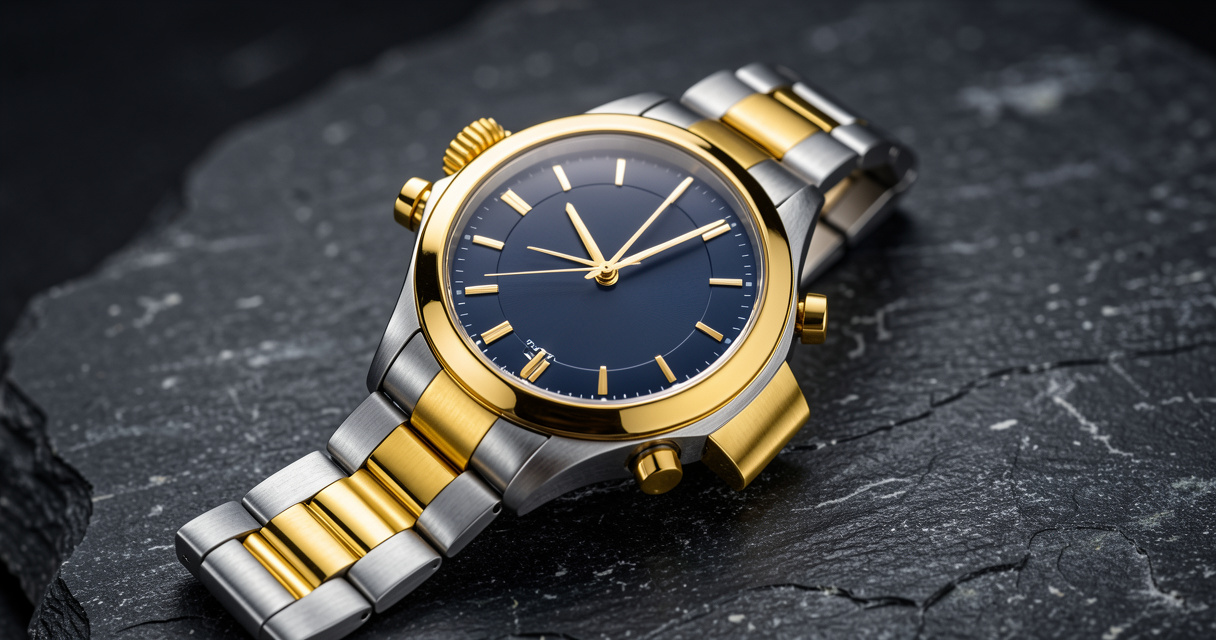
A two-tone watch combines two different metals in a single case and bracelet, most commonly stainless steel paired with yellow gold, rose gold, or platinum. The contrast lets one timepiece read as both sporty and dressy. Rolex trademarks its steel-and-18k-gold construction as Rolesor.
That is the plain definition. What it does not tell you is why the format works — or why the terminology confuses so many first-time buyers.
Chrono24 keeps the definition deliberately broad: two-tone is the combination of any two different materials. Wrist Aficionado narrows it usefully, framing two-tone as precious metal paired with durable steel to create a striking contrast that exudes both elegance and everyday practicality. Both are correct. One is a category, the other is a philosophy.
For the reader typing steel and gold watch into a search bar, the practical answer is this: you are looking at a steel case and bracelet whose mid-links and bezel are set in yellow gold, rose gold, or occasionally platinum. The result is a two-tone watch that carries visual warmth without solid-gold weight or solid-gold pricing. It is the middle path, and it earns its keep.
Two-Tone vs Bi-Metal vs Rolesor: The Terminology Decoded
Four terms get used interchangeably in listings and forums. They do not mean the same thing. Learn the distinctions and you will read any product page with fluency.
| Term | Meaning | Typical Example | Where You’ll See It |
|---|---|---|---|
| Two-tone | Two metals in one case and bracelet | Steel case with 18k yellow-gold bezel | Retail listings, enthusiast forums |
| Bi-metal | Industry synonym for two-tone construction | Any steel-plus-gold build | Manufacturer catalogues, auction notes |
| Rolesor | Rolex’s trademarked steel-and-18k-gold configuration | Submariner, Datejust, GMT-Master II in Rolesor | Rolex product pages, dealer language |
| Two-color | Two finishes on one metal, not two metals | Brushed and polished stainless steel | Case-finishing discussions, watch reviews |
| Gold-capped | Gold layer bonded to a base metal bracelet | Vintage 1970s-80s pieces | Auction catalogues, vintage listings |
The last two rows matter most. A two-color watch is not two-tone — it is one metal fooling the eye with contrasting finishes. And a gold-capped bracelet is not solid gold, however it photographs.
Two Metals, Three Finishes: What Actually Counts as Two-Tone
The confusion running through forum threads is whether a steel watch with a gold bezel qualifies as two-tone. It does. So does a steel bracelet with gold center links. So does a gold case on a steel bracelet, though that configuration is rarer and reads more formal.
What disqualifies a piece is monometal construction dressed with different finishes. A brushed-and-polished steel Datejust is a two-color watch. A steel Submariner with a gold-tone bezel insert is not two-tone. Only the presence of two genuinely different metals in the build earns the name.
Definition — Two-Tone Watch: A timepiece whose case, bezel, and bracelet combine two distinct metals — typically stainless steel with 18k yellow gold, rose gold, or platinum. The contrast produces a look that shifts between sporty and dressy, making one watch suitable for both tailoring and casual wear. Rolex brands its steel-and-18k-gold version as Rolesor.
Terminology settled, the more interesting question is why this format is back on desks, shelves, and wrists in 2026 — and why the pendulum is swinging toward warmth.
Why Two-Tone Watches Are Back in 2026
Quietly, this became the most talked-about metal pairing of the year. Not by volume of chatter — the watch world has plenty of that — but by the composition of buyers moving back toward warmth. Vogue’s editorial line was unambiguous: two-tone watches feel fresh, modern, and right for the times. That sentence lands differently once you notice how many silver pieces have been quietly rotated out of daily rotation in favour of yellow and rose.
This is a market cycle, not a coincidence. When jewellery swings — and 2026 has swung hard toward yellow gold — watches follow within eighteen months. The same diktat that put a gold signet ring back on the masculine hand has pulled the steel-and-gold bracelet out of storage. Buyers are not chasing excess. They are hedging: one watch that reads correctly with a navy suit, a stone-grey cashmere rollneck, and a pair of faded jeans.
Vogue called the moment. Reddit confirmed the demand. The are two tone watches still in style query that fills search autocomplete is asked by people who already suspect the answer is yes and want permission to act.
From 1980s Status Symbol to 2026 Wardrobe Staple
The 1980s association is the reason so many buyers pause. Two-tone carries the era’s fingerprints: oversized cases, wide bracelets, a certain shoulder-padded swagger. An r/Watches owner described his 36mm Datejust ref. 16013, circa 1983, as smaller than most modern watches and very 80s-feeling — and he meant it with affection, not as a warning.
That rehabilitation is the whole story. A 36mm case that read dated in 2005 reads classic in 2026. The proportions that once felt excessive now feel restrained next to 42mm steel divers. Two-tone has stopped being a costume and started being a canon — helped along by the same warm-metal cycle pulling yellow gold rings and silver jewellery back into the same outfit.
The Nostalgia Factor: Heirloom Watches Driving Demand
Consider the reader who inherits his father’s two-tone Datejust from 1983. He wears it reluctantly the first month — the bracelet feels dated, the gold reads loud. By month six, it has become the watch he reaches for first. The gold on his father’s wrist was never the point; the watch worked, and it worked with everything. That emotional arc is driving demand as much as any marketing cycle. Enthusiasts call it heirloom energy. We call it a valid reason to buy.
The dated-risk myth: Two-tone does not read vintage-classic automatically. Case size and bracelet width decide the outcome. Under 38mm with a tapered bracelet: timeless. Over 40mm with a wide, slab-sided bracelet: stuck in 1985. Choose proportions before you choose the brand.
That distinction between classic and dated feeds directly into the most consequential decision of the whole purchase: whether two-tone is the right metal tier at all.
Two-Tone vs Full Steel vs Solid Gold: Which Should You Buy?
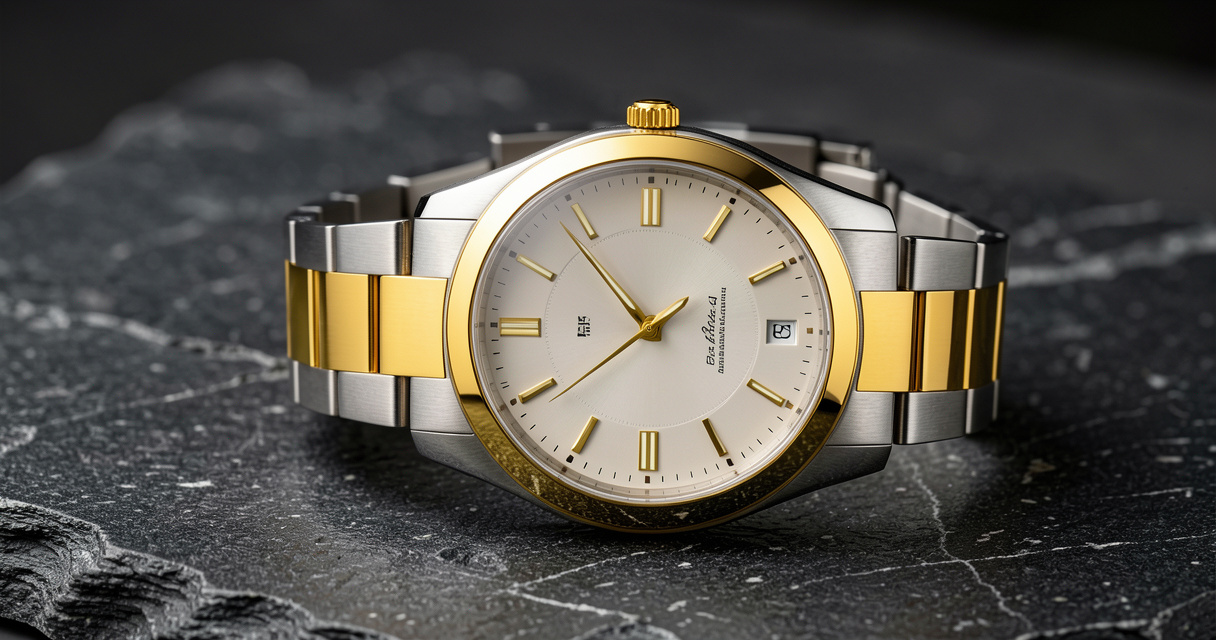
The three-way comparison almost nobody builds. Buyers get pushed toward one metal or the other by a sales script; the honest answer sits in a matrix of six criteria. Here is the two tone watch vs stainless steel question — and the third option every brand wants you to forget.
Price and Depreciation: How the Three Tiers Compare
Entry pricing tells the story immediately. A full-steel Swiss sports watch from Rolex, Omega, or Tudor usually sits between $7,000 and $11,000 new. Step up to Rolesor — the same model in steel-and-gold — and the number climbs 30 to 50 percent. Full 18k yellow or rose gold multiplies again, often to three times the steel price. There is no ambiguity about where two-tone sits: squarely in the middle.
Depreciation does not follow the same neat pattern. Solid gold watches carry a materially higher resale floor because the metal itself holds intrinsic value — the case is worth hundreds of dollars on its own in melt. Full steel sports pieces from the major houses hold value best on the secondary market, sometimes trading above retail. Two-tone typically depreciates faster than either because it lacks the purity of purpose each extreme offers. Buyers either want maximum value retention (steel) or maximum metal presence (gold). Two-tone attracts neither extreme.
That is a feature, not a fault — if you buy for wear and not for speculation. The two tone watch is designed for the person who wears one watch often and values its versatility over its exit price.
Durability, Scratches, and Daily Wear
Stainless steel and 18k gold are both excellent daily-wear materials, but they age very differently. Steel scratches show as light scuffs that polish out in minutes. Gold scratches — particularly on polished center links — show as deeper, more visible marks because the metal surface is softer. Wrist awareness matters more on a two-tone bracelet than on full steel, because visible wear lands on the shiny sections first.
Solid gold wears the same way but with a difference: any wear is wear on a solid metal that can be refinished without exposing anything beneath. The two-tone bracelet with solid gold links is comparable. The two-tone bracelet with gold caps is not — aggressive polishing can reach the base metal and end the party.
| Criterion | Two-Tone | Full Steel | Solid Gold |
|---|---|---|---|
| Entry price tier | Middle | Lowest | Highest |
| Resale behaviour | Softer than steel or gold | Strongest on popular sports models | Holds melt value, weaker on style |
| Scratch visibility | High on gold, low on steel | Low | High, but refinishable |
| Weight on wrist | Heavier than steel of same size | Baseline | Heaviest |
| Dress-code range | Widest — from tailoring to denim | Sporty to business-casual | Formal to statement |
| Service complexity | Highest — mixed-metal polishing | Lowest | Moderate |
Which One Matches Your Wardrobe and Lifestyle
- Choose two-tone if… you wear one watch most days, rotate between tailoring and casual, and want visual warmth without committing to a full-gold aesthetic or its price.
- Choose full steel if… you favour maximum durability, minimal servicing anxiety, and the strongest resale floor on popular sports references.
- Choose solid gold if… the metal itself is the point and you accept the higher entry price in exchange for intrinsic value and an unmistakably dressier read.
The comparison only matters once you know what the second metal actually is — and how it is built.
Materials and Metal Combinations: Yellow Gold, Rose Gold, Platinum, and Bronze
Here is the detail that separates two virtually identical listings by several thousand dollars: the construction of the eighteen-karat gold bracelet. Solid gold links, gold caps over a base metal, and gold plating on steel produce the same photograph and three completely different ownership experiences.
Solid Gold Links vs Gold Caps vs Gold Plating
Solid gold center links are the benchmark. Each mid-link is 18k gold, hallmarked as such, and refinishable without exposing anything beneath the surface. Cartier, Rolex, AP, and Patek all use this construction in their two-tone references. Five years in, with occasional polishing, a solid-link bracelet looks almost new.
Gold caps — a thicker bonded gold layer over steel or a base metal — were common in vintage pieces from the 1970s and 80s. They age gracefully when cared for. Two things kill them: aggressive polishing and chloride exposure. Once the cap wears through, the watch is a steel bracelet with gold-brown patches, and refinishing cannot help.
Gold plating, typically a few microns of electrolytic gold over steel, is the entry-level construction. It photographs well for the first year and dulls noticeably by year three with daily wear. Plated pieces are fine as a first taste of the format, but do not expect them to become heirlooms.
Matching Metal Tone to Skin Tone and Wardrobe
The other truth no competitor states plainly: the tone of the gold matters as much as the presence of it. Yellow gold flatters warmer complexions and pairs beautifully with navy, olive, brown, and cream. Rose gold — including Rolex’s copper-infused Everose — reads softer and suits cooler skin tones without the harshness some associate with yellow. A steel-and-white-gold combination is deliberately low-contrast, elegant on pale complexions and quietly modern on colourful wardrobes.
| Metal | Appearance | Durability | Best For | Watch It Appears On |
|---|---|---|---|---|
| 18k yellow gold | Warmest, traditional, most polarising | Excellent | Navy, olive, brown wardrobes | Rolex Submariner “Bluesy”, Datejust Rolesor |
| Rose gold / Everose | Soft, coppery warmth | Excellent | Cooler skin tones, modern tailoring | Rolex GMT-Master II Everose, Datejust 36 |
| White gold | Restrained, subtle contrast | Excellent | Minimalist taste | Datejust, Day-Date two-tone variants |
| Platinum | Cooler, denser, low-contrast | Outstanding | Understated luxury | Patek Nautilus two-tone references |
| Bronze | Patina-warm, entry-level | Moderate | Casual and experimental wear | Tudor Black Bay variants, microbrands |
Bronze and Alternative Metal Pairings
The most enthusiastic online voices on two-tone often cite steel with bronze as adding a beautiful flavour to watches. Tudor’s Black Bay Bronze and a handful of microbrands have proven the point. Bronze develops a living patina — changing colour with humidity and touch — that gives the same warm-versus-cool contrast as steel-and-gold, without the precious-metal price. It will not impress a collector at a dinner party. It will age better against a rotation of casual jackets and knitwear than any polished steel sports watch you can buy at the same price.
Verifying gold construction before you buy: Look for hallmarks on the clasp and caseback. Verify the reference number against the manufacturer’s catalogue. A magnet test is useful for spotting plated steel versus solid gold, but it will not distinguish gold caps from solid links — only bracelet photography and reference documentation will.
Once the metals are understood, the practical question becomes which references to consider — and the answer differs sharply by budget tier.
Best Two-Tone Watches and Brands to Know in 2026
Two-tone watches for men and two-tone watches for women share a canon. The differences sit in case size, bracelet integration, and dial — not in the metal formula. Here is the reference-specific roundup organised by budget, so you can self-select.
The Icons: Rolex Rolesor, AP Royal Oak, Patek Nautilus, Cartier
The Rolex two tone watch remains the reference point — the pairing every competing brand answers to. Rolesor models include the Submariner Date “Bluesy” (a blue dial and bezel against steel-and-gold), the Datejust 36 and 41 in various metal combinations, and the GMT-Master II Rolesor with its recognizable two-tone bracelet. The vintage benchmark is the Datejust ref. 16013, circa 1983, at 36mm — the case size that reads timeless where a 41mm reference reads dated.
Audemars Piguet’s Royal Oak two-tone references marry the octagonal bezel — a design signature with no equal in steel-and-gold — with a bracelet celebrated for its taper and finish. Patek Philippe’s Nautilus in two-tone remains one of the rarest formats in modern watchmaking, produced irregularly and trading significantly above retail on the secondary market. The Cartier Santos two-tone is the most versatile of the four: square-cased, integrated-bracelet, and equally at home with tailoring or knitwear. It is also the most size-inclusive, spanning small and large case options across the range.
The Accessible Tier: TAG Heuer, MICHELE, Olivia Burton, Kay
Below the Swiss giants sit brands making two-tone genuinely attainable. TAG Heuer builds a full men’s and women’s Swiss-made two-tone range — Carrera, Aquaracer, Formula 1 — with pricing starting in the low four figures. MICHELE’s diamond-set women’s two-tone pieces sit in the same consideration set for buyers who want the sparkle without the grand complication.
Olivia Burton’s two-tone watch collection totals 26 items, sold across the Sports Luxe, The England, Signature, and Classic collections, with case sizes spanning 29mm to 36mm (Olivia Burton brand catalogue, not dated). Kay runs a broad men’s and women’s two-tone assortment for buyers seeking a first taste of the format under $500.
Small-Wrist Picks: 29mm to 36mm Two-Tone Models
Readers searching for the best two tone watch for small wrists under 36mm should look at three specific reference families. The 36mm Rolex Datejust is the definitive answer — it has been the format’s canonical size since the 1970s and wears well on wrists from 14cm upward. The 32mm Cartier Santos Galbée is the dress option. Olivia Burton’s 29mm to 36mm range covers the accessible tier.
One warning worth spelling out: a thick case paired with a wide two-tone bracelet will overwhelm a slim wrist faster than steel ever could. Gold adds visual weight even before it adds physical grams. Always size by case diameter first, then confirm bracelet taper.
| Model / Brand | Metal Combo | Typical Case Size | Price Tier | Best For |
|---|---|---|---|---|
| Rolex Submariner “Bluesy” | Steel + 18k yellow gold | 40mm / 41mm | Luxury | Sporty daily wear |
| Rolex Datejust ref. 16013 (circa 1983) | Steel + 18k yellow gold | 36mm | Vintage luxury | Classic daily wear, heirloom |
| Audemars Piguet Royal Oak two-tone | Steel + 18k yellow or rose gold | 37mm / 41mm | Ultra-luxury | Collectors, statement wear |
| Patek Philippe Nautilus two-tone | Steel + rose gold | 38mm / 40mm | Ultra-luxury | Investment-grade format |
| Cartier Santos two-tone | Steel + 18k yellow gold | 32mm – 40mm | Luxury | Tailoring, unisex wear |
| TAG Heuer Carrera two-tone | Steel + yellow gold accent | 36mm – 41mm | Accessible luxury | First two-tone purchase |
| MICHELE women’s diamond two-tone | Steel + 18k gold plating | 29mm – 36mm | Mid-market | Diamond-set women’s daily |
| Olivia Burton two-tone | Steel + gold-tone | 29mm – 36mm | Entry | Accessible statement |
- Under $1,000, everyday wear: Olivia Burton two-tone or Kay men’s two-tone.
- $1,500 to $5,000, single-watch wardrobe: TAG Heuer or MICHELE two-tone.
- $10,000 and above, heirloom territory: Rolex Rolesor, Cartier Santos, AP Royal Oak, or Patek Nautilus.
How to Choose and Wear a Two-Tone Watch
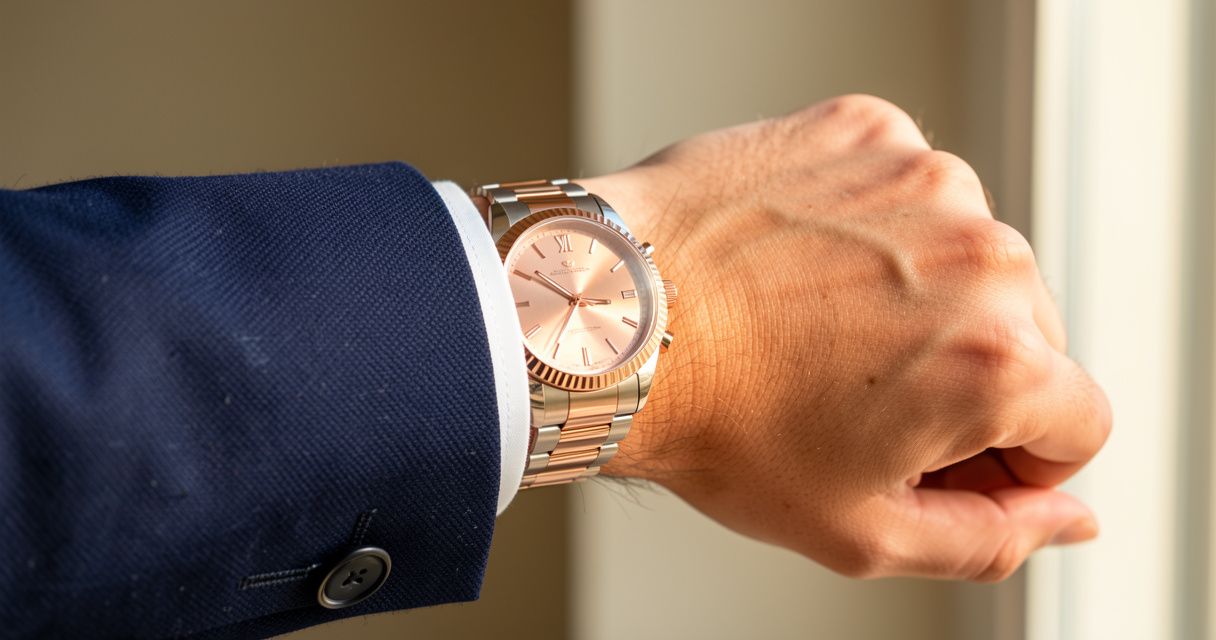
Buying is the easy part. The question no competitor answers cleanly is how to wear a two tone watch without it wearing you — sizing, styling, and the everyday-versus-occasion split.
Sizing a Two-Tone Watch to Your Wrist
Two-tone bracelets weigh 15 to 25 percent more than their full-steel equivalents, because gold is denser than steel. On a 7-inch wrist that weight is negligible. On a 6-inch wrist, it changes the balance perceptibly — sometimes for the better, sometimes not.
The rule of proportion: a case diameter of roughly 40 to 45 percent of wrist circumference reads classic. For a 16cm (6.3-inch) wrist, that is a 32mm to 36mm case. For a 19cm (7.5-inch) wrist, up to 42mm. Anything outside that range is a stylistic choice — the question is whether you can back it up with bracelet taper and dial restraint.
Outfit Pairing: Tailoring, Denim, and Metal-Matching Rules
Grey and navy tailoring pair beautifully with steel-and-yellow-gold. The metal warms the tailoring without competing with it. Denim and knitwear — cream, oatmeal, charcoal, navy — give the bracelet room to be the visual point without shouting. Avoid pairing a two-tone watch with a full yellow-gold ring on the same hand; two warm metals on adjacent fingers read as accidental rather than composed.
The one-warm-metal rule: If your watch carries gold, keep the rest of your hardware — cufflinks, belt buckle, ring — either matte, non-metal, or a single coordinating tone. Two competing warm metals on the same wrist is a styling error. One is a decision.
Everyday Wear vs Special Occasion
Can you wear a two tone watch every day? Yes — that is the entire reason the format survived the 1990s and why it is back in 2026. But the read changes depending on the case shape. A two-tone diver reads as a sports watch that happens to have gold on it. A two-tone dress watch with a roman-numeral dial reads as a formal piece. The same metal, two completely different wardrobes.
- Bracelet stretch — pull the bracelet between hands and check for sag between links.
- Center-link wear — look for dullness or pitting on the gold links, especially where the clasp closes.
- Clasp tightness — a loose clasp signals high hours of wear.
- Bezel scratches — deep gouges on a gold bezel are hard to refinish without losing line detail.
- Service history — a full Rolex or Patek service invoice is worth more than box alone.
- Box and papers — original documentation protects resale value significantly.
Choosing and wearing correctly only tells half the story. The other half is what happens after the honeymoon — when the bracelet picks up its first real scratch.
Ownership Reality: Value, Servicing, and Care
The section no retailer writes. The two tone watch resale value question and the servicing conversation are the two places buyers get surprised — usually unpleasantly — twelve to twenty-four months after purchase.
Resale and Depreciation: What the Market Actually Does
The broad pattern is not in two-tone’s favour. Rolex’s stainless-steel sports models — Submariner, GMT-Master, Daytona — hold value better than their Rolesor equivalents. Two-tone Datejusts trade at wider spreads over time; Submariner two-tone references depreciate faster than their steel counterparts. Solid gold carries a resale floor because of the metal, but its style attachment is weaker than steel’s. Two-tone sits between the two — the least protected of the three on a pure investment view.
Condition, box and papers, and reference popularity matter more than the two-tone configuration alone. A well-kept Rolesor Submariner with original documentation in a desirable reference number will hold value better than a scuffed steel Datejust with no history. The metal sets the baseline; the piece sets the outcome.
Servicing a Mixed-Metal Bracelet Without Losing the Gold
Servicing two-tone is not identical to servicing steel, and this is where owners get caught. Gold polishes and scratches more visibly than steel. A refinished center link that has been polished repeatedly loses definition; the crisp edge between polished gold and brushed steel gradually blurs into a soft grey-brown. The contrast that made the bracelet beautiful disappears with each over-eager refinish.
The correct handling is a light refinish every five to seven years, using a technician experienced with mixed-metal bracelets — preferably the original manufacturer, since Rolex and Cartier refinish to factory specification. Independent servicing should be approached with caution when the bracelet is two-tone. Steel is forgiving. Gold is not.
The polishing risk: Aggressive refinishing erases gold detail and flattens case edges permanently. A two-tone bracelet can be refinished twice if handled carefully. A third pass usually ends the contrast. Ask for a quote and a reference from any technician before you hand over the watch.
Daily Care Routine and Storage
| Task | Frequency | What to Use | What to Avoid |
|---|---|---|---|
| Cleaning | Monthly | Warm water, mild soap, soft brush | Ultrasonic cleaners on gold-plated pieces |
| Drying | After every wear | Soft microfiber cloth | Air-drying (moisture in bracelet pins) |
| Polishing | Every 5-7 years | Factory-spec light refinish | Abrasive polish, home polishing kits |
| Storage | Daily | Watch roll or individual case | Loose in a drawer next to other metals |
| Water exposure | As rated | Rinsed after saltwater or chlorine | Hot showers (discolours gold plating) |
| Servicing | Every 5-7 years | Manufacturer or approved technician | Generalist service centres on two-tone pieces |
Care routines, resale realities, and servicing discipline all point toward the same conclusion — and that conclusion is worth stating plainly.
Frequently Asked Questions
Style and Trend Questions
Is a two-tone watch outdated in 2026?
No — the format has cycled back on the strength of the wider return of warm metals. Restrained case sizes (36mm to 39mm) keep it reading classic rather than 1980s excess. In 2026 it is a considered choice, not a novelty, and demand has risen steadily since 2023.
Can a man wear a two-tone watch?
Yes — two-tone is fully unisex. Rolex, Cartier, and TAG Heuer market the same ranges to men and women, differing only in case size and bracelet dimensions. Case diameter and bracelet taper decide the read of a two-tone watch, not the gender label on the product page.
Is a two-tone watch too flashy for everyday wear?
Not if you choose the right configuration. A steel-and-gold bracelet with a modest bezel and neutral dial reads as classic, not loud. The flashy reputation belongs to oversized gold-capped pieces from the 1980s. Under 38mm with a tapered bracelet, daily wear is entirely comfortable in any environment.
Buying, Value, and Maintenance Questions
Are two-tone watches real gold?
It depends on the construction. Three tiers exist: solid 18k gold center links, gold caps over a base metal, and gold plating on steel. Only the first is fully refinishable and heirloom-grade. Verify hallmarks on the clasp and caseback, and research the reference number before buying.
Do two-tone watches hold their value?
Generally less consistently than full stainless-steel sports models from the same brand, and less than solid gold on a melt-value basis. Reference popularity, condition, and box-and-papers matter more than the two-tone configuration alone. Buy two-tone for wear, not speculation.
What is the best two-tone watch for a small wrist?
Look at the 29mm to 36mm range. The 36mm Rolex Datejust — including vintage references like the ref. 16013 — is the benchmark. The 32mm Cartier Santos Galbée is the dress option. Avoid thick cases with wide bracelets, which overwhelm slim wrists faster in gold than in steel.
How do I clean and maintain a two-tone watch bracelet?
Warm water with mild soap and a soft brush, once a month. Dry thoroughly with a microfiber cloth after every wear. Avoid abrasive polish on gold sections and limit refinishing to preserve the brushed-and-polished contrast. Manufacturer servicing every five to seven years is the safest long-term plan.
Is two-tone more expensive than stainless steel?
Yes — typically 30 to 50 percent more on the same reference, because of the precious-metal content in the bezel and bracelet. Solid gold sits above that again, often tripling the steel price. Two-tone is the middle tier of the three-metal hierarchy.
What is a two-tone watch good for?
A two-tone watch is best for owners who want one piece that transitions between tailoring and casual wear. It carries more visual warmth than steel and far more attainability than solid gold. The format’s defining strength is versatility — the same watch looks correct at a boardroom table and a Saturday lunch.
The Verdict on Two-Tone in 2026
A two-tone watch is a two-metal construction — most often stainless steel paired with yellow gold, rose gold, or platinum, and branded by Rolex as Rolesor. It occupies the middle ownership tier: more warmth and presence than full steel, far more attainable than solid gold, with resale behaviour that lands between the two rather than above either.
Construction matters more than marketing. Solid gold links, gold caps, and plating behave very differently over five years of wear, and the price gap between them is worth understanding before you sign. Fit and metal tone decide satisfaction more than the badge on the dial — a 36mm Rolesor Datejust on a 16cm wrist will simply work better than a 41mm version of the same reference.
The steel-and-gold timepiece is not the era-defining watch of 2026. It is the quietly correct one — the piece that does the work of three without asking for the ceremony of one. For buyers who value curation over quantity, that is the entire argument. Worth every mile of the search.
So: after weighing metal, size, and value, is a two-tone watch the one piece that finally does the job of three?