


Reading time: 15 min
Table of Contents
- Key Takeaways
- What Is a Family Compound? Understanding the Modern Multigenerational Estate
- Typical Features of a Family Compound
- The Resurgence of Communal Living
- Types of Family Compounds: Ready-Made vs. Build-Your-Own
- Top Locations for Family Compounds in 2026: Where to Buy
- Western North Carolina – Blue Ridge Mountain Estates
- Texas Hill Country – Ranch-Style Compounds
- Northeast Options: New York and Pennsylvania
- California Dream – High-End Coastal Compounds
- Family Compound Price Ranges: From $328,000 to $22 Million
- Entry-Level Compounds: Under $1 Million
- Mid-Range Estates: $1M – $5M
- Ultra-Premium Compounds: $5M – $22M+
- Key Features to Look For When Buying a Family Compound
- Water, Septic, and Utilities
- Internet and Connectivity
- Shared Amenities: Pool, Barn, Guest Cottages
- Pre-Purchase Checklist: 7 Critical Checks
- Legal and Zoning Considerations for Family Compounds
- Subdivision Regulations and Minimum Lot Sizes
- Ownership Structures: Joint Tenancy, LLCs, or Family Trusts
- Why You Need a Land Attorney
- Financing and Ownership Structures: How to Buy a Compound With Family or Friends
- Land Loans vs. Traditional Mortgages
- Co-Borrowing and Joint Ownership Agreements
- Cost-Sharing Models for Utilities and Maintenance
- Ready-Made vs. Build-Your-Own: Which Path Is Right for You?
- Advantages of Buying an Existing Compound
- Advantages of Building Your Own
- Turnkey Compound Definition
- How to Start Your Own Multi-Family Compound From Scratch
- Step 1: Find Suitable Land
- Step 2: Verify Zoning and Subdivision Limits
- Step 3: Plan the Layout and Utilities
- Step 4: Build Infrastructure
- Step 5: Establish a Shared Ownership Agreement
- 10-Step Checklist for Building a Family Compound
- Frequently Asked Questions
- Your Family Compound Awaits
Key Takeaways
- Definition – A family compound comprises multiple detached homes on shared land, offering both privacy and community.
- Price Range – From $328,000 to $22 million, varying by acreage, location, and amenities.
- Legal Complexity – Zoning and subdivision laws differ by county; always consult a land attorney.
- Financing – Land loans and co-borrowing are key; traditional mortgages may not fit.
Family compounds for sale range from $328,000 to $22 million—and the market is booming in 2026. But finding the right one requires more than a simple search. Buyers searching for family compounds for sale are overwhelmed by scattered listings, lack of price transparency, and no centralized guide covering legal, financial, and lifestyle factors. Whether you dream of a multigenerational estate in the Blue Ridge Mountains or a private rural retreat for multiple families, this guide will equip you with the knowledge to buy a family compound with confidence.
What Is a Family Compound? Understanding the Modern Multigenerational Estate
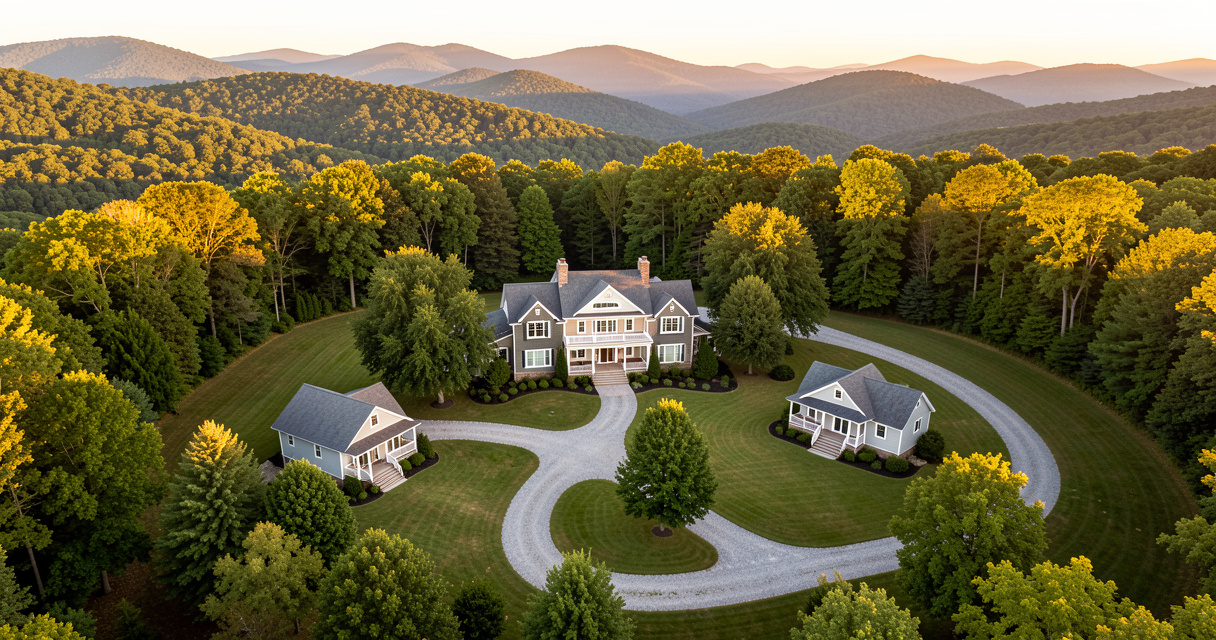
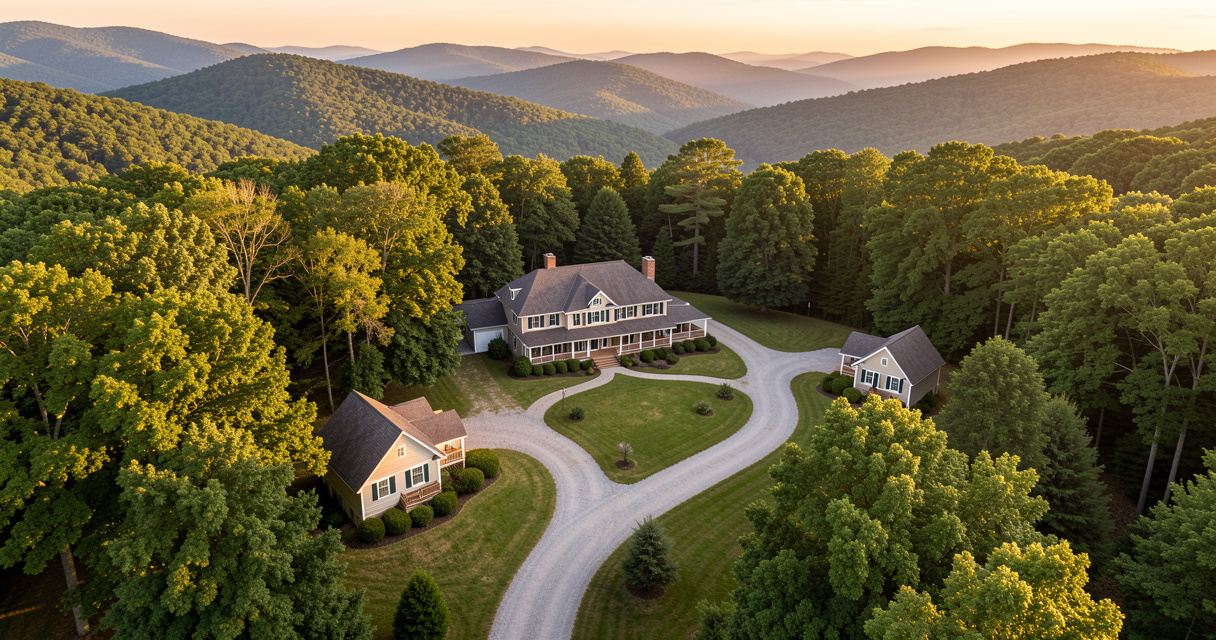
A family compound is a private estate consisting of multiple separate homes on a single large parcel of land, designed for multigenerational or multiple-family living. Unlike multi-family buildings, compounds offer detached dwellings, shared outdoor amenities, and significant privacy. They range from rustic mountain retreats to luxury ranch estates, often featuring guest cottages, barns, swimming pools, and communal gathering spaces.
Typical Features of a Family Compound
- Two or more detached dwellings
- Shared land (e.g., 5+ acres)
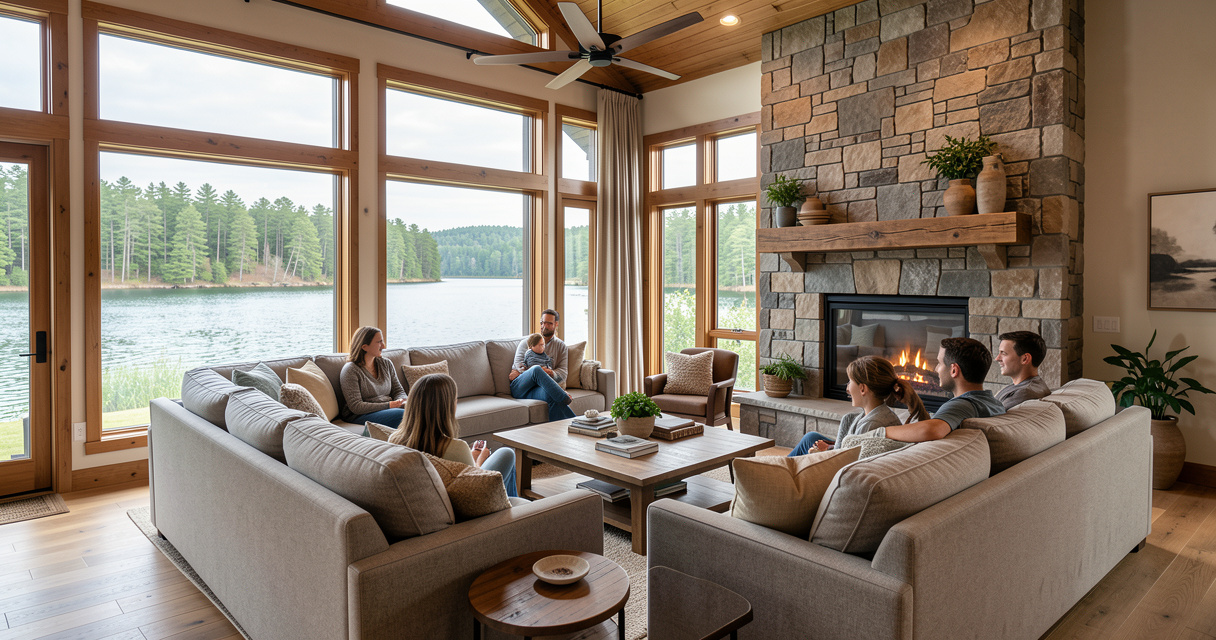
- Common areas – pool, barn, fireplace lounge
- Privacy buffers between homes
- Single ownership or shared via LLC
The Resurgence of Communal Living
The modern family compound movement is not your grandparents’ commune. It’s a sophisticated response to the desire for closeness without sacrificing autonomy. Groups of friends are buying former summer camps, like the one in Comfort, Texas, described by Trulia as “Friendship Row” – a cluster of cabins with a central lodge. “We wanted to raise our kids together but still have our own space,” one owner shared. This is the new multigenerational living: intentional, planned, and private.
Types of Family Compounds: Ready-Made vs. Build-Your-Own
Some compounds come fully built – turnkey estates with multiple homes, landscaping, and utilities already in place. Others are raw land waiting for your vision. The keyword multigenerational estates for sale often points to the former, but building from scratch gives you total control over layout and design. The key question: do you want to move in next month or shape every detail over two years?
Now that you understand what a family compound is, let’s explore the best places to plant your roots.
Top Locations for Family Compounds in 2026: Where to Buy
The best regions for multi-family land for sale offer a blend of accessibility, natural beauty, and lenient zoning. Our research across Noble & Company Realty and Farm & Ranch listings reveals four standout markets.
Western North Carolina – Blue Ridge Mountain Estates
With over 2,083 results for family compounds alone, Western NC dominates the market. A prime example: a 16.77-acre compound in Horse Shoe, NC, listed at $4,900,000, featuring three bedrooms, four baths, and mountain views. The region’s temperate climate and proximity to Asheville make it a perennial favorite. “Buyers are looking for land that feels remote but is only 20 minutes from a good farmers’ market,” notes a local agent.
Texas Hill Country – Ranch-Style Compounds
Pine Hills Ranch in Smithville, TX, spans 557.9 acres with multiple homes and private access, listed as a turnkey compound less than an hour from Austin. Texas offers sprawling ranches and relatively simple subdivision rules, ideal for buyers seeking large acreage. Price range: $929,000 for 12.5 acres to multi-million dollar spreads.
Northeast Options: New York and Pennsylvania
Upstate New York and Pennsylvania offer affordable land near major cities. The Catskills and Finger Lakes regions have seen a surge in multigenerational purchases. Smaller parcels (5–20 acres) with existing structures can be found under $500,000, but check local zoning – some towns limit the number of dwellings per lot.
California Dream – High-End Coastal Compounds
For those with deeper pockets, coastal California compounds combine ocean views with privacy. Montecito and Santa Barbara are hotspots, with prices starting at $10 million. These often come with guest houses, infinity pools, and vineyard views. However, California’s coastal zoning can be restrictive – always verify buildable area.
| Region | Price Range | Average Acreage | Number of Homes | Notable Features |
|---|---|---|---|---|
| Western NC | $595K – $22M | 10–1,500 | 2–5 | Mountain views, waterfalls |
| Texas Hill Country | $929K – $5M+ | 12–560 | 3–6 | Rivers, hunting land |
| Upstate NY | $328K – $2M | 5–100 | 2–4 | Forests, lake access |
| Coastal California | $10M – $25M+ | 5–50 | 3–8 | Ocean views, luxury finishes |
- Climate & disaster risk: Check fire zones and flood plains.
- Local subdivision rules: Can you build additional structures?
- Proximity to healthcare/schools: Essential for multigenerational families.
Once you’ve pinpointed a region, the next question is budget. Let’s break down what you can actually expect to pay.
Family Compound Price Ranges: From $328,000 to $22 Million
The market for compound houses with multiple homes spans a staggering price spectrum. According to Noble & Company listings (2026), you can find a property in Clinton, SC for $328,000 on 0.86 acres, or a 1,429-acre estate in Murphy, NC for $22,000,000. The median for a functional compound hovers around $1–2 million – but hidden costs matter. Per-acre cost often decreases with larger parcels, but infrastructure expenses increase.
Entry-Level Compounds: Under $1 Million
These are often smaller parcels (1–10 acres) with one main home and a guest cottage. Lake Toxaway, NC offers a 3-bedroom compound at $595,000 – ideal for a family looking to start small. Expect older construction and shared utilities. “You can find diamonds in the rough, but always budget for renovations,” warns a land broker.
Mid-Range Estates: $1M – $5M
The sweet spot for most buyers. At $4.9M, the Horse Shoe, NC property includes a main house, separate guest quarters, and a barn on 16.77 acres. You also get better amenities – pools, ponds, and manicured landscapes. Many properties in this range are turnkey.
Ultra-Premium Compounds: $5M – $22M+
These are vast estates, often with multiple luxury homes, private lakes, airstrips, and equestrian facilities. The Murphy, NC property at $22M includes 1,429 acres and substantial income potential from timber. Tip: Factor in land taxes and shared maintenance costs when comparing list prices.
| Price Tier | Example Property | Acreage | Key Amenities |
|---|---|---|---|
| Under $1M | Clinton, SC – $328K | 0.86 acres | Single home, small lot |
| $1M – $5M | Horse Shoe, NC – $4.9M | 16.77 acres | Main house, guest cottage, barn |
| $5M+ | Murphy, NC – $22M | 1,429 acres | Multiple homes, lake, timber |
Budget is only one piece of the puzzle. The features that define a great compound go far beyond square footage.
Key Features to Look For When Buying a Family Compound
When searching for large acreage properties with guest houses, infrastructure determines livability. A stunning setting means little if the well runs dry or the internet is dial-up. Here’s what to inspect closely.
Water, Septic, and Utilities
For multiple households, a single well may not suffice. Test water flow and quality. Septic systems must be designed for the number of bedrooms – exceeding capacity can cost tens of thousands. Check whether utilities are underground or need to be buried.
Internet and Connectivity
Remote work demands reliable connectivity. Properties like the Kaw Lake listing in Oklahoma boast fiber-optic availability. “We wouldn’t consider a property without high-speed internet – it’s non-negotiable for our family,” says a recent buyer. Satellite options exist but add monthly costs.
Shared Amenities: Pool, Barn, Guest Cottages
The best compounds create shared spaces that become the heart of family gatherings. A pool, outdoor kitchen, or barn with a gathering area can transform your property. But remember: shared amenities mean shared maintenance. Establish a fund for repairs from day one.
Pre-Purchase Checklist: 7 Critical Checks
- Well water test – flow rate and purity
- Septic capacity – can it handle multiple homes?
- Road access and snow removal agreement
- Fiber or high-speed internet availability
- Zoning for multiple dwellings (verify with county)
- Shared maintenance agreement (if multiple owners)
- Soil and flood zone assessment
Before you get excited about that mountain view, let’s talk about the legal hoops that can make or break your dream compound.
Legal and Zoning Considerations for Family Compounds
The single biggest surprise for buyers is zoning for multiple homes on one parcel. Many counties restrict the number of dwellings per lot, and violating these rules can lead to fines or forced removal. A land attorney is not optional – it’s essential.
Subdivision Regulations and Minimum Lot Sizes
Counties often require minimum acreage per home. For example, if the rule is 5 acres per dwelling and you want three homes, you need at least 15 acres. Some areas allow cluster developments where homes can be closer if you preserve open space. Warning: “Proceed with caution – many counties restrict the number of dwellings per parcel. Always verify zoning before making an offer.”
Ownership Structures: Joint Tenancy, LLCs, or Family Trusts
How you hold the title matters. If multiple families buy together, a tenancy-in-common agreement spells out percentages and usage rights. An LLC can simplify taxes and liability. For estate planning, a family trust keeps the compound intact across generations. “We used an LLC for our four-family compound – it made financing and insurance much easier,” shares a buyer from the Rethink Rural feature.
Why You Need a Land Attorney
Beth and Cheryl’s story from Rethink Rural illustrates the path less traveled: they bought adjacent parcels and used fencing to create a de facto compound while keeping lots separate. This approach bypassed subdivision laws but required careful legal documentation. A local attorney who understands rural property law is worth every mile.
With legal groundwork laid, let’s tackle the financial side – how to pay for a compound when you’re pooling resources with family or friends.
Financing and Ownership Structures: How to Buy a Compound With Family or Friends
One of the most common questions we hear: “Can you finance a family compound?” Yes, but the path differs from a standard home purchase. Shared ownership real estate requires careful planning.
Land Loans vs. Traditional Mortgages
If the property is raw land or has multiple structures, a conventional mortgage may not apply. Land loans typically require higher down payments (25–50%) and have shorter terms. Construction loans can finance building, but you’ll need a clear plan and permits. “Work with a land lender who specializes in rural properties – they understand the unique valuation of land with multiple buildable sites,” advises a loan officer.
| Financing Type | Best For | Down Payment | Interest Rate Range |
|---|---|---|---|
| Land Loan | Raw land with future building plans | 25–50% | 6–9% |
| Conventional Mortgage | Turnkey compound with single title | 10–20% | 5–7% |
| Construction Loan | Building from scratch | 20–30% | 6–8% |
| Portfolio Loan (Local Bank) | Custom structures, multiple owners | Varies | Negotiable |
Co-Borrowing and Joint Ownership Agreements
When buying with family, all parties typically need to be on the loan. Lenders evaluate combined credit scores and debt-to-income ratios. A joint ownership agreement spells out who pays what, how decisions are made, and what happens if someone wants to sell. “We drafted a simple agreement that covers everything from utility bills to guest limits – it prevents arguments,” shares the Warner family from Rethink Rural.
Cost-Sharing Models for Utilities and Maintenance
Set up a shared account for taxes, insurance, and maintenance. Many compounds divide costs by square footage or number of occupants. Transparency is key – use a digital spreadsheet or a property management app to track expenses.
Now that you understand the financial structure, you face a strategic choice: buy a compound that’s already built, or build your own from the ground up.
Ready-Made vs. Build-Your-Own: Which Path Is Right for You?
Both options have passionate advocates. The decision often comes down to timeline, customization, and tolerance for uncertainty.
Advantages of Buying an Existing Compound
Turnkey compounds – like those listed with turnkey family compounds for sale – let you move in immediately. Everything is already built: homes, utilities, landscaping. You can see exactly what you’re getting. The downside: less control over layout and style. You might inherit someone else’s taste. Price premium is often 10–20% above the cost of building.
Advantages of Building Your Own
Building from scratch gives you total freedom – choose the land, design each home to suit different generations, and incorporate eco-friendly systems like solar or rainwater harvesting. The catch: it takes 1–3 years, requires constant decision-making, and costs can spiral without a fixed-price contract. “We built our compound over two summers,” says a family in Colorado. “The hardest part was coordinating contractors for five separate structures.”
Turnkey Compound Definition
A turnkey compound is a property that is fully built, often with multiple homes, ready for immediate occupancy. No construction required – just bring your furniture.
If building your own feels like the right adventure, here’s how to start from scratch, step by step.
How to Start Your Own Multi-Family Compound From Scratch
Creating a compound from raw land is a rewarding but complex journey. How to start a family compound begins with the right parcel and meticulous planning. Here’s the process that successful buyers follow.
Step 1: Find Suitable Land
Look for parcels with multiple buildable sites: flat or gently sloping terrain, southern exposure, and access to water. Use platforms like LandWatch and local real estate agents specializing in rural tracts. The Warner family from Rethink Rural found their land by driving back roads and asking neighbors. “We bought adjacent parcels over three years,” they explain. “Each addition made the compound stronger.”
Step 2: Verify Zoning and Subdivision Limits
Before making an offer, confirm with the county planning department how many dwellings are allowed. Some counties offer “family compound” exemptions if the homes are for immediate relatives. Always get this in writing.
Step 3: Plan the Layout and Utilities
Work with a land surveyor and architect. Position homes for privacy (at least 200 feet apart) while clustering shared amenities. Plan the well, septic, and utility lines to minimize disruption. A preliminary layout helps you determine if the land can support your vision.
Step 4: Build Infrastructure
Roads, wells, septic, and electrical lines come first. Budget for these before any homes go up. Many rural parcels require a long driveway – account for gravel, grading, and drainage. Fiber-optic internet may need to be brought in by the utility company, which can take months.
Step 5: Establish a Shared Ownership Agreement
Even if you’re building for your own family, document how the property will be used and maintained. If multiple families are involved, a formal agreement covers common areas, cost sharing, and dispute resolution. Pro tip: Include a buyout clause so any member can exit without fracturing the compound.
10-Step Checklist for Building a Family Compound
- Define family needs and budget
- Research regions and visit
- Find land with multiple buildable sites
- Verify zoning and subdivision rules
- Hire a land attorney and surveyor
- Secure financing (land loan or construction loan)
- Design site plan and home layouts
- Install infrastructure (road, well, septic, power, internet)
- Build homes (phase 1, 2, etc.)
- Create shared governance and maintenance plan
With the blueprint in hand, you’re ready to turn your multigenerational dream into reality. But before you sign anything, let’s address the most common questions buyers ask.
Frequently Asked Questions
What is the average price of a family compound in 2026?
Based on current listings, prices range from $328,000 for a small 0.86-acre property with a single home up to $22 million for a 1,429-acre estate with multiple dwellings. The median is around $1–2 million for a functional compound.
Do I need special insurance for a family compound?
Yes, standard homeowner’s insurance often doesn’t cover multiple structures or shared ownership. You may need a farm or ranch policy, landlord insurance for guest houses, and liability coverage for common areas.
Can I use a VA or FHA loan to buy a family compound?
VA and FHA loans generally require a single-family residence and may not cover multiple homes on one parcel. Consider a conventional loan, land loan, or portfolio loan from a local bank.
How much land do you need for a family compound?
It depends on the number of homes and desired privacy. Mini compounds can work on 5–10 acres with careful layout. Most luxury compounds in our research range from 12 to 1,400 acres.
Are family compounds a good investment?
They can be, especially in rural areas appreciating in value due to remote work trends. However, consider liquidity – selling a compound can take longer than a standard home. Focus on location and infrastructure.
What is the difference between a family compound and a multi-family home?
A multi-family home (duplex, triplex) has shared walls and a single owner. A family compound consists of separate, detached homes on one or more parcels of land, often with shared amenities and more privacy.
How do taxes work for a family compound owned by multiple families?
If each family owns a separate parcel, property taxes are individual. If owned jointly via an LLC or trust, tax liability is shared. Consult a CPA about potential 1031 exchanges or estate planning benefits.
Your Family Compound Awaits
We’ve covered the landscape from $328,000 to $22 million, navigated zoning hurdles, and laid out financing options. The perfect family compound is out there – but it takes the right knowledge and team to bring your multigenerational vision to life. Start your search today with our checklist in hand.
Recap the essentials:
- Family compounds are defined by multiple detached homes on shared land, offering privacy and community.
- Prices vary dramatically by region and acreage; always factor in hidden costs like zoning compliance and infrastructure.
- Before buying, verify local subdivision laws and consider a land lender for financing.
- Whether you buy a turnkey compound or build from scratch, careful planning with an attorney and surveyor is essential.
What’s your next step? Explore listings, call a local land attorney, and start turning your compound dream into a tangible estate. The right property is waiting.