

Reading time: 18 min
Table of Contents
- Key takeaways
- How We Ranked the Best Watch Brands for Women in 2026
- The Five Criteria We Scored Every Brand On
- Why 2026 Buying Habits Look Different
- The Top Luxury Watch Brands for Women in 2026
- Rolex: The Resale Liquidity Leader
- Cartier: Design First, Watchmaker Second
- Omega and Patek Philippe: Craftsmanship at Different Price Points
- Audemars Piguet, Vacheron Constantin, and Tudor: The Specialist Picks
- Investment Value: Which Women’s Watches Actually Hold Their Price
- Production Volume and Why Scarcity Drives Premiums
- Rolex Lady-Datejust and Cartier Tank: The Safe Bets
- What Kills a Watch’s Resale Value
- Entry-Level Luxury: The Best Brands Under $5,000
- Longines and Tissot: Swiss Credibility on a Budget
- Tudor and Movado: Heritage and Design Access
- When to Stretch Your Budget and When to Stop
- Case Sizes, Metals, and Dials: What Actually Fits a Woman’s Wrist
- Measuring Your Wrist Before You Buy
- 31mm vs 34mm vs 36mm: How Each Size Reads
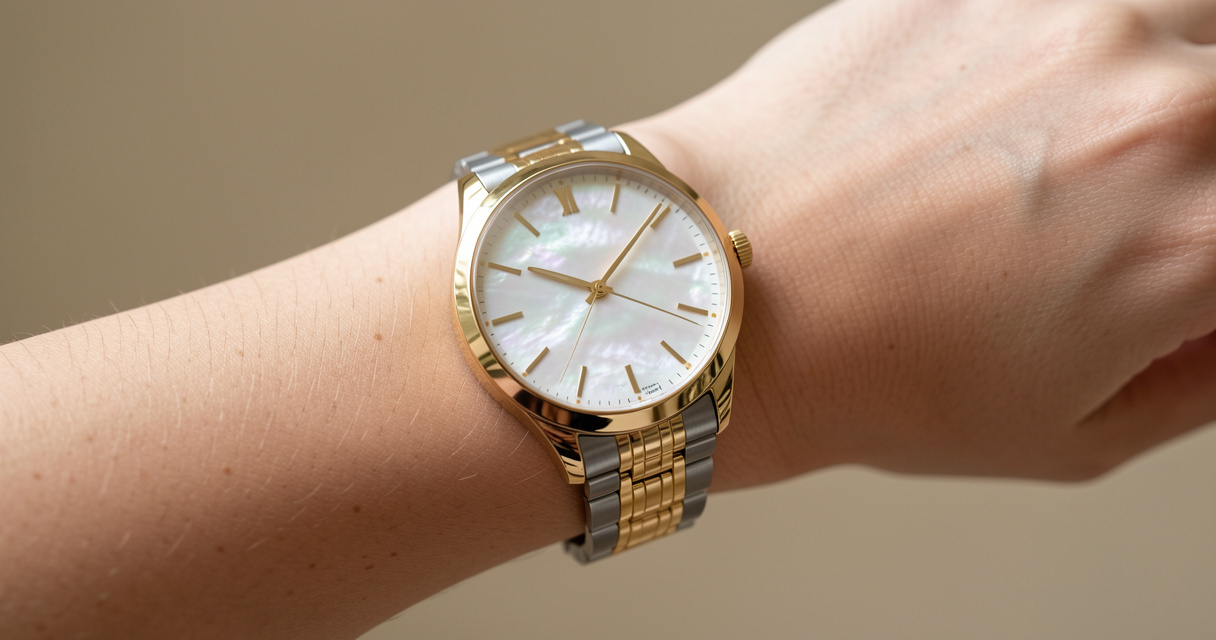
- Two-Tone Steel and Gold: The Most Versatile Metal Choice
- Dials and Embellishment: Mother-of-Pearl, Diamonds, and Sapphire Crystal
- Automatic vs Quartz: The Movement Decision That Defines Long-Term Ownership
- What Automatic Actually Means in Daily Wear
- Where Quartz Still Wins
- Servicing Costs and Ownership Reality
- How to Choose: Matching the Brand to Your Budget and Lifestyle
- Three Buyer Profiles, Three Shortlists
- New Versus Pre-Owned: The Real Trade-Off
- Questions to Ask Before You Pay
- Frequently Asked Questions About Women’s Watch Brands
- The Verdict: What the Finest Women’s Watch Brands of 2026 Actually Deliver
Key takeaways
- Rolex and Cartier lead the category through resale liquidity and design authority, with the Lady-Datejust and the Tank as the defining references.
- 31mm to 36mm is now the established everyday case window for women’s watches — the 26mm profile of the past is finished.
- Audemars Piguet’s limited output, roughly 50,000 watches a year against Rolex’s one million, is what drives secondary-market premiums of 25% to 50% on core steel Royal Oak references.
- Longines and Tissot deliver genuine Swiss credibility under $5,000 without the resale curves of the major houses — a fair trade, not a compromise.
The gap between one million and fifty thousand is where this list begins. Rolex produces roughly one million watches a year. Audemars Piguet produces about fifty thousand. That arithmetic is the reason core steel Royal Oak references trade 25% to 50% above original retail on the secondary market while most references merely hold their ground — and it is why any ranking of the best watch brands for women that ignores production volume leaves the buyer exactly where she started.
Most lists of luxury watch brands for women recycle the same five names and never answer the questions that decide a purchase. Which case size fits the wrist in front of you? Automatic or quartz? Which references still command a price five years out? The finest women’s watch brands of 2026 are not the ones with the loudest campaigns. They are the houses whose materials, mechanics, and secondary-market performance reward a decade of ownership rather than a single season.
This is the edit: the best women’s watches 2026 has to offer, scored on movement quality, case materials, sizing range, and resale strength, then mapped to real budgets and real wrists. The kind of guide that treats a luxury watch as the durable asset it has quietly become. Here is the ranking.
How We Ranked the Best Watch Brands for Women in 2026
Rankings are easy to publish and useless without terms. Before scoring a single brand, we set five criteria that separate a genuine watch from an expensive bracelet with a dial attached. Those criteria drive every judgment that follows — and they should drive yours.
The Five Criteria We Scored Every Brand On
Each brand was measured against five standards, each with a defined benchmark for what good actually looks like:
- Movement type and provenance. An in-house or proven Swiss automatic beats a generic quartz module for longevity. What good looks like: a mechanical calibre with a documented service history and a known manufacturer.
- Case material integrity. Solid stainless steel or solid 18k gold only. Plating and gold-fill never survive a decade of daily wear. What good looks like: a caseback stamped 750 for 18k gold or 904L/316L for steel.
- Case-size range for women. A brand that offers 28mm through 36mm serves more wrists than one that offers a single size. What good looks like: at least three sizes across a single collection.
- Sapphire crystal. Scratch-resistant, standard above entry luxury, and the first item to verify in a boutique. What good looks like: sapphire front and, ideally, sapphire caseback.
- Resale retention. Measured on core women’s references, not aspirational auction outliers. What good looks like: 80% or better of retail after three years.
Why 2026 Buying Habits Look Different
The 2026 buyer is not shopping for a birthday accessory. Watch specialists across Europe and North America report the same shift: women are purchasing timepieces to commemorate achievements — a promotion, a launch, a decade in a career — and treating the piece as an asset rather than a wardrobe addition. That changes the questions. A watch bought to mark a milestone is bought to last; a watch bought to match one dress is bought to be replaced.
Case sizes between 31mm and 36mm have become the established everyday standard for women’s watches, and two-tone steel and gold remains the most versatile metal choice on the market because it bridges different pieces of jewelry without forcing a match. Know those two facts and half of the category’s mystique evaporates.
Definition: solid gold versus gold-filled versus gold-plated. A solid 18k gold case contains 75% pure gold throughout — it can be polished, serviced, and worn for fifty years. Gold-filled is a thin bonded layer of gold over brass; it wears through at the crown and lugs. Gold-plated is a micron-thin coating that fades within three to five years of daily use. Only the first belongs on a long-term purchase.
With the terms set, here is how the twelve houses actually separate.
The Top Luxury Watch Brands for Women in 2026
The best watch brands for women in 2026 are:
- Cartier — design authority through the Tank and Panthère.
- Rolex — resale liquidity through the Lady-Datejust and the Datejust 31.
- Omega — engineering value through the Constellation and De Ville.
- Patek Philippe — heritage and scarcity through the Nautilus and Twenty~4.
- Audemars Piguet — structural scarcity through the Royal Oak.
- Vacheron Constantin — hand-finishing and métiers d’art.
- Tudor — Swiss quality without the waiting list.
- Longines and Tissot — the entry-luxury anchors.
Rolex, Cartier, Omega, and Patek Philippe consistently command the bulk of collector attention across both primary and secondary markets, according to SwissWatchExpo and The Watch Club (2026). The four houses that follow them — Audemars Piguet, Vacheron Constantin, Tudor, and the entry tier — earn their place through specialist value rather than name recognition alone.
Rolex: The Resale Liquidity Leader
No brand converts prestige into cash faster. The Rolex Lady-Datejust in 28mm, the Datejust 31, and the Datejust 36 form the single most liquid trio of women’s references on the secondary market — you can sell any of them within a week at a fair price, and that is the whole point. Rolex’s catalog runs from steel Oyster Perpetual at around $6,500 to solid yellow-gold Lady-Datejust models past $40,000, and the range means almost any budget can enter the house without compromise. What Rolex does better than anyone: protect the value of the watch you just bought.
Cartier: Design First, Watchmaker Second
Cartier is a jewelry house that happens to make extraordinary watches, and it is stronger for it. The Cartier Tank in its Must and Solarbeat variants, the Panthère de Cartier, and the Ballon Bleu are the three references that move fastest in European showcases — each one works as well stacked with bracelets as worn alone, which is precisely the styling women ask for. Steel Tank Must starts near $3,300; solid gold Panthère crosses $30,000. Cartier does not compete with Rolex on movement physics. It competes on the fact that no other house designs a rectangular case this well.
Omega and Patek Philippe: Craftsmanship at Different Price Points
Omega occupies the sweet spot between finish and function. The Constellation with its integrated bracelet and the De Ville Prestige are the two women’s lines that matter, both running Omega’s co-axial automatic movements at price points between $4,000 and $12,000. Patek Philippe operates at another altitude entirely. The Nautilus in 35mm, 36mm, and 37mm, and the Twenty~4 in quartz and automatic, sit above $25,000 and often trade at premiums on the secondary market because production remains deliberately constrained. One buys engineering, the other buys dynasty.
Audemars Piguet, Vacheron Constantin, and Tudor: The Specialist Picks
Audemars Piguet’s Royal Oak for women — the 34mm and 37mm selfwinding references in steel and gold — sits at the heart of the current scarcity story. Vacheron Constantin’s Égérie and Overseas collections bring hand-finishing and métiers d’art dials to a house with the smallest production of the three trinity brands. Tudor is the quiet winner: the Black Bay 31, 36, and 39 give women a Swiss automatic with genuine manufacture pedigree and no waiting list, starting around $2,800. Each of the three plays a different role — scarcity, artistry, accessibility — but all three reward the buyer who reads specifications before logos.
| Brand | Flagship Women’s Model | Case Sizes | Metal Options | Movement Type | Entry Price Band | Resale Strength |
|---|---|---|---|---|---|---|
| Rolex | Lady-Datejust / Datejust 31 | 28mm, 31mm, 36mm | Steel, steel+gold, 18k gold | In-house automatic | $7,000+ | Strong |
| Cartier | Tank Must / Panthère | 22mm–37mm | Steel, steel+gold, 18k gold | Quartz or in-house automatic | $3,300+ | Strong |
| Omega | Constellation / De Ville | 25mm–36mm | Steel, steel+gold, 18k gold | Co-axial automatic | $4,000+ | Moderate |
| Patek Philippe | Nautilus / Twenty~4 | 25mm–37mm | Steel, steel+gold, 18k gold | In-house automatic or quartz | $25,000+ | Strong |
| Audemars Piguet | Royal Oak Selfwinding | 34mm, 37mm | Steel, steel+gold, 18k gold | In-house automatic | $18,000+ | Strong |
| Vacheron Constantin | Égérie / Overseas | 33mm–37mm | Steel, 18k gold | In-house automatic | $20,000+ | Moderate |
| Tudor | Black Bay 31 / 36 / 39 | 31mm, 36mm, 39mm | Steel, steel+gold | Manufacture automatic | $2,800+ | Moderate |
| Longines | DolceVita / PrimaLuna | 23mm–34mm | Steel, steel+gold | Quartz or automatic | $1,300+ | Variable |
| Tissot | PRX 35mm / Bellissima | 26mm–35mm | Steel, steel+gold | Quartz or Powermatic automatic | $400+ | Variable |
| Movado | Museum Classic / Bold | 26mm–36mm | Steel, gold-plated, 18k gold | Quartz | $600+ | Variable |
| Jaeger-LeCoultre | Reverso Classic / Rendez-Vous | 20mm–34mm | Steel, 18k gold | In-house automatic or quartz | $5,500+ | Moderate |
| Chopard | Happy Sport / Alpine Eagle | 30mm–36mm | Steel, steel+gold, 18k gold | In-house automatic or quartz | $5,000+ | Moderate |
“The Tank and the Panthère outsell everything in the case that is not a Datejust,” a Geneva boutique director told me last spring. “Women walk in wanting a watch that works with what they already wear. Those two references answer that question before the client has finished asking it.”
Prestige is the starting point. The real test — the one the buyer only discovers three years in — is what the piece is actually worth when she decides to move it. That is where the next section begins.
[SECTION_IMAGE_1]Investment Value: Which Women’s Watches Actually Hold Their Price
Rolex and Cartier lead on name recognition and resale value, but Audemars Piguet’s limited production — roughly 50,000 watches per year against Rolex’s roughly one million — creates structural scarcity. Core steel Royal Oak references often trade 25% to 50% above original retail on the secondary market, and that premium reflects supply, not hype.
Production Volume and Why Scarcity Drives Premiums
Three mechanics drive the pricing gap. First, production volume: a brand making 50,000 watches a year cannot satisfy a global waiting list, and secondary-market prices rise to reflect the imbalance. Second, waiting lists at authorized dealers push impatient buyers into the pre-owned market, where prices carry a premium of their own. Third, discontinued references — like the original Panthère or a specific Royal Oak dial color — become finite overnight. According to Bob’s Watches editorial (2026), the core steel Royal Oak sits consistently at a 25% to 50% premium because it collects all three dynamics at once.
Rolex Lady-Datejust and Cartier Tank: The Safe Bets
If your goal is capital preservation rather than speculation, two references do the job without drama. The Rolex Lady-Datejust retains 85% to 105% of retail in mint, full-set condition — the steel-and-gold 31mm with a jubilee bracelet is the single safest configuration. The Cartier Tank follows at a similar curve, particularly the steel Must and the large 33mm gold references. Neither appreciates reliably. Both protect what you spent. In a category where most women’s watches lose 30% to 50% the moment they leave the boutique, that protection is the real prize.
What Kills a Watch’s Resale Value
Four things erase the numbers above: buying without box and papers, excessive polishing that rounds the lugs, a redialed or altered dial, and paying grey-market markups above retail from a reseller who has already captured the premium. Green dials, oversized diamonds on the bezel, and one-off fashion collaborations also depress resale — the market wants referential configurations, not novelty.
| Brand | Annual Production (approx.) | Typical Secondary-Market Result | Key Value Driver |
|---|---|---|---|
| Rolex | ~1,000,000 | 85%–105% of retail | Name recognition, deep buyer pool |
| Audemars Piguet | ~50,000 | Premiums of 25%–50% on Royal Oak steel | Structural scarcity |
| Patek Philippe | ~60,000 | Above retail on Nautilus, at retail on Twenty~4 | Dynastic demand |
| Cartier | ~500,000 (watches only) | 85%–100% of retail | Design equity, jewelry-house appeal |
| Omega | ~600,000 | 60%–80% of retail | Recognition without scarcity |
| Tudor | ~250,000 | 60%–75% of retail | Swiss credibility at entry pricing |
Warning: three mistakes that erase resale value. Buying pre-owned without box and papers deletes 15% to 25% of potential resale. A heavily polished case reads as a damaged case. And a grey-market markup above retail is money you will never recover — the market prices from retail, not from what you paid a middleman.
Investment logic only works if the watch survives daily wear long enough to be worth selling. The entry tier is where most first buyers actually start — and where the honest trade-offs live.
Entry-Level Luxury: The Best Brands Under $5,000
Credibility without a five-figure spend is entirely achievable. The best entry-level luxury watches for women come from four houses — Longines, Tissot, Tudor, and Movado — and the trade you make is honest: Swiss engineering and solid materials on one side, in-house movements and strong resale curves on the other.
Longines and Tissot: Swiss Credibility on a Budget
The Longines DolceVita, in its rectangular and round forms, is the standout entry-luxury women’s reference — a fully realized design language at a price point that still buys a proper watch. Longines’ PrimaLuna and Conquest also serve the tier well. The Tissot PRX 35mm with the Powermatic 80 automatic is the best automatic watch for women under $1,000 on the current market, and the Bellissima adds a jewelry-forward option in the same family. Tissot and Longines share the Swatch Group’s supply chain, movement finishing, and servicing infrastructure — you are not buying a compromise; you are buying a different slice of the same Swiss pie.
Tudor and Movado: Heritage and Design Access
Tudor sits at the top of the entry tier — the Black Bay 31, 36, and 39 deliver in-house manufacture movements and Rolex-adjacent service networks starting from around $2,800. It is the upgrade most first buyers make at their second purchase. Movado plays a different game: the Museum Classic and Bold lines trade on design heritage — the single dot at twelve that has been the brand’s signature since 1947 — and serve buyers who want a clean, architectural dial at $600 to $1,500. Both are worth owning; only one holds resale value.
When to Stretch Your Budget and When to Stop
Two moments justify stretching. The first is the quartz-to-automatic upgrade — if you can move from a $900 quartz to a $2,200 automatic without strain, do it; the movement is the single most consequential decision at this price point. The second is the metal upgrade — solid stainless steel over gold-plated, every time. Two moments justify stopping. Do not finance a watch. And do not stretch to a $6,000 reference if it forces you to skip a service you will need in five years.
| Brand | Recommended Model | Case Size | Movement | Price Band | Best For |
|---|---|---|---|---|---|
| Tissot | PRX 35mm Powermatic 80 | 35mm | Automatic | $700–$900 | First automatic |
| Tissot | Bellissima | 26mm–29mm | Quartz | $400–$700 | Everyday dress |
| Longines | DolceVita | 23mm–32mm | Quartz or automatic | $1,300–$2,200 | Dress and gifting |
| Longines | PrimaLuna | 26mm–30mm | Automatic | $1,800–$2,600 | Everyday automatic |
| Tudor | Black Bay 36 | 36mm | Manufacture automatic | $3,200–$4,000 | Everyday sport |
| Movado | Museum Classic | 28mm–36mm | Quartz | $600–$1,200 | Design-led daily wear |
Servicing reality over ten years. A Swiss automatic typically runs $350 to $600 per service every 5 to 7 years. A quartz battery change runs $30 to $80 every 2 to 3 years. Over a decade, that is roughly $800 for the automatic against $250 for the quartz — a difference you will recover only if you actually sell the piece, or if the automatic is the one you wear every day.
Brand tier settles one question. Fit settles the rest — and fit is where the current results fail hardest.
Case Sizes, Metals, and Dials: What Actually Fits a Woman’s Wrist
Case sizes between 31mm and 36mm are now the established standard for everyday wear among women’s watches, according to SwissWatchExpo and The Watch Club (2026). The 26mm profiles of an earlier era read dated on most wrists, and the shift is not a trend — it is a correction. Here is how to buy the right size the first time.
Measuring Your Wrist Before You Buy
Wrap a soft measuring tape around your wrist just below the wrist bone — the same place a bracelet sits — and record the circumference in millimeters. That number is the starting point for every sizing decision that follows. Lug-to-lug measurement, not case diameter, is the true determinant of comfort: a 36mm watch with a 42mm lug-to-lug wears smaller than a 34mm watch with a 46mm lug-to-lug. Ask the boutique for both numbers before you commit.
31mm vs 34mm vs 36mm: How Each Size Reads
31mm reads as a classic dress watch — a Datejust 31 or Tank on a 14cm to 16cm wrist looks properly scaled and elegant. 34mm is the versatile middle: sporty enough for daily wear, refined enough for evening, and the size most women’s catalogs now build around. 36mm is the “boyfriend” profile that competes directly with men’s references — it works beautifully on wrists of 15.5cm and above, and it delivers the integrated-bracelet look that has become a category signature. The 36mm is not too big for a woman’s wrist. It is too big for the wrong wrist.
Two-Tone Steel and Gold: The Most Versatile Metal Choice
Two-tone steel and gold maintains a very strong market position because the metal combination bridges different pieces of jewelry — a steel-and-gold Datejust, a Tank with a two-tone bracelet, or a Black Bay S&G all sit comfortably beside silver, gold, or mixed-metal styling. That versatility is not marketing. It is the reason two-tone women’s watches have outsold all-steel or all-gold references in several major European markets across the past three years running.
Dials and Embellishment: Mother-of-Pearl, Diamonds, and Sapphire Crystal
Mother-of-pearl dials do not scratch — the material is set under sapphire crystal, which protects it from daily wear. They can discolor or crack if moisture penetrates the case, which is why water resistance above 50 meters and proper gasket maintenance matter. Diamond-set bezels increase price and visual weight but reduce resale appeal on most references. Sapphire crystal — a synthetic, transparent material rated 9 on the Mohs hardness scale — should be non-negotiable on anything over $1,500.
| Wrist Circumference | Recommended Case Size | Typical Lug-to-Lug Range | Best Use Case |
|---|---|---|---|
| 13cm–14.5cm | 26mm–28mm | 30mm–34mm | Dress, formal |
| 14.5cm–16cm | 31mm–34mm | 34mm–40mm | Everyday, dress, gifting |
| 16cm–17.5cm | 34mm–36mm | 38mm–43mm | Everyday, sport, desk work |
| 17.5cm+ | 36mm–39mm | 42mm–47mm | Sport, travel, boyfriend profile |
- Does the strap adjust to your exact wrist without adding or removing links?
- Is the clasp a folding deployant or a simple pin buckle, and can you operate it one-handed?
- Does the bracelet taper below the case, or does it stay obtrusive at the wrist?
- Does the crown dig into your hand when you flex your wrist?
- Does the metal work with your existing jewelry rotation — or fight it?
Size and metal answer the visual question. The dial hides a decision that determines how the watch lives with you for twenty years.
Automatic vs Quartz: The Movement Decision That Defines Long-Term Ownership
Buyers are moving decisively toward automatic movements — the Swiss automatic is now the default choice for informed first-time buyers above $2,000. But the honest answer is more nuanced, and the honest answer is what saves money.
What Automatic Actually Means in Daily Wear
An automatic movement winds itself through the motion of your wrist and stores energy in a mainspring — typically 38 to 80 hours of power reserve. Wear it daily, and it runs accurately. Take it off for a week, and you reset it upon return. No batteries, no quartz tick, and the second hand sweeps smoothly. It is a small ritual, and for many women, that ritual is the point.
Where Quartz Still Wins
Quartz is more accurate than any mechanical movement — plus or minus 15 seconds per month versus 4 to 6 seconds per day — and it needs nothing but a battery every two to three years. For a dress watch worn a few times a month, quartz is objectively the smarter mechanical choice. Cartier’s Tank Must quartz exists for a reason. So does the Patek Philippe Twenty~4 quartz. The people making those watches are not cutting corners; they are designing for how the watch is actually used.
Servicing Costs and Ownership Reality
An automatic watch should be serviced every 5 to 7 years at $350 to $600 per service. A quartz watch needs a battery every 2 to 3 years at $30 to $80 per change. Over twenty years, that is roughly $1,600 for the automatic against $500 for the quartz — a $1,100 gap. Resale favors the automatic by a similar margin. The break-even point depends on how long you keep the watch, and how much you value the ritual.
| Movement Type | Accuracy | Service Interval | Typical Service Cost | Resale Impact | Best For |
|---|---|---|---|---|---|
| In-house automatic | +/- 2 to 6 sec/day | 5–7 years | $400–$600 | +15% to +30% | Everyday wear, investment |
| Proven Swiss automatic | +/- 4 to 8 sec/day | 5–7 years | $350–$500 | +10% to +20% | Everyday wear |
| Quartz | +/- 15 sec/month | 2–3 years (battery) | $30–$80 | -5% to -15% | Dress, occasional wear |
| Solar quartz | +/- 10 sec/month | 8–10 years | $80–$150 | Neutral | Low-maintenance dress |
Movement settled, the last open questions are the ones only you can answer about budget, lifestyle, and timing.
How to Choose: Matching the Brand to Your Budget and Lifestyle
Three buyer profiles make the decision concrete. Find the one that matches your moment, and the shortlist writes itself.
Three Buyer Profiles, Three Shortlists
- The first-time buyer, $3,000–$6,000. Best first luxury watch for a woman at this budget: a steel Cartier Tank Must on a leather strap ($3,300), a Longines DolceVita automatic ($1,800–$2,200), a Tudor Black Bay 36 ($3,600), or a Rolex Oyster Perpetual 34 ($6,100) if you can stretch. Prioritize longevity and daily wearability over brand flash.
- The milestone-achievement buyer, $8,000–$15,000. Rolex Lady-Datejust 31 in steel-and-gold ($11,000–$14,000), Omega Constellation 28mm automatic ($6,500–$9,000), Cartier Panthère small in steel-and-gold ($9,500). This is the tier where the purchase becomes a durable asset rather than a celebration accessory.
- The collector adding a steel sports piece, $15,000+. Audemars Piguet Royal Oak 34mm steel, Patek Philippe Nautilus 35mm, Rolex Datejust 36 or a Submariner in steel. These references trade with minimal friction on the secondary market and rarely sit in a display case for long.
New Versus Pre-Owned: The Real Trade-Off
Pre-owned is the faster route to a discontinued or waitlisted reference — you skip the boutique queue and often pay near, at, or slightly below retail on high-volume models. New is the cleaner provenance route: full warranty, unopened box, no risk of undeclared polishing or a redialed dial. Both are legitimate. What matters is verification: authenticate the reference through the brand, confirm box and papers, and check the watch’s service history before money changes hands.
Questions to Ask Before You Pay
- What is the exact reference number, and does it match the box and papers?
- When was the last service, and who performed it?
- Has the case been polished, and if so, by whom?
- Does the case size fit your actual wrist circumference — not the boutique’s mirror?
- What does the same reference currently trade for on the grey market?
Timing tip: milestone purchases and waiting-list dynamics make some references worth ordering a year ahead. If you know the watch is meant for a specific date — a fortieth birthday, a retirement, an anniversary — put the order in early, confirm the configuration with the boutique in writing, and treat the wait as part of the ritual.
The questions are answered. What remains are the ones readers ask most often — condensed here into direct answers.
Frequently Asked Questions About Women’s Watch Brands
What is the most popular women’s watch in 2026?
The Rolex Datejust — specifically the 31mm and 36mm sizes — is the dealer consensus favorite, with Cartier’s Tank and Panthère selling fastest in the same showcases.
What is a good quality ladies watch?
Quality is a specification, not a logo: solid stainless steel or 18k gold instead of plating, a sapphire crystal, and a proven movement from a major Swiss house. Daily-wear durability is the practical test.
Which ladies watch is the best investment?
The Rolex Lady-Datejust and Cartier Tank lead. Limited production drives premiums — Audemars Piguet makes roughly 50,000 watches a year against Rolex’s roughly one million. Most watches preserve rather than multiply value.
Is a 36mm watch too big for a woman’s wrist?
No — 31mm to 36mm is now the mainstream range. Lug-to-lug measurement matters more than diameter, so measure your wrist circumference and try the watch on before deciding.
Are two-tone steel and gold watches still in style?
Yes. Two-tone remains a very strong market category because it bridges different pieces of jewelry and works across dress and casual wear — with widening choice at both luxury and entry-luxury tiers.
What is the best entry-level luxury watch brand for women?
Longines and Tissot lead the tier, with the Longines DolceVita and Tissot PRX 35mm Powermatic the standout options. You keep Swiss credibility but give up in-house movements and the strongest resale curves.
Should I buy a new or pre-owned women’s luxury watch?
Pre-owned is the faster route to a discontinued or waitlisted reference; new is the cleaner provenance route. Verify box, papers, and service history either way — that verification protects more value than any brand badge.
Definitions: three tiers in one line each. Luxury: in-house or manufacture movements, solid precious metals or high-grade steel, resale curves that hold. Entry-luxury: proven Swiss movements, solid steel with sapphire crystals, moderate resale. Fashion: quartz modules, plated or base metals, no meaningful resale — bought for the look, priced accordingly.
The Verdict: What the Finest Women’s Watch Brands of 2026 Actually Deliver
The finest women’s watch brands of 2026 separate cleanly into three truths. Rolex and Cartier lead through name recognition, design authority, and resale liquidity — the Datejust and the Tank remain the defining references of the category, and neither is going anywhere. Case sizes between 31mm and 36mm are the established everyday standard, and two-tone steel and gold is the most versatile metal choice on the current market, bridging silver, gold, and mixed-metal jewelry with equal ease.
What separates a watch that lasts twenty years from one that lasts five is not brand prestige. It is movement type and case material — solid 18k gold or stainless steel over plating, a proven Swiss automatic over a generic quartz module, sapphire crystal over mineral glass. The tier that does this best below $5,000 is Longines and Tissot, both delivering genuine Swiss credibility to buyers not yet ready for a five-figure purchase. Tudor sits just above; Rolex, Cartier, Omega, and Patek sit above both.
So here is the question that outlasts every ranking you will read this season. If you are about to spend four figures on a watch you intend to wear for twenty years, are you buying the brand your friends will recognize — or the reference your wrist actually fits and your lifestyle actually serves? A decade from now, only one of those decisions will still look smart on your forearm. The discerning buyer knows which one.