


Reading time: 16 min
Table of Contents
- Key Takeaways
- What Is a Watch Bracelet? (And Why It Is Different from a Strap)
- Anatomy of a Watch Bracelet
- Common Materials: 316L Steel, Titanium, and PVD Coatings
- The 5 Most Popular Types of Watch Bracelets
- Oyster Bracelets – The Sports Watch Standard
- Jubilee Bracelets – Five-Link Elegance
- Milanese Mesh – Vintage Comfort Meets Modern Function
- President and Beads of Rice – Luxury and Texture
- Oyster vs Jubilee: Which Bracelet Should You Choose?
- Comfort and Fit: The Link Count Matters
- Clasp Systems: Easylink, Glidelock, and Standard Folding
- Style Versatility: Sport vs. Dress
- Materials and Build Quality: What to Look For
- Solid vs Hollow Links: Weight and Longevity
- Finishes: Brushed, Polished, and Two-Tone
- Bracelet Thickness and Taper
- How to Size and Adjust a Watch Bracelet at Home
- Tools You’ll Need
- Removing Links with Screwed Pins vs. Pinned Links
- Using Micro‑Adjust Holes for a Perfect Fit
- Cleaning and Maintenance: Keep Your Bracelet Looking New
- Everyday Cleaning Routine
- Dealing with Scratches – When to Polish vs. Leave Patina
- Aftermarket vs. OEM Bracelets: Which Should You Buy?
- How to Verify Compatibility (Lug Width, End Links, Curvature)
- Frequently Asked Questions About Watch Bracelets
- Your Next Move
Key Takeaways
- Bracelet types matter – Oyster, Jubilee, Milanese, President, and Beads of Rice each offer distinct comfort, durability, and style.
- Solid links and 316L steel – Prioritize full solid link construction and surgical-grade stainless steel for longevity.
- Proper sizing is essential – Measure your wrist and use micro-adjust clasps to achieve a perfect, comfortable fit.
- Aftermarket can rival OEM – Brands like Strapcode and Holben’s deliver OEM-level quality at a fraction of the price.
What Is a Watch Bracelet? (And Why It Is Different from a Strap)
Did you know that 80% of watch enthusiasts switch to a metal bracelet within their first year of collecting? The decision seems straightforward – pick a band, attach it, go. Yet the sheer number of watch bracelet types – Oyster, Jubilee, Milanese, President, Beads of Rice – makes the choice overwhelming. The result? Many settle for a metal watch band that looks right but feels wrong, or worse, one that doesn’t fit at all. This guide exists to change that.
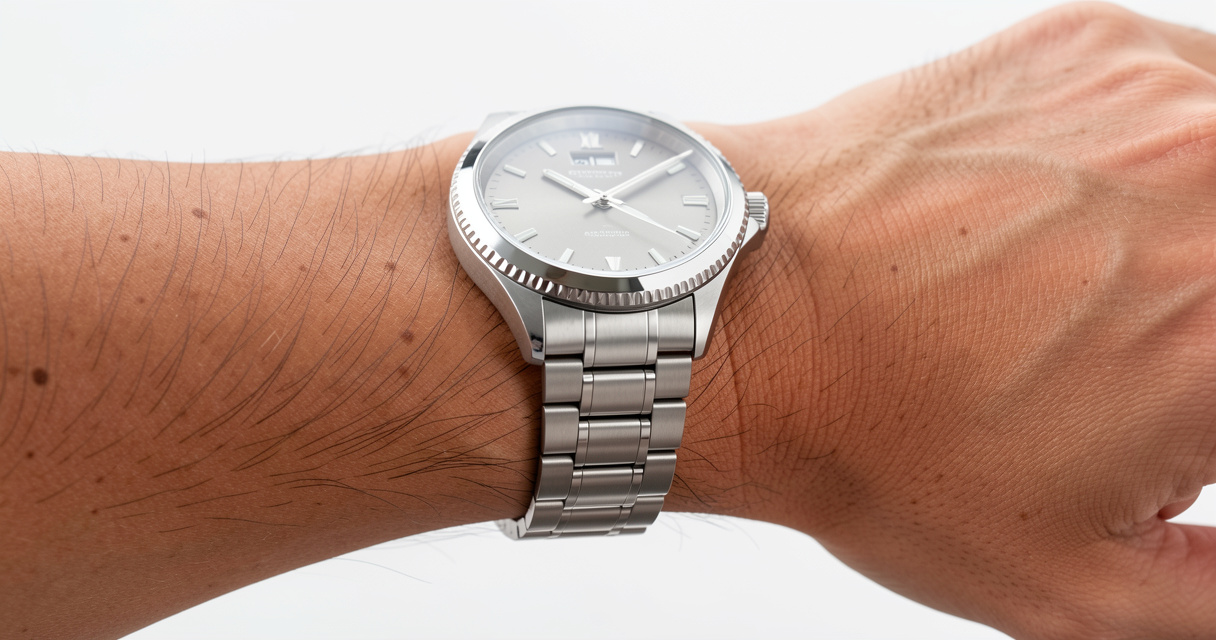
A watch bracelet is a metal band composed of interlocking links – typically stainless steel, though titanium and gold variants exist. Unlike a leather, rubber, or NATO strap, a bracelet integrates a clasp system, end links that connect to the watch case, and often micro-adjust features. The complexity of a bracelet is part of its appeal: it transforms a timepiece from an accessory into an extension of the wrist. The discerning traveler knows that a well-chosen bracelet can make or break the wearing experience – especially during long flights or formal dinners where comfort and elegance must coexist.
Anatomy of a Watch Bracelet
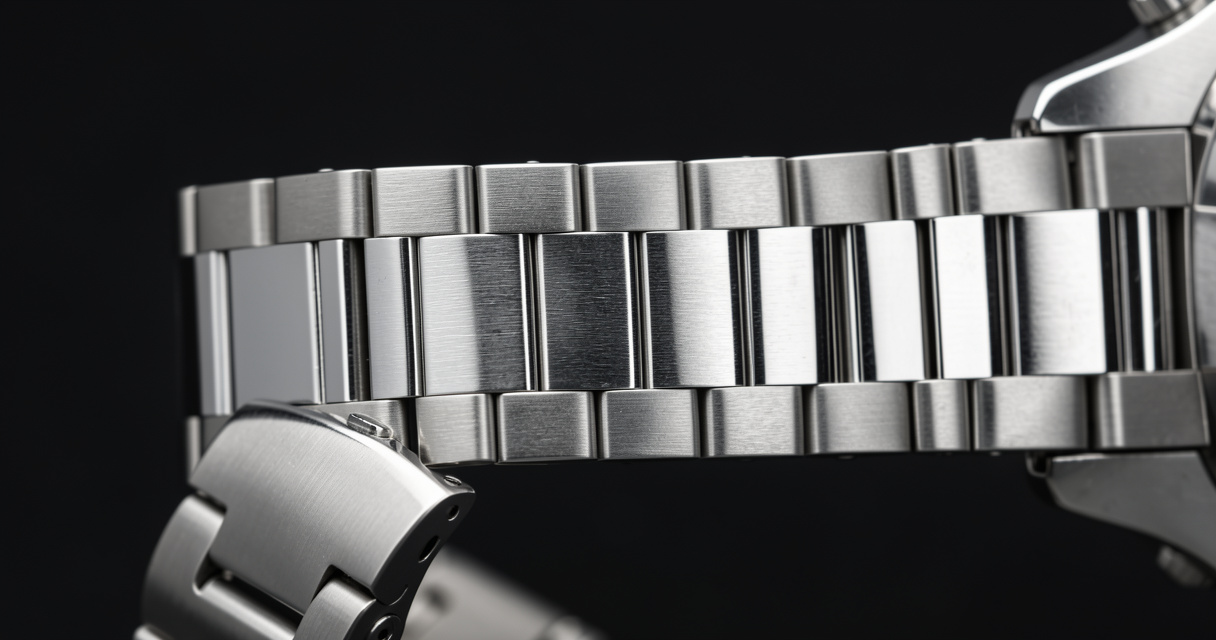
To evaluate any bracelet, understand its components: links (the individual segments), end links (the first and last links that attach to the watch lugs), clasp (folding, butterfly, or deployant), and pins or screws that hold it together. A solid link bracelet uses fully machined pieces, while hollow links are stamped and lighter. Every element affects weight, flexibility, and longevity.
Common Materials: 316L Steel, Titanium, and PVD Coatings
316L stainless steel – also called “surgical steel” – is the industry benchmark. It is corrosion-resistant, hypoallergenic for most, and polishes beautifully. Premium brands like Rolex use 904L steel (Oystersteel), which is slightly more resistant to corrosion and takes a higher polish. Titanium bracelets are lighter and warm to the touch, ideal for dive watches. PVD (Physical Vapor Deposition) coatings add color – black, gunmetal, rose gold – but can wear over time if not applied well. A quality bracelet will specify its steel grade; avoid any that only say “stainless steel” without a number.
Definition box: Watch Bracelet – A metal band composed of interlocking links, usually stainless steel, designed for durability and a secure fit. Unlike a strap, it requires tools to adjust and offers permanent fixing.
Now that we’ve defined the bracelet, let’s explore the five archetypes that dominate the market – each with a distinct character and purpose.
The 5 Most Popular Types of Watch Bracelets
The world of watch bracelet types can be distilled into five classics. Each has a history, a specific link pattern, and a personality that matches certain watches better than others. Here is the definitive list, as Google would present it in a featured snippet:
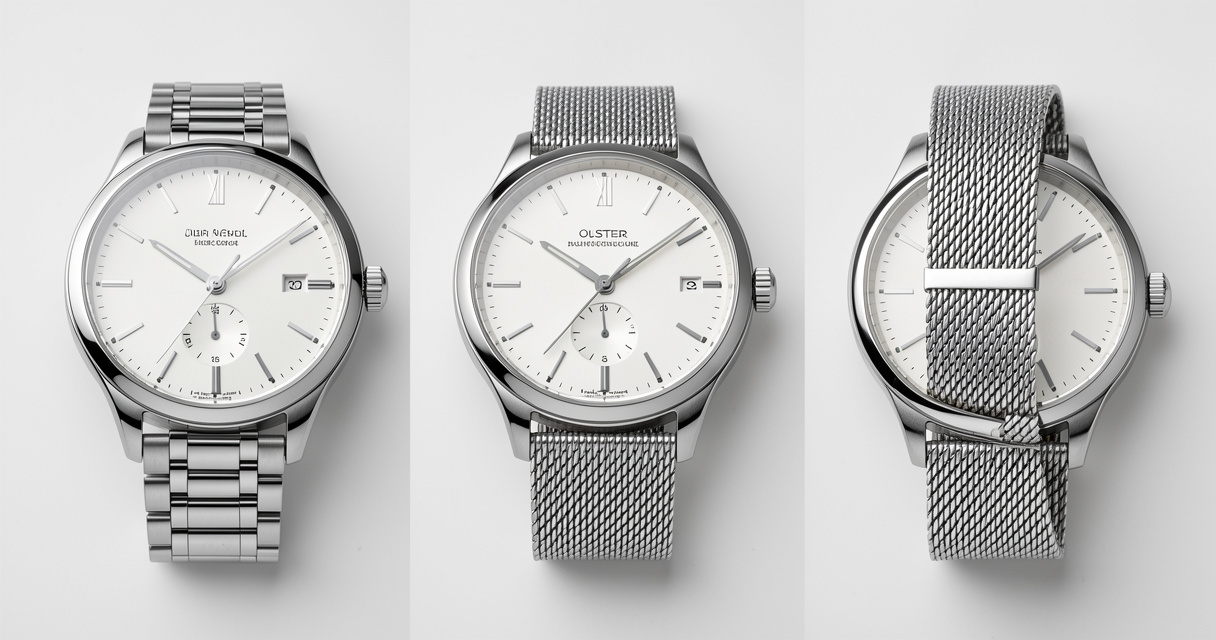
- Oyster – a 3-link bracelet known for durability, popularized by Rolex in 1926.
- Jubilee – a 5-link bracelet offering extra comfort and shine, introduced in 1945.
- Milanese mesh – a finely woven steel mesh, flexible and breathable.
- President – a semi-circular 3-link design, often used in luxury dress watches.
- Beads of Rice – rounded links resembling grains, very flexible and vintage in style.
Now, let’s go deeper into each.
Oyster Bracelets – The Sports Watch Standard
The Oyster bracelet is the steel backbone of the watch world. Three flat or slightly rounded links per row – wide center link flanked by two narrower outer links. This construction is robust, easy to clean, and resists stretching. Originally designed for the Rolex Oyster case, it has been adopted by almost every sports watch maker. An Oyster bracelet with a diver’s extension and a milled clasp is the gold standard for dive watches. Weight for a 20mm Oyster bracelet: approximately 85–95g for a full-size length (depends on link count).
Jubilee Bracelets – Five-Link Elegance
Rolex introduced the Jubilee in 1945 to celebrate the company’s 40th anniversary. Five links per row – three narrow polished links between two wider brushed links – create a supple, almost liquid drape on the wrist. The Jubilee is more comfortable than the Oyster for many, thanks to its flexibility and lighter weight (around 75–85g for 20mm). Watch enthusiasts often debate Oyster vs Jubilee for the Rolex Datejust; the answer depends on whether you prioritize casual durability or dressy elegance.
Milanese Mesh – Vintage Comfort Meets Modern Function
Milanese mesh (also called “mesh bracelet”) is woven from fine stainless steel threads into a flexible net. It is lightweight, breathable, and conforms to the wrist without pinch points. Originally from Milan in the 19th century, it saw a revival with the rise of minimal watches like the Junghans Max Bill. Modern mesh bracelets from brands like Staib use high-quality steel and adjustable sliding clasps. A 20mm Milanese weighs approximately 55–65g – the lightest of the major types. The kind of bracelet that feels like nothing on the wrist.
President and Beads of Rice – Luxury and Texture
The President bracelet, with its semi-circular three-link design, is almost exclusively found on Rolex Day-Date models. It projects status and weight (around 90–100g in gold). Beads of Rice – named for its oval links resembling grains – is a vintage design often seen on Omega and affordable alternatives. It is highly flexible, almost like a chain, and sits beautifully on smaller wrists. Both are less common but worth knowing for their distinctive texture.
| Type | Number of Links | Comfort Level | Formality | Common on | Weight (approx. for 20mm) |
|---|---|---|---|---|---|
| Oyster | 3 | High | Casual–Sport | Rolex Submariner, Seiko SKX | 85–95g |
| Jubilee | 5 | Very High | Dress–Smart Casual | Rolex Datejust, Tudor Black Bay 58 | 75–85g |
| Milanese Mesh | – (woven) | Extremely High | Dress–Casual | Junghans Max Bill, Omega Seamaster | 55–65g |
| President | 3 (semi-circular) | High | Formal | Rolex Day-Date | 90–100g (gold) |
| Beads of Rice | Variable (oval) | Very High | Dress–Vintage | Omega Speedmaster, vintage watches | 65–75g |
Each bracelet type serves a different purpose. The next section will help you decide between the two most debated – Oyster and Jubilee.
Oyster vs Jubilee: Which Bracelet Should You Choose?
The oyster vs jubilee bracelet debate is as old as the watches they grace. Both are Rolex originals, but they cater to different sensibilities. We’ve worn both extensively – here’s the inside story.
Comfort and Fit: The Link Count Matters
The Jubilee’s five links create more points of articulation, making it conform to the wrist better than the Oyster’s three. For daily wear, especially on a watch that slips under a cuff, the Jubilee wins for comfort. However, the Oyster’s wider center links provide a more secure, locked-in feeling during physical activity. If you plan to dive or play sports, Oyster is the choice. If you want a bracelet that disappears on your wrist, pick Jubilee.
Anecdote: “I wore a Jubilee on my daily wear for six months and loved the flexibility. But after a week of hiking with an Oyster, I realized the extra stability matters for active days. Now I switch based on the agenda.”
Clasp Systems: Easylink, Glidelock, and Standard Folding
Both bracelets can be equipped with micro-adjust clasps, but the Oyster often gets more advanced systems like Rolex’s Glidelock (continuously adjustable) or the Easylink (5mm extension). Jubilee clasps are typically folding with three micro-adjust holes. The Oyster’s heavier clasp feels more secure on a dive watch. For a dress watch, the Jubilee’s lighter clasp is more elegant.
Style Versatility: Sport vs. Dress
A Sea-Dweller on Jubilee looks off – the tool-watch heritage demands an Oyster. Conversely, a Datejust on Oyster feels a bit too rugged for black-tie. The rule: sport watches deserve Oyster; dress and versatile watches sing on Jubilee. But there is no absolute – some collectors love a Daytona on Oysterflex, but that’s a different topic.
The decision often comes down to wrist size. For smaller wrists (under 6.5 inches), the Jubilee’s taper and flexibility are more flattering. For larger wrists, the Oyster’s heft balances the watch. Now, beyond style, let’s talk about what makes a great bracelet: materials and construction.
Materials and Build Quality: What to Look For
Not all stainless steel bracelet watch options are created equal. The difference between a flimsy strap and a heirloom-quality bracelet lies in three factors: steel grade, link construction, and finish.
Solid vs Hollow Links: Weight and Longevity
Solid links are machined from a single piece of metal; hollow links are formed from folded steel. Solid links are heavier, more durable, and less prone to stretching. A full solid bracelet (including solid end links) will feel substantial on the wrist and last decades. Hollow links rattle and bend over time. As a rule: never buy a bracelet with hollow links if you intend to wear it daily.
Finishes: Brushed, Polished, and Two-Tone
Brushed finishes hide scratches better – ideal for a daily beater. Polished center links catch light but show wear fast. Two-tone (gold and steel) adds dressiness but requires care against abrasion. The best bracelets combine both: brushed outer links with polished center links (like a super Jubilee).
Bracelet Thickness and Taper
A bracelet that tapers from 20mm at the lugs to 16mm at the clasp creates a more elegant silhouette. Sports bracelets often stay straighter (20mm to 18mm). A thicker bracelet adds visual weight; a thinner one feels more refined. Choose based on the watch’s character.
- Quick checklist to evaluate bracelet quality:
- Solid links?
- Screw-in pins (not friction pins)?
- Milled clasp (not stamped)?
- Micro-adjust holes or extension system?
- Solid end links that match the case curvature?
If your bracelet checks all these, you have a winner. Next: how to make it fit perfectly.
How to Size and Adjust a Watch Bracelet at Home
Watch bracelet sizing is a skill every enthusiast should master – no more expensive trips to a jeweler. With the right tools and patience, you can adjust your metal band in ten minutes.
Tools You’ll Need
- Spring bar tool (double-ended with forked tip)
- Screwdriver set (for screw-link bracelets)
- Pin pusher (for friction pin bracelets)
- Small hammer or mallet
- Soft cloth to protect the watch
Removing Links with Screwed Pins vs. Pinned Links
Screw-link bracelets (common on higher-end watches) have tiny screws holding the links together. Simply unscrew, remove the link, and reassemble. Use Loctite (threadlocker) on the screws to prevent loosening. Most Oyster and Jubilee bracelets use screws. Friction pins require a pin pusher: align the arrow (direction of removal) and tap out the pin. Work on one side at a time; the pin can be bent if forced.
Warning: Avoid over‑tightening screws – they can snap. Apply Loctite if needed. Always work on a clean, soft surface.
Using Micro‑Adjust Holes for a Perfect Fit
Most quality bracelets have micro-adjust holes in the clasp – three to six positions. After removing or adding links, fine-tune the fit using these holes. The goal: the watch should not slide past your wrist bone when your arm is down, but should be loose enough to fit a finger under the bracelet. If your wrist swells in heat, a dive extension or Easylink is invaluable.
Once sized, how to remove links from a stainless steel watch bracelet becomes second nature. Now, let’s keep it looking pristine.
Cleaning and Maintenance: Keep Your Bracelet Looking New
A metal bracelet collects dirt, sweat, and grime between links. Without proper care, it can become a breeding ground for bacteria and eventually stiffen. The good news: watch bracelet maintenance is simple.
Everyday Cleaning Routine
Rinse your bracelet under lukewarm water, add a drop of mild dish soap, and agitate gently with a soft toothbrush. Focus on the clasp and end links where dirt accumulates. Rinse thoroughly and dry with a microfiber cloth. For deep cleaning, use an ultrasonic cleaner with non-abrasive solution (avoid for watches with low water resistance).
For saltwater exposure (ocean swimming), rinse immediately. Salt crystals can corrode the spring bars and promote rust on lower-grade steel. Rinsing after every swim is non-negotiable.
Dealing with Scratches – When to Polish vs. Leave Patina
Scratches are inevitable. For brushed finishes, use a Scotch-Brite pad (grey, not green) in the direction of the brushing. For polished surfaces, a Cape Cod cloth can restore shine. But be warned: over-polishing can round edges and remove metal. Some collectors embrace a “desk diving” patina as a badge of regular wear. Decide what matters to you – a pristine showpiece or a lived-in companion.
A well-maintained bracelet will outlast the watch’s movement. Next, we answer a critical question: should you buy original or aftermarket?
Aftermarket vs. OEM Bracelets: Which Should You Buy?
When the best watch bracelet replacement is considered, the choice between OEM (Original Equipment Manufacturer) and aftermarket is both practical and philosophical. OEM bracelets from Rolex, Omega, or Seiko are designed for perfect fit and finish, but they can cost $500–$1500. Aftermarket options from specialists like Strapcode, StrapsCo, and Holben’s deliver 90% of the quality at 30% of the price.
| Brand | Price Range | Known For | Best For |
|---|---|---|---|
| Rolex (OEM) | $700–$1500 | Perfect fit, 904L steel | Rolex watches obviously |
| Omega (OEM) | $400–$900 | Precision end links, micro-adjust | Omega Seamaster, Speedmaster |
| Strapcode | $80–$200 | Solid links, screw pins, heavy duty | Seiko SKX, Alpinist, Citizen Promaster |
| StrapsCo | $50–$120 | Affordable, variety of styles | Seiko, Casio, vintage watches |
| Holben’s | $40–$150 | Milanese mesh specialist | Junghans, dress watches |
| Fratello’s favorites | $30–$100 | Curated, often unique designs | Vintage and microbrands |
How to Verify Compatibility (Lug Width, End Links, Curvature)
Measure the distance between the lugs in millimeters (most common: 20mm, 22mm). Check spring bar hole alignment – newer watches have holes at the same height, vintage might be offset. End link curvature is critical: a flat end link will gap. Many aftermarket sites list compatible models; use the “watch model” filter. For 20mm watch bracelet replacement for Seiko diver, Strapcode’s Super-J Louis is a no-brainer.
The discerning traveler knows that a $100 aftermarket bracelet can rival a $500 OEM in quality, provided you choose solid links and a milled clasp. Now, let’s address the most common questions.
Frequently Asked Questions About Watch Bracelets
Are metal watch bracelets waterproof?
Yes, most stainless steel bracelets are fine for swimming and showering. However, saltwater and chlorine should be rinsed off to prevent corrosion. The watch head’s water resistance is the limiting factor; the bracelet itself is not a sealed unit but can withstand moisture.
How do I know if a replacement bracelet will fit my watch?
Measure the lug width (distance between the lugs) in millimeters. Common widths are 18mm, 20mm, 22mm. Also check spring bar hole alignment and end link curvature. Many aftermarket brands list compatible models on their product pages – use that as your first check.
What is the most comfortable type of watch bracelet?
Jubilee and Milanese mesh are often cited as the most comfortable due to their flexibility and lighter weight. Oyster bracelets with micro-adjust clasps also rank high. Comfort depends on wrist shape and link taper; there is no universal winner, but a well-sized bracelet of any type can be comfortable.
Can I wear a metal bracelet if I have a nickel allergy?
Avoid low-grade stainless steel (contains nickel). Look for 316L or 904L surgical-grade steel, or hypoallergenic coatings like PVD. Some premium bracelets use titanium which is nickel-free. Always check the steel grade specification.
How often should I replace my watch bracelet?
With proper care, a quality stainless steel bracelet can last decades. Replace if links become loose, the clasp fails, or the fit changes due to wear. Everyday cleaning extends lifespan; a good bracelet can outlive the watch movement.
Your Next Move
We have covered the essentials: watch bracelet types, materials, sizing, maintenance, and the OEM vs aftermarket choice. The key is to match the bracelet to your lifestyle – a Jubilee for the office, a Milanese for travel, an Oyster for the weekend. Metal watch band selection no longer needs to be a gamble. Armed with this knowledge, you can now look at your collection and ask: which bracelet will elevate my timepiece today?
Now that you know the ins and outs of watch bracelets, which style will you try first on your trusty timepiece?