


Reading time: 15 min
Table of Contents
- Key Takeaways
- What Is a Quartz Watch?
- How a Quartz Watch Works: The Science Behind the Tick
- The Battery and Quartz Crystal
- Piezoelectricity and Oscillation
- Dividing Frequency to One Second
- Quartz Watch Accuracy: How Precise Are They?
- Typical Accuracy Ranges
- What Affects Accuracy?
- How to Adjust a Quartz Movement (Trimmer Condenser)
- Quartz vs Mechanical: Which Is Right for You?
- Quartz Pros and Cons
- Mechanical Pros and Cons
- When to Choose Each
- A Brief History of the Quartz Watch Revolution
- From Clocks to Wristwatches: 1927–1969
- The Quartz Crisis (1970s–1980s)
- Modern High‑End Quartz Innovations
- Maintenance and Battery Replacement: Keep Your Quartz Running
- Battery Care
- Water Resistance After Battery Changes
- When to Service a Quartz Movement
- Buying Guide: What to Look for in a Quartz Watch
- Movement Quality: Swiss vs Japanese
- Features to Consider (Chronograph, Solar, GMT)
- Budget Recommendations
- The Future of Quartz: Solar, Eco‑Drive, and Smart Integration
- Solar and Light‑Powered Quartz
- Kinetic (Auto‑Quartz) Hybrids
- Quartz in the Smartwatch Era
- Frequently Asked Questions About Quartz Watches
- Your Next Reliable Companion
Key Takeaways
- Quartz accuracy: A standard quartz watch loses or gains only a few seconds per month, while the best mechanical watches may drift several seconds each day.
- Low maintenance: Quartz movements require a battery change every 1–2 years (or none with solar), with minimal additional servicing.
- Modern innovations: Solar, kinetic, and long-life battery quartz watches (e.g., F.P. Journe Elegante with 8‑year battery) expand the appeal of quartz technology.
- Fine-tuning possible: A trimmer condenser screw can adjust a quartz watch’s rate by roughly ±1 second per day per 1/6 turn, offering professional-level accuracy.
What Is a Quartz Watch?
Did you know that a typical quartz watch is accurate to within one second every few days, while the best mechanical watches may deviate by several seconds each day? That split-second precision comes from a surprisingly simple principle: a battery sends electricity through a tiny quartz crystal, causing it to vibrate at exactly 32,768 times per second. A microchip counts those vibrations and converts them into one-second pulses that drive the hands. With so many watch types available, buyers often struggle to understand how quartz watches work, why they are so accurate, and whether they are a better choice than mechanical or automatic watches. This guide cuts through the noise.
The kind of clarity a quartz movement offers is the reason it dominates the global watch industry. Unlike a mechanical watch, which relies on a mainspring and a complex train of gears, a quartz watch needs only a battery, a quartz crystal, a circuit, and a stepping motor. The result is a timepiece that is affordable, robust, and virtually maintenance-free — yet often dismissed by purists as soulless. We are here to change that perception.
Definition box: A quartz watch uses a battery to send electricity through a quartz crystal, causing it to vibrate at 32,768 Hz. A circuit counts these vibrations to keep time. The arrangement is known as a quartz movement.
How a Quartz Watch Works: The Science Behind the Tick
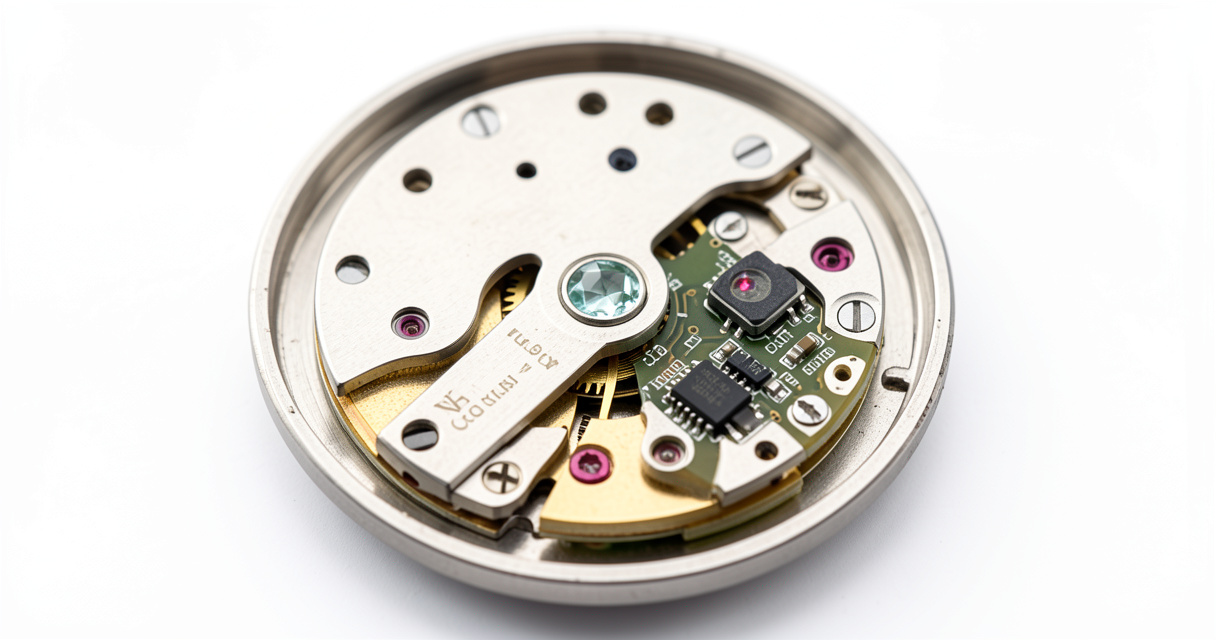
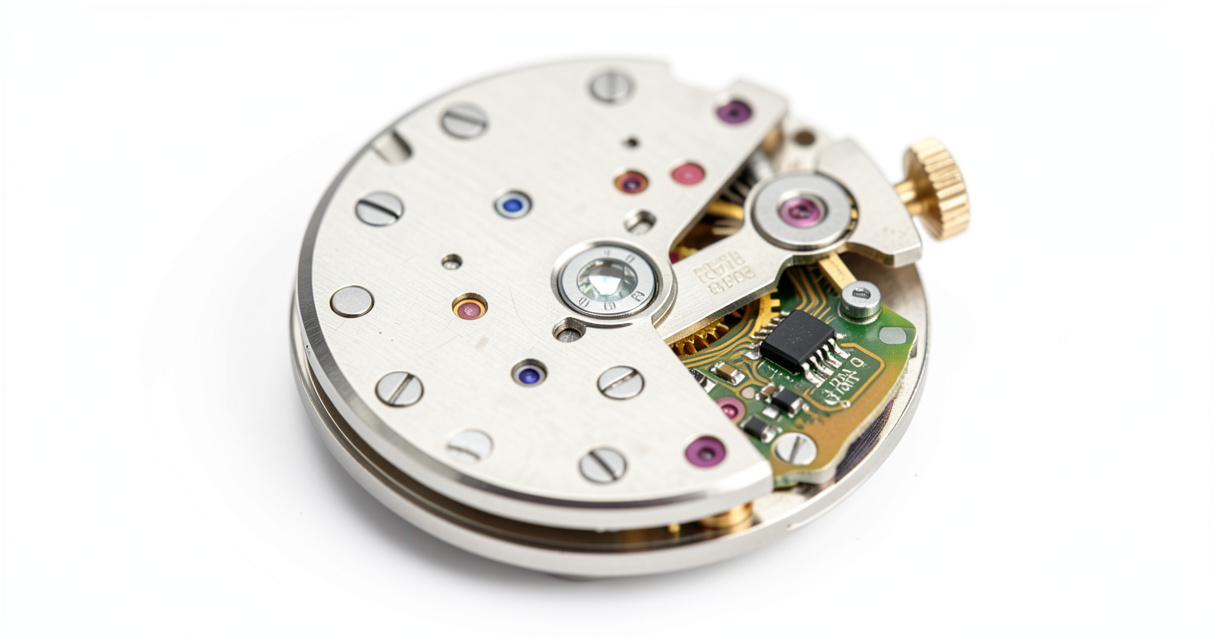
A quartz watch uses a battery to send electrical current through a tiny quartz crystal. The crystal vibrates at a precise 32,768 times per second due to the piezoelectric effect. A microchip circuit counts these vibrations and converts them into regular electric pulses that drive a stepper motor, moving the watch hands at exact one-second intervals. This system gives quartz watches their renowned accuracy and low maintenance.
To understand the magic, we break it down step by step.
The Battery and Quartz Crystal
The journey begins with a small battery — typically a silver-oxide or lithium cell — that provides a steady voltage (usually 1.5 V). This current is sent to a precisely cut quartz crystal shaped like a tuning fork. The crystal is the heart of the movement, and its purity is non-negotiable.
Piezoelectricity and Oscillation
When the electric field passes through the quartz, it causes the crystal to physically deform — a property called piezoelectricity. The crystal then oscillates at its natural resonant frequency: 32,768 Hz (cycles per second). This frequency was chosen because it is a power of two (215), which makes it easy to divide down to 1 Hz using simple binary counters.
Dividing Frequency to One Second
A microchip called the frequency divider counts exactly 32,768 oscillations and then outputs one pulse. That pulse fires a small stepping motor that rotates the gear train by one step — moving the second hand forward one tick. The same circuit also powers the hour and minute hands via a gear reduction system. The entire cycle repeats every second, yielding the familiar ticking motion.
Worth every mile of understanding, this elegant technology is the reason quartz watches are the world’s most reliable timekeepers. History adds another layer of fascination: the first quartz wristwatch, the Seiko Astron, was launched on December 25, 1969, after a race between Seiko and Swiss manufacturers. « Seiko’s engineers knew they had to miniaturize a room-sized clock into a wristwatch, » recalls watch historian Dr. Kazuo Suzuki. « The Astron changed everything. »
Quartz Watch Accuracy: How Precise Are They?
The accuracy of quartz watches is often taken for granted, but the numbers are staggering. A standard quartz watch deviates by only ±15 seconds per month — that is around 0.5 seconds per day. High-end quartz calibers, such as those from Grand Seiko or the F.P. Journe Élégante, achieve ±5 to ±10 seconds per year. By contrast, a well-regulated mechanical watch may run +4 to +6 seconds per day, and a COSC-certified chronometer is allowed -4/+6 seconds per day.
Typical Accuracy Ranges
Quartz watch accuracy seconds per day: Most quartz watches are within 0.5 sec/day. High-end pieces like the Omega Seamaster Quartz are tested to ±0.1 sec/day. According to Casio (2025 product specifications), their standard quartz modules maintain ±15 sec/month, which equates to roughly 0.5 sec/day.
What Affects Accuracy?
Temperature is the primary enemy of quartz precision. The crystal’s oscillation frequency shifts with heat and cold — but regular wearing of a quartz watch reduces temperature swings because the human body acts as a stable temperature source (Wikipedia – Quartz clock, 2025). Another factor is aging of the crystal itself; after a few years, the frequency may drift slightly. The good news: most modern circuits compensate for these variations.
How to Adjust a Quartz Movement (Trimmer Condenser)
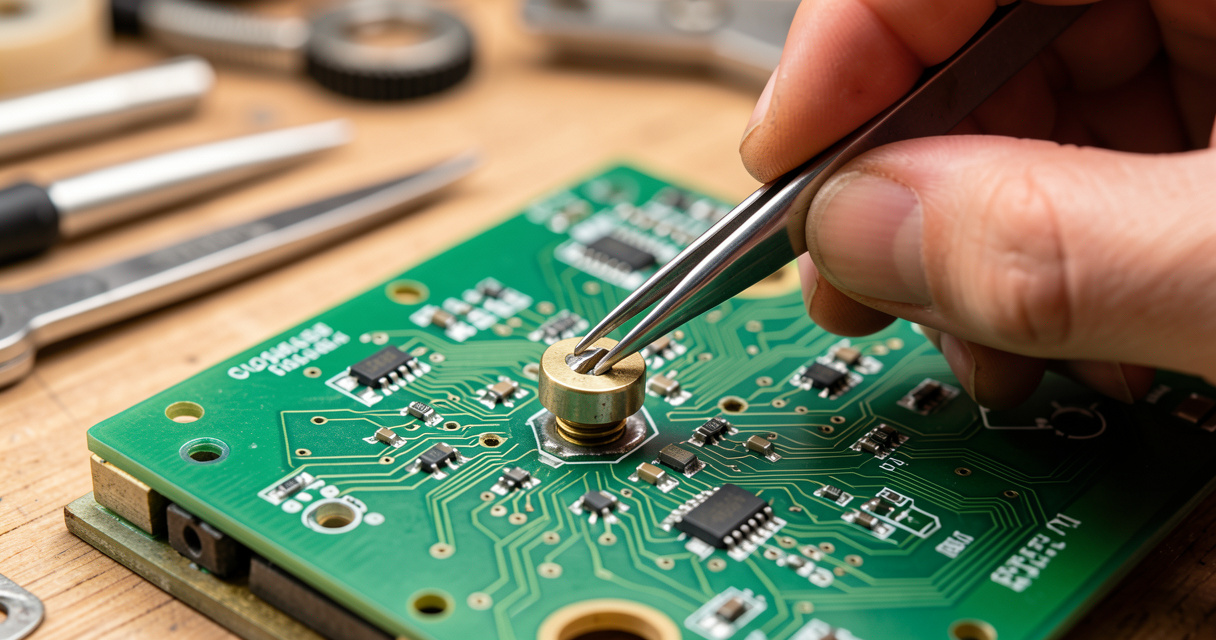
For those who demand perfection, many quartz movements include a trimmer condenser — a small adjustable capacitor that fine-tunes the crystal’s frequency. Turning the trimmer screw clockwise speeds the movement by about one second per day per 1/6 turn (Wikipedia – Quartz clock, 2025). This is how a watchmaker can bring a quartz watch back to atomic-level precision. It is the kind of hidden detail that only horological insiders know.
| Type | Typical Accuracy | Cost Range | Maintenance |
|---|---|---|---|
| Standard quartz | ±15 sec/month | $20 – $500 | Battery every 1–2 years |
| High-end quartz | ±5 sec/year | $1,000 – $10,000+ | Battery every 3–8 years |
| Mechanical (no COSC) | +10 to +25 sec/day | $200 – $5,000 | Service every 3–5 years |
| Automatic (COSC) | -4 to +6 sec/day | $500 – $20,000+ | Service every 3–5 years |
The table above leaves little doubt: for pure precision and low fuss, quartz is the champion. But accuracy is only one part of the story. The debate between quartz and mechanical runs deeper, touching on emotion, craftsmanship, and daily habits.
Quartz vs Mechanical: Which Is Right for You?
Ask a collector and you will hear passionate arguments on both sides. The quartz vs mechanical decision is not about right or wrong — it is about your priorities. We break down the case for each.
Quartz Pros and Cons
- Exceptional accuracy, often within 15 sec/month
- Grab-and-go reliability: wind it once (never) – just put it on
- Lower cost; many fine watches under $500
- Minimal maintenance – battery swap every couple of years
- Some find the ticking second hand less elegant
- Battery dependency; if it dies without notice, you lose time
Mechanical Pros and Cons
- Sweeping second hand; mesmerizing movement
- Heirloom potential – can last generations with servicing
- No battery to replace
- Less accurate: often +10 sec/day or more
- Needs regular winding or daily wear (automatics)
- Expensive service every few years
When to Choose Each
Choose quartz if: You want a reliable daily beater, you travel across time zones, you need accuracy for work or sport, or you are stepping into watch ownership for the first time. Choose mechanical if: You appreciate craftsmanship, you want a connection to horological history, or the watch is part of a collection you enjoy hand-winding. As Teddy Baldassarre puts it: « A quartz watch is your practical companion; a mechanical watch is your emotional one. »
Still not sure? Perhaps the history of the quartz revolution will help clarify how these two worlds collided — and why both have a place on your wrist.
A Brief History of the Quartz Watch Revolution
The history of the quartz watch is a story of disruption, survival, and eventual reconciliation. It began not on a wrist, but in a laboratory.
From Clocks to Wristwatches: 1927–1969
In 1927, Canadian engineer Warren Marrison built the first quartz clock at Bell Labs. It was the size of a refrigerator and kept time to within a second per year. Miniaturizing it for the wrist took over four decades. The race culminated on December 25, 1969, when Seiko released the Astron — the world’s first quartz wristwatch. « Seiko’s engineers knew they had to miniaturize a room-sized clock into a wristwatch, » reflects watch historian Dr. Kazuo Suzuki. « The Astron changed everything. »
The Quartz Crisis (1970s–1980s)
The success of quartz decimated the Swiss watch industry. In the 1970s, Swiss watch exports dropped by roughly 70% (a figure often cited in historical analyses, e.g., Watches of Switzerland – A Guide to Quartz Watch Movements, 2025). Thousands of workshops closed. Only a few brands — Rolex, Patek Philippe, Omega — survived by repositioning mechanical watches as luxury items and embracing quartz themselves. The term Quartz Crisis was born. It was a harsh lesson that innovation cannot be ignored.
Modern High‑End Quartz Innovations
Today, quartz is no longer the cheap alternative. Brands like F.P. Journe produce the Élégante, an in‑house electromagnetic quartz caliber with an 8‑year battery life and a standby mode that stops the hands when the watch is not worn, then resets using GPS. « Quartz is the smart innovation many collectors overlook, » says independent watchmaker Alain Zimmermann. Citizen’s Eco‑Drive solar quartz and Seiko’s Kinetic auto‑quartz hybrids further blur the lines. The revolution is far from over.
Maintaining these remarkable machines is simpler than you think — but there are a few rules to follow.
Maintenance and Battery Replacement: Keep Your Quartz Running
Quartz watch maintenance is a breeze compared to its mechanical counterparts. The battery is the only consumable, and replacing it is straightforward — but must be done correctly.
Battery Care
A standard quartz watch battery lasts 1–2 years. High‑end models like the F.P. Journe Élégante can go 8 years, while solar‑powered batteries may exceed a decade. Warning: Always replace the battery quickly when it dies. A leaking battery can permanently damage the movement. Most cheap quartz watches can be swapped by a jeweler for $10–$30; for luxury pieces, have a watchmaker do it to preserve water resistance.
Water Resistance After Battery Changes
Every time the case back is opened, the water‑resistant seals are disturbed. Always insist on a new gasket and a pressure test after a battery change. This is especially critical if you dive or swim with your watch. Quartz watch battery replacement cost is negligible compared to a flooded movement.
When to Service a Quartz Movement
Unlike mechanical watches, quartz movements rarely need lubrication. However, after 10–15 years, the circuit or motor may fail. The most cost‑effective solution is often a movement swap — standard calibers from Ronda, ETA, or Miyota are widely available and inexpensive. Many jewelers can replace an entire movement for under $100. For high‑end quartz, factory service is recommended every 10 years.
Now that you know how to care for your quartz watch, let’s turn to the most exciting part: buying the right one.
Buying Guide: What to Look for in a Quartz Watch
Choosing among the best quartz watches requires a systematic approach. The edit: focus on movement, materials, and intended use.
Movement Quality: Swiss vs Japanese
The world’s top quartz movement manufacturers are Ronda (Swiss), ETA (Swatch Group), and Miyota (Citizen, Japan). Swiss movements are often more precisely adjusted and may use higher‑grade crystals, but Japanese movements offer exceptional reliability at lower cost. For example, a watch with a Ronda 515 is a solid mid‑range choice; a Miyota 2035 powers countless affordable everyday watches. Both can achieve ±20 sec/month or better.
Features to Consider (Chronograph, Solar, GMT)
- Chronograph: Quartz chronographs are highly accurate and easier to repair than mechanical. The Seiko 7T62 is a workhorse.
- Solar quartz: Citizen Eco‑Drive and Casio Tough Solar eliminate battery changes entirely.
- GMT: Casio’s Wave Ceptor automatically syncs with atomic time signals for ±0 sec – the pinnacle of accuracy of quartz watches.
- Hacking seconds: Most quartz watches have a stop‑second function for precise time‑setting.
Budget Recommendations
Under $100: Casio F-91W (legendary), Timex Weekender.
$100–$500: Citizen Eco‑Drive BM8180, Seiko Prospex solar SNE589, Tissot PRX Quartz.
$500–$2,000: Longines Conquest VHP (annual calendar, ±5 sec/year), Grand Seiko 9F quartz (hand‑assembled, ±10 sec/year).
$2,000+: F.P. Journe Élégante, Omega Seamaster Quartz, Cartier Tank Quartz.
But the story does not end here. Quartz technology continues to evolve, and the next generation is already here.
The Future of Quartz: Solar, Eco‑Drive, and Smart Integration
The future of quartz is bright, powered by light, movement, and connectivity. « Quartz is the smart innovation many collectors overlook, » says independent watchmaker Alain Zimmermann. Here are the most exciting developments.
Solar and Light‑Powered Quartz
Citizen’s Eco‑Drive™ technology uses any light source — from sunlight to indoor ambient — to charge a rechargeable battery. A full charge can power the watch for months in complete darkness. No battery changes, ever. Eco‑Drive™ by Citizen uses any light source to charge a battery, eliminating battery changes. Casio’s Tough Solar and Seiko’s Solar are equivalent systems. These watches are ideal for the environmentally conscious traveler.
Kinetic (Auto‑Quartz) Hybrids
Seiko’s Kinetic movement generates electricity from the natural motion of the wearer’s arm — an oscillating weight drives a tiny generator that charges a capacitor. It offers the convenience of no battery change with the accuracy of quartz. The Seiko Kinetic SKA401 is a prime example. Other brands like Tissot and Eterna have explored similar mechanical‑quartz hybrids.
Quartz in the Smartwatch Era
Even traditional quartz watches are incorporating smart functions. The Withings Activité line features an analog quartz display with step tracking. Casio’s G‑Shock series now offers Bluetooth connectivity for time syncing. While not full smartwatches, these hybrids prove that quartz can coexist with digital technology. The discerning traveler knows that a quartz watch can be the last watch you ever buy — provided you choose wisely.
Frequently Asked Questions About Quartz Watches
Do quartz watches need winding?
No, quartz watches are battery‑powered and never need winding. As long as the battery has power, they keep running without any user action.
How long does a quartz watch battery last?
Typically 1–2 years, but some high‑end models (e.g., F.P. Journe Elegante) can last up to 8 years. Solar batteries may last 10+ years.
Are quartz watches more accurate than mechanical?
Yes, most quartz watches are accurate to within ±15 seconds per month, while mechanical watches often gain or lose several seconds per day. Temperature and aging can affect both, but quartz is inherently more precise.
Can quartz watches be repaired?
Yes, quartz movements are repairable. Common repairs include battery replacement, stem/crown fixes, and movement swaps. Many affordable quartz watches use standard movements that can be replaced entirely.
Why do some quartz watches have a sweeping second hand?
Sweeping second hands in quartz watches are achieved by using a high‑frequency quartz crystal (e.g., 16 Hz instead of 1 Hz) or a special stepper motor that moves the hand multiple times per second. Examples: Bulova Precisionist and Seiko VH31.
Are luxury quartz watches worth it?
Luxury quartz watches like the Omega Seamaster Quartz or F.P. Journe Elegante offer precision, durability, and brand prestige. They can be a good investment if you value accuracy and low maintenance over mechanical tradition.
What does ‘trimmer condenser’ mean in a quartz watch?
A trimmer condenser is a small adjustable capacitor found in some quartz movements. Turning a screw changes the frequency of the quartz crystal, fine‑tuning the watch’s accuracy by about one second per day per 1/6 turn.
Your Next Reliable Companion
We’ve covered the essential territory: the inner workings of a quartz watch, its impressive accuracy, the maintenance realities, and the buying decisions that matter. A quartz watch is not a compromise — it is a deliberate choice for those who value precision, practicality, and modern innovation. From the iconic Seiko Astron that sparked a revolution to the solar‑powered Eco‑Drive that runs on ambient light, quartz has proven its staying power.
Now that you know the inner workings and benefits, ask yourself: is a quartz watch the practical, reliable companion you’ve been looking for? If you value grab‑and‑go accuracy, want to avoid the regular servicing of a mechanical watch, and appreciate the quiet sophistication of a battery‑powered timepiece, the answer is clear. Book that purchase. Now.