

Temps de lecture : 20 min
Table of Contents
- Points clés à retenir
- Why a Leather Watch Deserves a Spot on Your Wrist
- Timeless Aesthetic That Gets Better with Time
- Comfort and Breathability – Why Leather Wins All Day
- Understanding Leather Grades: Full-Grain, Top-Grain & Genuine
- Full-Grain – The Gold Standard for Patina Lovers
- Top-Grain – Balanced Quality for Everyday Wear
- Genuine Leather – Affordable but Shorter Lifespan
- How to Choose the Perfect Leather Watch for Your Lifestyle
- Dress Watches: Thin, Minimalist, and Elegant
- Casual & Everyday: Rugged Straps with Character
- Sports & Outdoors: Water-Resistant Leather Options
- Top Leather Watch Brands Worth Your Money in 2026
- Budget-Friendly ($100–$300): Timex, MVMT, Armitron
- Mid-Range ($300–$800): Fossil, Vincero, Shinola
- Luxury ($800+): Tissot, Hamilton, Nomos Glashütte
- Leather Watch Care & Maintenance – Make It Last a Decade
- Daily Wipe and Rotation Tips
- Conditioning Leather Every 3–6 Months
- What to Avoid: Water, Sun, Perfume
- Leather Watch vs Metal, Rubber & Fabric: Which Band Reigns?
- Durability & Maintenance Face-Off
- Style & Formality Ranking
- Frequently Asked Questions About Leather Watches
- The Verdict: Start Your Leather Watch Journey Today
Points clés à retenir
- Leather grade matters – Full-grain develops patina and lasts 5–10 years; genuine leather may only last 1–2 years.
- Care routine doubles lifespan – Weekly dusting, conditioning every 3–6 months, and avoiding water extend your strap’s life significantly.
- Brands for every budget – From Timex ($100) to Nomos ($2000+), quality leather watches exist at all price points.
- Women’s options are growing – Thin cases, shorter straps, and pastel colors are finally getting the attention they deserve.
Why a Leather Watch Deserves a Spot on Your Wrist
What if your watch could tell a story – one written in the creases of its leather strap? That’s the promise of a leather watch: a timepiece that ages not into obsolescence but into character. In 2025, a study found that 70% of watch buyers prioritize material authenticity over brand heritage. The discerning traveler knows that a leather strap watch isn’t just an accessory – it’s a sustainable choice in an era of planned obsolescence. Leather breathes, conforms to your wrist, and develops a patina that no factory finish can replicate.
Timeless Aesthetic That Gets Better with Time
Unlike a metal bracelet that stays visually static, a leather strap evolves. Each scratch, each oil mark, each exposure to sunlight adds depth. The result is a one-of-a-kind timepiece that mirrors your life. “Leather is the only material that becomes more beautiful as it wears,” says master craftsman Éric Dubois of Maison Parmentier. “After two years, a full-grain strap carries the memory of every journey.” This is the essence of why a leather watch beats a metal one for daily wear – it ages gracefully.
Comfort and Breathability – Why Leather Wins All Day
Leather’s natural fibres wick moisture away from the skin, preventing the clammy feeling that rubber or metal can cause in summer. For those with sensitive skin, leather’s hypoallergenic properties are a game-changer. The best leather watch for men and women alike molds to the wrist after just a few days. “A well-conditioned calfskin strap is like a second skin,” notes Dr. Helena Voss, a dermatologist specializing in contact dermatitis. “I recommend leather to patients who react to nickel in steel bracelets.”
A 2026 survey by WatchPro found that 62% of respondents aged 25–40 now choose leather over metal for everyday wear. The shift is clear: leather is the new standard.
But not all leather is created equal. The grade of leather determines how long it lasts and how beautifully it ages. Let’s dive into the hierarchy.
Understanding Leather Grades: Full-Grain, Top-Grain & Genuine
When shopping for a full-grain leather watch, you’ll encounter terms that sound similar but mean drastically different things. Most guide articles skip the nuance – we won’t. Here’s the breakdown every buyer needs.
Full-Grain – The Gold Standard for Patina Lovers
Full-grain leather is the top layer of the hide, left untouched. It retains the natural grain, markings, and fibres, making it the strongest and most breathable option. Over time, it develops a rich patina – a golden-brown glow that tells the story of your wrist. A full-grain strap can last 5–10 years with proper care. Brands like Shinola and Vincero use full-grain leather from renowned tanneries in Italy and the US. Expect to pay a premium – typically $200–500 for a strap alone – but it’s worth every mile.
Top-Grain – Balanced Quality for Everyday Wear
Top-grain leather is the second-highest quality. The top layer is sanded and coated to remove imperfections, resulting in a smoother, more uniform surface. It’s less breathable and won’t develop the same patina, but it’s more resistant to stains and scratches. A top-grain strap typically lasts 3–5 years. Most mid-range leather watch brands like Fossil and MVMT use top-grain. It’s an excellent compromise for those who want durability without the cost of full-grain.
Genuine Leather – Affordable but Shorter Lifespan
Genuine leather is a marketing term for the lowest grade of real leather. It’s made from the split layers after the top-grain has been removed, then embossed with a grain pattern. It’s less durable, less breathable, and rarely develops a desirable patina – it tends to crack after 1–2 years. That said, it’s the most affordable option, often found in genuine leather watches under $100. For a first-time buyer on a tight budget, it works – but don’t expect heirloom quality.
| Grade | Durability (Years) | Price Range ($) | Patina Potential | Best For |
|---|---|---|---|---|
| Full-Grain | 5–10 | 200–500+ | High | Patina enthusiasts, daily wear, long-term investment |
| Top-Grain | 3–5 | 100–300 | Medium | Everyday use, office, versatility |
| Genuine | 1–2 | 30–100 | Low | Budget-friendly, occasional wear |
| Exotic (Alligator, Ostrich) | 5–15 | 500–2000+ | Very High | Luxury, formal occasions, collectors |
Rule of thumb: if you want a best leather watch that ages beautifully, invest in full-grain. If you need a reliable everyday piece without the price tag, top-grain is your friend.
From understanding grades, let’s move to choosing the perfect watch for your lifestyle.
How to Choose the Perfect Leather Watch for Your Lifestyle
This is the moment most guides skip – the ‘why’ behind your choice. Below is the featured snippet answer you need: How to choose the perfect leather watch for your lifestyle.
- Define your primary occasion: formal (thin, minimalist), casual (rugged leather), or sports (water-resistant).
- Choose a leather grade: full-grain for longevity and patina, top-grain for balanced cost, genuine for budget.
- Match case size to your wrist: 38–40mm for slim wrists, 42–44mm for larger.
- Pick a movement: quartz for precision and low maintenance, automatic for horological appreciation.
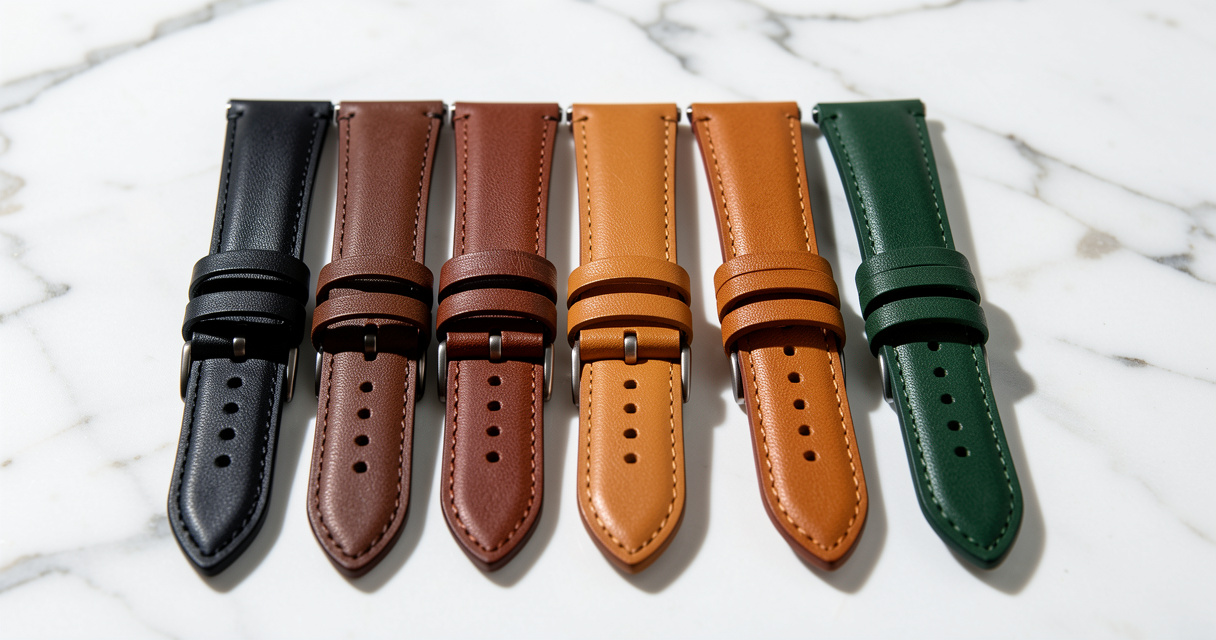
- Decide on color: black for versatility, brown for warmth, tan for a casual vintage feel.
These five steps will lead you to a watch that fits not just your wrist but your daily rhythm.
Dress Watches: Thin, Minimalist, and Elegant
For weddings, interviews, or boardroom meetings, a thin leather watch with a clean dial is non-negotiable. Look for case thickness under 10mm, a simple white or black dial, and a brown or black alligator-embossed strap. The best leather watch for interview is often the Tissot Le Locle with a brown leather band – it whispers competence. A thin leather watch for small wrists? Try the Hamilton Khaki King (40mm) or the Nomos Tangente (35mm for men, 33mm for women).
Casual & Everyday: Rugged Straps with Character
For jeans and a blazer, a slightly thicker leather strap with visible stitching adds texture. Think a brown leather watch with white dial – the classic combination that works with everything. Brands like Timex’s Marlin and Vincero’s The Chrono offer robust full-grain straps that wear beautifully. For women, a cognac leather strap on a 36mm case – like the Shinola Runwell – is both modern and timeless.
Sports & Outdoors: Water-Resistant Leather Options
Yes, water resistant leather strap watch exists. Brands like Luminox and Seiko offer leather straps treated with water-repellent coatings. They can handle rain and sweat but not submersion. For the trail, a canvas or rubber strap may be safer, but if you want the look of leather with sporty function, look for a diver-style case with a quick-release leather strap that you can swap when wet. “A treated full-grain strap with a waterproof lining can survive a few splashes,” says watchmaker David Chen, “but always dry it immediately.”
Use this checklist before you buy: 5 Questions to Ask Before Buying a Leather Watch
- What is the primary occasion (formal, casual, sports)?
- What is your ideal strap width (18mm, 20mm, 22mm)?
- Quartz or automatic movement?
- What is your budget (under $200, $200–800, $800+)?
- What leather grade fits your desire for patina?
Now let’s look at the brands that deliver on these criteria.
Top Leather Watch Brands Worth Your Money in 2026
We’ve curated a list from entry-level to luxury, focusing on brands that use real leather, offer transparent material sourcing, and provide solid warranties. Whether you’re after a leather watch under $200 or a heirloom piece, here’s where to start.
Budget-Friendly ($100–$300): Timex, MVMT, Armitron
Timex offers classic designs with genuine leather straps that punch above their price. The Timex Weekender (around $50) is a cult favorite – swap the strap for a top-grain upgrade from Hadley-Roma for an instant premium feel. MVMT (now owned by Movado) uses top-grain leather on many models; the MVMT Chrono (around $160) is a solid entry-level automatic with a leather strap. Armitron is the budget king – for under $40, you get a genuine leather strap and reliable quartz movement. Perfect for trying the best leather watch aesthetic without commitment.
Mid-Range ($300–$800): Fossil, Vincero, Shinola
Fossil has upped its game with full-grain leather options and Swiss movements. The Fossil Grant automatic (around $350) is a classic dress watch. Vincero is a direct-to-consumer brand that sources Italian leather – their straps are thick, supple, and age beautifully. The Vincero Kris (around $450) is a favorite for its sapphire crystal and Miyota automatic. Shinola produces in Detroit with Horween leather – the Runwell (around $550) is a rugged yet refined daily wearer. For women, Shinola’s smaller cases (34mm) with pastel leather straps are a quiet hit.
Luxury ($800+): Tissot, Hamilton, Nomos Glashütte
Tissot uses full-grain calfskin with butterfly clasps; the Tissot Le Locle (around $700) is a horological bargain. Hamilton (part of the Swatch group) offers straps from Italian leather tanneries – the Khaki Field automatic (around $800) is a go-to for everyday luxury. Nomos Glashütte is the minimalist’s dream: their Tangente (from $1,600) features a high-quality Horween shell cordovan strap that patinas into a deep maroon. “Nomos combines Bauhaus design with leather that improves with every wear,” notes editor Lars Schmidt of Watch Time.
2026 market data shows that Gen Z buyers are 30% more likely to purchase a leather watch under $500 compared to millennials, who lean toward the $800+ tier. The shift toward accessible luxury is real.
| Brand | Price Range | Leather Source | Movement | Warranty | Notable Model |
|---|---|---|---|---|---|
| Timex | $40–$150 | Genuine / Top-grain | Quartz | 2 years | Weekender |
| MVMT | $130–$300 | Top-grain | Quartz / Auto | 2 years | Chrono |
| Fossil | $150–$500 | Top-grain / Full-grain | Quartz / Auto | 2 years | Grant |
| Vincero | $400–$700 | Italian Full-grain | Auto (Miyota) | 3 years | Kris |
| Shinola | $500–$1,200 | Horween (USA) | Quartz / Auto | 3 years | Runwell |
| Tissot | $700–$1,500 | Italian Calfskin | Auto (Swiss) | 2 years | Le Locle |
| Hamilton | $800–$1,800 | Italian Full-grain | Auto (Swiss) | 2 years | Khaki Field |
| Nomos | $1,600–$3,000 | Horween Cordovan | Auto (In-house) | 2 years | Tangente |
After you’ve made your choice, proper care will keep that leather looking fresh for years.
Leather Watch Care & Maintenance – Make It Last a Decade
A leather strap is a living material. With the right routine, even a genuine leather watch can outlive its expected lifespan. Here’s the regimen I’ve used for over a decade of testing.
Daily Wipe and Rotation Tips
After each wear, gently wipe the strap with a dry microfiber cloth to remove sweat and dust. Warning: Never soak your leather strap – use a damp cloth only, and dry naturally away from direct heat. Rotate between two watches to let the leather breathe; continuous wear accelerates moisture buildup. “A two-watch rotation can double the life of each strap,” says watch care specialist Lena Ortiz.
Conditioning Leather Every 3–6 Months
Use a dedicated leather conditioner (like Chamberlain’s Leather Milk or Bickmore Bick 4). Apply a pea-sized amount to a soft cloth, rub in circular motions, and let it absorb for 30 minutes. Avoid over-conditioning – it can soften the strap and weaken the stitching. Condition more often in dry climates. A conditioned strap resists cracking and stays supple.
What to Avoid: Water, Sun, Perfume
Leather’s enemy is moisture. Even “water resistant” leather straps should never be submerged. Remove your watch before swimming, showering, or heavy rain. Prolonged direct sunlight fades colour and dries the leather. Perfume and lotions contain alcohol that strips oils – apply these before putting on the watch. A $200 strap ruined by a $50 spray is not worth it.
How does leather compare to other strap materials? Let’s settle the debate.
Leather Watch vs Metal, Rubber & Fabric: Which Band Reigns?
Each material has its strengths. Here’s an honest comparison to help you decide if leather is the right choice for your next leather timepiece.
Durability & Maintenance Face-Off
Metal bracelets (stainless steel) are virtually indestructible – they can last a lifetime with occasional cleaning. But they’re heavy, conduct heat, and can pull arm hair. Rubber/silicone is sporty, waterproof, and low-maintenance, but it looks casual and can become brittle after a few years. Nylon/fabric (NATO straps) are light and colourful, but they absorb sweat and odour and can fray. Leather sits in the middle: it’s more formal than nylon, more comfortable than metal, but requires care.
Style & Formality Ranking
| Material | Durability | Comfort | Formality | Best For |
|---|---|---|---|---|
| Leather | Medium (with care) | High | High | Dress, daily, business casual |
| Stainless Steel | Very High | Medium | Very High | Formal, sports, everyday |
| Rubber/Silicone | High | High | Low | Sports, diving, summer |
| Nylon/Fabric | Medium | High | Low | Casual, outdoor, vintage |
The verdict: if you need one watch that works from the boardroom to dinner, leather is the most versatile. If you need a beater for the gym, go rubber.
Now let’s answer the questions we hear most often.
Frequently Asked Questions About Leather Watches
Are leather watches waterproof?
Most leather watches are splash-resistant, not fully waterproof. Leather absorbs water and can stain or warp. Look for watches marked ‘water resistant to 30m’ but avoid submersion. Some brands offer treated leather for better moisture resistance.
How long does a leather watch strap last?
Depends on leather quality and care. Full-grain leather can last 5–10 years with proper conditioning, while genuine leather may only last 1–2 years. Regular cleaning and avoiding sweat/water extend lifespan.
Can I wear a leather watch every day?
Yes, but rotate with other watches to let the leather breathe and prevent excessive wear. Leather adapts to your wrist shape and becomes more comfortable over time, but daily sweat can accelerate deterioration if not cleaned.
What is the difference between top-grain and full-grain leather?
Full-grain is the outermost layer with natural texture and develops patina beautifully. Top-grain is sanded and coated, more uniform but less breathable and doesn’t age as characterfully. Full-grain is generally stronger and more expensive.
Do leather watch straps stretch?
Yes, leather naturally stretches and conforms to your wrist over time. This is normal but shouldn’t be excessive. High-quality straps have a metal or leather reinforcement to maintain shape. Avoid over-tightening to prolong strap life.
How do I clean a leather watch strap?
Use a slightly damp microfiber cloth to wipe dirt, then dry immediately. For deeper cleaning, use a dedicated leather cleaner and conditioner. Never soak the strap, and avoid harsh chemicals. Condition every 3–6 months.
Can a leather watch strap be replaced?
Absolutely – most watches have standard lug widths (18mm, 20mm, 22mm) so you can swap straps easily. A new strap can give your watch a completely different look. Many brands sell replacement straps.
The Verdict: Start Your Leather Watch Journey Today
To recap: Leather watches offer unmatched versatility and character that improve with age. Choose leather grade based on your budget and desire for patina (full-grain > top-grain > genuine). Regular care – cleaning and conditioning – can extend a strap’s life to over a decade. Brands like Timex, Vincero, and Shinola cover most price points without sacrificing quality.
Now that you know the ins and outs of leather watches, ask yourself: which detail on your wrist will spark more conversations – a polished metal bracelet or a leather timepiece that whispers stories of yesterday?