


Reading time: 18 min
Table of Contents
- Key takeaways
- Why Do Some People Look Younger? The Visible Aging Factors You Can Control
- Sun damage, collagen loss, and skin texture
- Dehydration, sleep, and puffiness
- Styling cues that read older than your age
- What Are the Most Effective Ways to Look Younger?
- Low-risk, high-impact changes to start today
- What to skip if you want to avoid an overdone look
- How to choose your first three changes
- Build a Daily Skincare Routine That Actually Makes You Look Younger
- Morning routine: protection before correction
- Evening routine: repair and cell turnover
- Exfoliation rules and irritation warning
- Use Makeup to Look Younger Without Looking Overdone
- Base makeup that reflects light instead of settling into lines
- Brows and eyes: definition without harshness
- Blush, lips, and finishing touches
- Refresh Your Hair, Brows, and Wardrobe for a Younger Frame
- Hair color and cut: contrast, softness, and gray blending
- Brows and facial framing
- Clothing, jewelry, and neckline strategy
- Daily Habits That Change How You Age: Sleep, Hydration, Diet, Movement, Alcohol
- Sleep and recovery
- Hydration, diet, and skin support
- Movement, stress, alcohol, and caffeine
- Do Not Stop at Your Jawline: Neck, Chest, Hands, and Eyes
- Eyes and sunglasses: UV protection plus squint control
- Neck and chest: extend your skincare downward
- Hands: sunscreen, moisturizer, and nail grooming
- How to Look Younger in 5 Minutes, 5 Weeks, and 5 Months
- The 5-minute reset before an event
- The 5-week consistency plan
- The 5-month review: what to keep, stop, or escalate
- Frequently asked questions
- The Edit: Your Next Thirty Days
Key takeaways
- Sunscreen is the foundation, not the accessory. A broad-spectrum SPF 30 or higher, worn daily and reapplied outdoors, is the single best-evidenced way to look younger for longer.
- Speed beats spending. Hair color, brow shape, and a lighter base makeup change a face in an afternoon; retinoids and consistency take eight to twelve weeks.
- The jawline is not the finish line. The neck, chest, hands, and eye area carry more perceived age than most people realize, and they receive the least care.
- Lifestyle compounds quietly. Seven-plus hours of sleep, steady hydration, antioxidant-rich food, movement, and limited alcohol support the skin you can see — no serum can outrun a bad week.
What if the fastest way to look younger is not another cream, but a smarter sequence — sun protection first, makeup second, hair color third, and sleep running quietly underneath all of it?
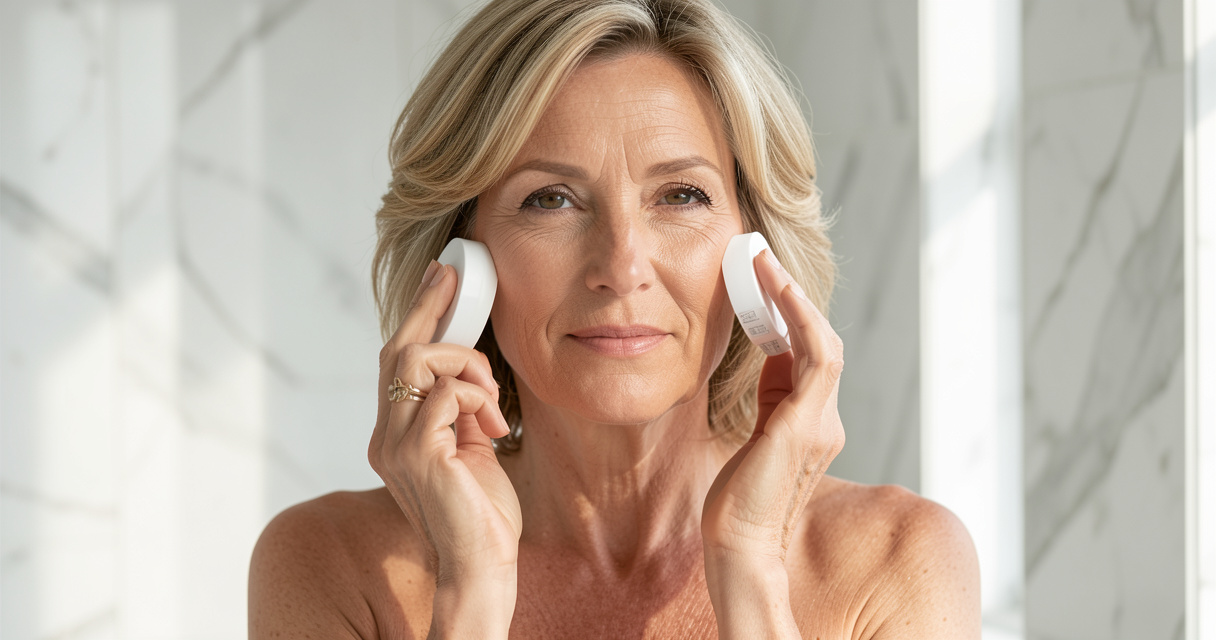
Watch the woman across the table at a long November lunch in the 11th arrondissement. She is 52. Her skin is not flawless; there is a fine line at the corner of each eye and she has made no attempt to erase it. What reads as younger-looking skin is something else entirely: an even tone, a healthy bounce at the jaw, brows that frame rather than shout, hair the color of weak tea instead of ink. No single product did that. A sequence did.
This is where most anti-aging routine advice fails. It arrives as a pile of products rather than an order of operations. Readers spend on serum what they should spend on sunglasses, then wonder why the mirror refuses to cooperate. The discerning reader knows the difference between expensive and effective — and the gap between them is usually a matter of sequence.
What follows is the working edit: what to start tonight, what to ignore entirely, and how to look younger naturally without surgery, needles, or a bathroom shelf that reads like a chemistry set.
Why Do Some People Look Younger? The Visible Aging Factors You Can Control
Perceived age is not a clinical measurement. It is a set of visual signals the eye reads in under two seconds: tone evenness, texture, contour, the contrast between hair and skin, and the way fabric sits at the throat. Understand the signals and the shopping list writes itself.
Sun damage, collagen loss, and skin texture
UV radiation works on two fronts at once. It degrades collagen and elastin — the scaffolding that keeps skin springy — and it drives the pigment unevenness that reads as years rather than sun. The eye does not register “photodamage.” It registers texture, shadow, and a jawline that has gone soft at the edges.
Which is precisely why the least glamorous product in the bathroom outperforms the most expensive one. A broad-spectrum sunscreen with SPF 30 or higher, applied every morning, in November as faithfully as in July, is the closest thing this category has to a guarantee. The American Academy of Dermatology’s public guidance on photoaging has said as much for years, and its position on retinoids has barely moved: consistent nightly use, introduced slowly, is the second pillar.
Dehydration, sleep, and puffiness
A compromised moisture barrier does not create wrinkles, but it exaggerates every one of them. The same holds for sleep debt. Eight hours versus five shows up first in the tear troughs and the nasolabial folds, then in the general dullness people misread as age.
Alcohol is the quiet saboteur. Two glasses of red at dinner and the reflection at seven the next morning is puffy, shadowed, and noticeably older. “What I see in the mirror at eight in the morning is usually last night’s dinner, not this year’s collagen,” says a London facialist whose appointment book is notoriously full. She is not wrong.
Styling cues that read older than your age
Hair is the fastest lever nobody pulls. Jet-black dye on a 55-year-old face reads harder than a soft brown two shades lighter than the natural color. Eyebrow framing that has been over-plucked or over-drawn adds a decade in a single stroke. A high neckline with a short chain shortens the neck at exactly the moment length is the goal.
These are not skin problems. They are styling problems, and they respond in an afternoon rather than a season.
| Aging factor | What people notice first | Best first fix | Evidence note |
|---|---|---|---|
| UV radiation | Uneven tone, brown patches, rough texture | Daily broad-spectrum SPF 30+ | Long-standing dermatology consensus |
| Collagen and elastin loss | Softened jawline, thinning under the eyes | Nightly retinoid, introduced slowly | Well-established; results in 8–12 weeks |
| Dehydration | Fine lines that look deeper than they are | Humectant plus barrier moisturizer | Rapid, visible within days |
| Sleep debt | Dark circles, dullness, puffiness | Seven to nine hours, consistent timing | Strong practical consensus |
| Hair color contrast | Harsh root line, flat tone | Soften two shades, blend grays | Cosmetic; immediate effect |
| Eyebrow and neckline styling | Over-defined brows, shortened neck | Softer brow fill, longer necklace | Cosmetic; immediate effect |
Once perceived age is understood as a stack of signals rather than a single flaw, the order of operations becomes obvious — and it begins with the moves that pay back fastest.
What Are the Most Effective Ways to Look Younger?
The short answer:
- Wear broad-spectrum sunscreen with SPF 30+ every day.
- Use a gentle cleanser, a moisturizer, and a night retinoid if tolerated.
- Add a weekly acid exfoliant only if your skin can handle it.
- Swap thick foundation for primer plus a light liquid foundation.
- Refresh hair color and cut to soften grays and frame the face.
- Prioritize sleep, hydration, vegetables, movement, and limited alcohol.
Low-risk, high-impact changes to start today
The most effective ways to look younger naturally are ranked, not gathered. Some changes cost almost nothing and show up within days; others cost a fortune and show up in six months, if at all. The table below organizes them by cost, time to visible result, strength of evidence, and — the column most guides omit — how likely each one is to look overdone.
The edit:
- Daily SPF 30+ — cost: low; visible result: preventive from day one, cumulative by 12 weeks; evidence: strongest in category; overdone risk: none.
- Primer and light liquid foundation — cost: low; visible result: same hour; evidence: cosmetic but consistent; overdone risk: moderate if over-applied.
- Hair-color refresh and a softer cut — cost: medium; visible result: same day; evidence: cosmetic; overdone risk: high if the shade runs too dark or too warm.
- Nightly retinoid — cost: medium; visible result: 8–12 weeks; evidence: strong; overdone risk: irritation if rushed.
- UV 400 sunglasses — cost: low; visible result: immediate squint control, long-term protection; evidence: strong for the eye area; overdone risk: none.
- Sleep, water, and alcohol limits — cost: none; visible result: 1–3 weeks; evidence: practical consensus; overdone risk: none.
What to skip if you want to avoid an overdone look
Skip anything that asks you to change your face rather than your habits. Aggressive at-home peels, layered acids used nightly, and devices bought in a moment of enthusiasm and abandoned by week three tend to produce redness, barrier damage, and a complexion that photographs older, not younger.
The overdone signals are consistent: too-dark hair, over-filled brows, matte foundation applied to the jaw and throat, and a lip line drawn a millimeter outside the natural edge. Each one adds contrast where softness was the point.
How to choose your first three changes
Pick one change per time horizon. One that works in an afternoon (hair or base makeup), one that works in a season (retinoid or exfoliation), and one that works over a lifetime (sunscreen). That triangulation gives you visible momentum without abandoning the long game — and it prevents the classic error of buying six new products in a single afternoon and then blaming all six when the skin rebels.
| Tactic | Purpose | Expected effect | Misuse risk |
|---|---|---|---|
| Sunscreen | Prevent collagen breakdown and pigment | Slower visible aging over years | Applying too little; skipping in winter |
| Retinoid | Stimulate cell turnover | Finer texture, reduced fine lines | Starting nightly instead of twice weekly |
| Exfoliant | Lift dull surface cells | Smoother finish within days | Overuse leading to dehydration |
| Primer and light base | Reflect light, blur texture | Fresher finish in minutes | Heavy layers settling into lines |
| Hair color | Reduce contrast at the hairline | Softer framing immediately | Shade too dark for the skin tone |
| UV 400 sunglasses | Protect lids and reduce squinting | Fewer expression lines over time | Fashion lenses without UV certification |
Ranking the tactics is the easy part. Executing the top one well requires a routine simple enough that you will still be doing it in March.
Build a Daily Skincare Routine That Actually Makes You Look Younger
Any anti-aging skincare routine worth following fits on an index card: protect in the morning, repair at night, exfoliate sparingly. Everything else is negotiable.
Morning routine: protection before correction
Rinse with a gentle cleanser — a creamy one in winter, a gel in August — then apply a moisturizer with hyaluronic acid or glycerin while the skin is still slightly damp. Finish with sunscreen. The error almost everyone makes is treating sunscreen for aging skin as a summer product, or as something to apply on holiday. It is a daily habit, and the dose matters: two finger-lengths for the face, another for the neck, and a pass over the backs of the hands.
A vitamin C serum under the sunscreen is a reasonable addition if the skin tolerates it. It is not a requirement, and it will not compensate for a missed SPF.
Evening routine: repair and cell turnover
Cleanse properly at night, especially if you wore makeup or spent the afternoon in the city. Then a nighttime retinol for younger-looking skin — or a gentler retinoid if your skin is reactive. Start twice a week, on non-consecutive nights, and build from there. A pea-sized amount for the whole face; more is not better, and the neck is often more sensitive than the face.
Follow with a barrier-supporting moisturizer. If the skin stings, flakes, or looks shiny and tight, step back to twice weekly and add a night of plain moisturizer between applications.
Exfoliation rules and irritation warning
Chemical exfoliation with glycolic acid or salicylic acid is useful and easy to overdo. Dry skin: no more than once weekly. Normal or combination skin: twice weekly, never on the same night as a retinoid. Both ingredients increase sun sensitivity, which turns a good habit into a bad one if the SPF slips.
| Step | Product type | Purpose | Frequency | Beginner caution |
|---|---|---|---|---|
| Morning cleanse | Gentle cream or gel cleanser | Remove overnight residue | Daily | Avoid foaming formulas if skin feels tight |
| Morning moisturize | Humectant or ceramide cream | Support the moisture barrier | Daily | Apply on slightly damp skin |
| Morning protect | Broad-spectrum SPF 30+ | Prevent UV damage | Daily, reapplied outdoors | Most people apply roughly half the needed amount |
| Evening cleanse | Cleanser or oil balm plus cleanser | Remove sunscreen and makeup | Daily | Do not scrub; let the product do the work |
| Evening treat | Retinoid | Support cell turnover | 2 nights weekly, building up | Patch-test for five nights first |
| Weekly exfoliate | Glycolic or salicylic acid | Lift dull surface cells | 1–2 times weekly | Never on a retinoid night |
Warning: patch-test retinoids and acids on the jawline for five nights, never layer strong actives on the same evening, and reapply sunscreen every two hours outdoors. If your skin is stinging rather than merely tingling, stop for a week.
Skincare sets the canvas. What most people see first, however, is the paint.
Use Makeup to Look Younger Without Looking Overdone
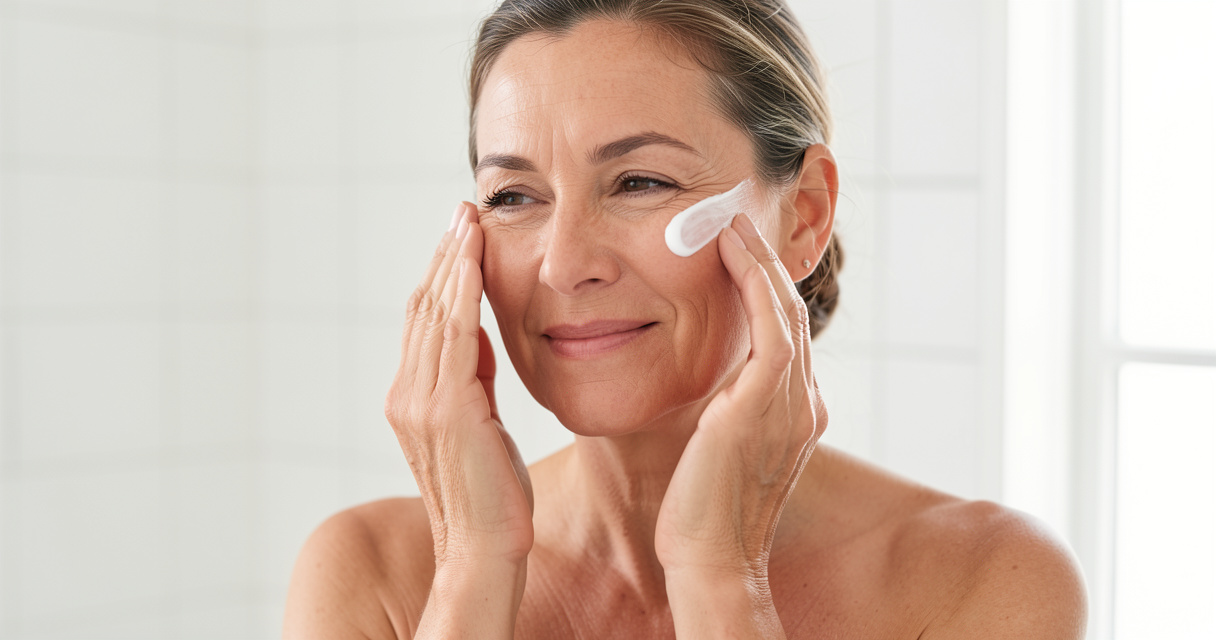
Makeup can add five years or remove five, and the deciding factor is rarely the price of the compact. It is the finish. Thick, matte foundation settles into every expression line and turns a face into a mask; a light, slightly luminous base reflects light and reads as rested skin.
Base makeup that reflects light instead of settling into lines
The single most common of all makeup mistakes that make you look older is layering full-coverage foundation over skin that has not been primed and moisturized. Thin the texture first: a hydrating primer, then a light liquid foundation applied with fingertips and pressed — not buffed — into the center of the face. Leave the perimeter barely covered. Coverage that stops well before the jaw reads as skin; coverage that continues to the collarbone reads as makeup.
Brows and eyes: definition without harshness
Brows should be framed, not drawn. A soft brow gel in a shade close to the natural hair — never two shades darker — lifts the whole face. On the eyes, trade a hard black pencil for a soft brown or charcoal smudged along the lash line. Harsh liner closes the eye; soft liner opens it. Waterproof formulas on the lower lash line are a shortcut to looking tired by four in the afternoon.
The makeup tricks to look younger that actually hold up are unspectacular: less product, warmer tones, softer edges, and a deliberate pause before adding more.
Blush, lips, and finishing touches
Colour belongs where the face naturally flushes — the apples of the cheeks, slightly higher than you think. A cream blush melts into the skin in a way powder cannot. On lips, a tinted balm outperforms a matte lipstick at any age: matte finishes emphasize every vertical line, and a defined lip line drawn outside the natural edge fools nobody.
- Heavy foundation → tinted moisturizer or light liquid
- Harsh black liner → soft brown or charcoal, smudged
- Flat, block-filled brows → brow gel and gentle definition
- Dry matte lips → balm plus a wash of colour
- Powder everywhere → cream textures, powder only where shine appears
Advice: use a magnifying mirror for precision work — brows, liner, lip edge — then step back and check the whole face in ordinary daylight. Most overdone makeup is invisible at ten centimetres and obvious at one metre.
If makeup is the paint, hair is the frame — and the frame is usually the first thing anyone notices.
Refresh Your Hair, Brows, and Wardrobe for a Younger Frame
Ask a room full of people to guess a stranger’s age and they will look at the hairline before the eye cream. Contrast is the reason: stark hair against softening skin reads as harder, while a softer tone reads as light.
Hair color and cut: contrast, softness, and gray blending
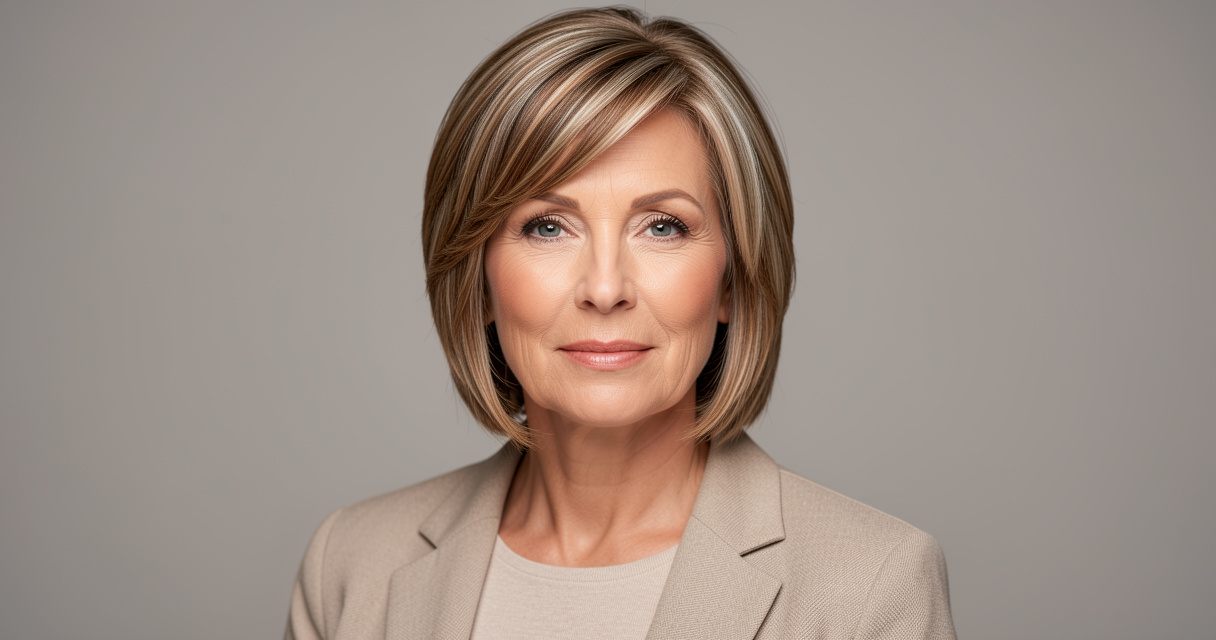
The most flattering hairstyle to look younger is rarely a dramatic one. It is a cut with soft layers that frames the face and moves when you do, plus a color strategy that works with the gray rather than against it. If your natural color has faded, a semi-permanent gloss adds shine in twenty minutes and costs about as much as a good lunch. If you are covering gray, go two shades lighter than you think you want; the root line softens and the skin looks less tired immediately.
“The mistake I see most often is a client asking for the colour she had at thirty,” says a colorist in the 6th arrondissement who has been correcting that request for two decades. “We go warmer and lighter, and suddenly she looks like she slept.”
Length matters too. Pulling hair back away from the face — a low chignon, a loose ponytail — subtly lifts the features and mimics the plumper contour of a younger face. Bangs, cut softly rather than bluntly, soften forehead lines without hiding them.
Brows and facial framing
Brows should sit slightly higher than the natural line and taper softly at the tail. Over-plucking thins the eye area and drops the whole face; over-drawing freezes it. A tinted brow gel and a fine pencil used in short strokes is the whole technique. For most people over forty, this is the highest-return five minutes in the entire routine.
Clothing, jewelry, and neckline strategy
A long necklace draws the eye downward in a lengthening line; a silk scarf at the throat softens the crepey texture that no cream will fully fix. V-necks and open collars elongate the neck; crew necks and turtlenecks shorten it. Move attention upward — earrings, a scarf, a collar — and the eye follows.
| Feature | Older-looking cue | Younger-looking strategy | Best for |
|---|---|---|---|
| Hair color | Flat, too dark, hard root line | Soften two shades, add gloss | Anyone covering gray |
| Hair cut | Heavy, blunt, one length | Soft layers or gentle bangs | Fine or thinning hair |
| Brows | Over-plucked or block-drawn | Tinted gel and fine strokes | Everyone past forty |
| Neckline | High and closed | Open collar or V-neck | Shorter necks |
| Jewelry | Short, tight chain | Longer pendant or silk scarf | Neck and décolleté lines |
A reader I have known since her forties wrote to me last autumn after doing nothing but softening her hair color and swapping a choker for a long chain. “Three people asked what I’d had done. I’d had nothing done.” She had spent less than she used to spend on foundation — and received more compliments than the year she bought the expensive one.
All of it — the cut, the color, the chain — works better on a face that has slept. Which brings the sequence to its quietest and most powerful layer.
Daily Habits That Change How You Age: Sleep, Hydration, Diet, Movement, Alcohol
Nothing on a bathroom shelf can outrun a bad week. The lifestyle habits for younger skin that matter are unglamorous, cheap, and cumulative — which is exactly why they get skipped in favour of a serum with better marketing.
Sleep and recovery
Seven to nine hours, at consistent times, in a dark room. If you want to look younger, this is the least expensive intervention available and the one most people trade away first. Sleep hygiene matters as much as duration: a cool room, no screens for the last half hour, and the same wake-up time even on Sundays. The payoff appears in the tear troughs within a fortnight.
Hydration, diet, and skin support
Does drinking water make you look younger? Partially. Adequate water supports skin hydration and reduces the dullness that reads as fatigue, but it will not erase wrinkles or replace sun protection. Aim for roughly eight glasses of water a day and stop expecting it to behave like a retinoid.
Food does more than most people credit. Colour — peppers, tomatoes, leafy greens, berries — delivers the antioxidants that help skin manage UV and pollution stress. Protein supports collagen synthesis. Neither is dramatic on its own; together, over months, they show.
Movement, stress, alcohol, and caffeine
Twenty minutes of walking most days improves circulation and, more importantly, sleep. Stress shows in the face through jaw tension and broken rest. Alcohol dehydrates and produces the morning puffiness everyone recognizes in photographs. Caffeine is fine in moderation; four espressos and no water is not a hydration strategy.
- Eight glasses of water, spread across the day
- Seven or more hours of sleep, consistent timing
- Two servings of fruit or vegetables with colour
- A twenty-minute walk, ideally outdoors
- A defined alcohol limit — and two alcohol-free evenings a week
- Five minutes of deliberate stillness to reset stress
Advice: hydration helps skin look less dull and less tired, but it cannot erase wrinkles or substitute for sunscreen. Treat water as support, not treatment.
Habits govern how the face ages overall. Then there are the specific areas where age is announced first — and where almost nobody is looking.
Do Not Stop at Your Jawline: Neck, Chest, Hands, and Eyes
The face gets the serum; the neck gets the shampoo. That asymmetry is precisely why neck and hand rejuvenation delivers more visible change per euro than another facial product.
Eyes and sunglasses: UV protection plus squint control
The skin around the eyes is the thinnest on the body and the first to show dehydration and sun damage. Sunglasses with UV 400 lenses protect the lid and the corner of the eye — and, just as usefully, stop the squinting that etches expression lines year after year. Fashion frames without certified UV protection are a costly mistake.
Neck and chest: extend your skincare downward
How do you stop your neck from showing your age? You treat it like the face. Extend the cleanser, the moisturizer, the retinoid, and above all the sunscreen from the jaw to the collarbone. Neck wrinkles deepen fastest on the sides and the back, where most people apply nothing at all — and a driver’s-side window is a sun exposure event like any other.
Hands: sunscreen, moisturizer, and nail grooming
The first signs on the hands are usually pigment spots across the back, then thinning skin and more visible veins. Sunscreen on the backs of the hands takes four seconds and is the most neglected step in the entire routine. A hand cream after every wash, a gentle weekly exfoliation, and tidy nails complete the picture.
- UV 400 sunglasses, worn in the city as well as on the coast
- SPF extended to the neck, chest, ears, and backs of hands
- Moisturizer after every hand wash
- Gentle weekly exfoliation, never aggressive
- A weekly hand mask while reading on a Sunday
| Area | Why it ages faster | Daily fix | Visible result timeline |
|---|---|---|---|
| Eye area | Thinnest skin, constant movement | UV 400 sunglasses, eye cream | Immediate comfort; months for lines |
| Neck | Thin skin, forgotten by skincare | Extend cleanser, SPF, and retinoid | 4–12 weeks |
| Chest | Chronic sun exposure, low necklines | SPF daily, moisturizer nightly | 6–12 weeks for texture |
| Hands | Washing, sun, no sun protection | SPF plus hand cream after washing | 2–4 weeks for softness |
Everything above can begin today. The only remaining question is how much of it to expect, and when.
How to Look Younger in 5 Minutes, 5 Weeks, and 5 Months
The quick ways to look younger and the durable ones operate on different clocks. Confusing the two is what leads people to abandon a good routine in week three, just before it starts working.
The 5-minute reset before an event
Cleanse and moisturize, press a hydrating primer into the centre of the face, then a light base applied with fingertips. Groom the brows with gel. Add cream blush high on the cheek and a tinted balm. Tidy the hairline — a little dry shampoo at the root, a soft tuck behind the ear. The goal is freshness and contrast, not coverage.
- Cleanse and moisturize
- Primer, pressed not buffed
- Light base on the centre of the face only
- Brow gel and a soft smudge of liner
- Cream blush and tinted balm
- Hairline tidy and a long necklace
The 5-week consistency plan
Five weeks is enough to see the first honest returns. Wear sunscreen every single morning and reapply when outdoors. Take a photograph in the same light on day one and day thirty-five — memory is a poor judge of skin. Book the haircut or gloss in week two, so the change lands while the skincare is quietly working. Protect sleep with the same discipline you apply to meetings.
The 5-month review: what to keep, stop, or escalate
At five months, assess honestly. If the retinoid is tolerated and the texture has improved, keep going. If the skin is persistently irritated, step down to a gentler formula rather than abandoning the category. Reassess hair-color maintenance and decide whether professional treatments are worth the cost — and be wary of escalating simply because nothing feels dramatic yet. Most good skin changes are undramatic by design.
| Time frame | Actions | Expected visible result | Cost level |
|---|---|---|---|
| 5 minutes | Primer, light base, brow gel, cream blush, lip colour, hairline tidy | Fresher, more rested face | Low |
| 5 weeks | Daily SPF, sleep discipline, hydration, hair refresh | More even tone, less dullness | Low to medium |
| 5 months | Retinoid consistency, exfoliation rhythm, hair-color upkeep | Finer texture, softened fine lines | Medium |
That is the sequence. Protection first, presentation second, patience throughout.
Frequently asked questions
How can I look younger naturally at home?
Start with daily sunscreen, a simple cleanser-moisturizer-retinoid routine, better sleep, steady hydration, and a hair-color or brow refresh. These low-risk changes deliver more visible results than most expensive treatments, provided you stay consistent for at least eight weeks.
Does drinking water make you look younger?
Water supports skin hydration and reduces dullness, but it will not erase wrinkles. Pair it with sunscreen, a barrier moisturizer, sleep, and a balanced diet for results you can actually see.
What makeup makes you look older?
Thick foundation, harsh black eyeliner, over-powdered skin, and heavily drawn brows all add years. Reach for a primer, a light liquid foundation, soft liner, and gentle brow definition instead.
How can I look younger in 5 minutes?
Use primer, a light base, brow gel, cream blush, lip colour, and a quick hairline fix. Focus on freshness and contrast rather than covering every line — the goal is a rested face, not a masked one.
What is the best hairstyle to look younger?
Soft layers, gentle bangs, or a pulled-back style frame the face and soften lines, while a lighter hair colour blends grays and adds shine when it suits your skin tone. Avoid blunt, heavy cuts and shades darker than your natural colour.
Can skincare really make you look younger?
Skincare improves texture, tone, and hydration, and reduces the look of fine lines over time. Sunscreen and retinoids have the strongest practical case, but results depend entirely on consistency and on how well your skin tolerates the actives.
How do I stop my neck from showing my age?
Extend sunscreen and moisturizer from the jaw to the collarbone, wear UV 400 sunglasses, and avoid harsh exfoliation on the neck. Open necklines, silk scarves, and longer necklaces also soften visible aging without a single new product.
The Edit: Your Next Thirty Days
If there is one conclusion worth carrying out of this guide, it is that the order matters more than the budget. Begin with sunscreen at SPF 30 or higher and a routine simple enough to survive a Tuesday — cleanse, moisturize, retinoid at night, exfoliate sparingly. That foundation does the slow, invisible work that everything else is built on.
Then take the fast wins. A softer hair colour, a cut with movement, brows gently framed, a base that reflects light instead of settling into it. These are the changes that earn comments in the first week, and they cost a fraction of a single jar of prestige cream.
Underneath it all, protect the parts everyone forgets. The neck, the chest, the backs of the hands, the skin around the eyes — the areas that quietly announce age long before the face does. Extend the sunscreen downward, wear the sunglasses, and let the long necklace do its work.
And keep the habits that no product can replace: seven hours of sleep, water through the day, colour on the plate, a daily walk, and a firm limit on the second glass of wine.
Worth every mile, this one — because it is not really about looking younger. It is about looking like yourself on a good day, consistently.
Which single change from this guide will you test for the next thirty days?