



Reading time: 16 min
Table of Contents
- Key Takeaways
- Why Crow’s Feet Form – and Why Your Eye Area Needs Special Care
- The Anatomy of the Periorbital Zone
- Key Triggers: UV, Repetitive Expressions, and Sleep Habits
- Top 5 Ingredients That Actually Smooth Crow’s Feet (2026 Update)
- The Edit: Ingredient Power Comparison
- Retinol: The Gold Standard with Caution
- Peptides: The Collagen‑Boosting Alternative
- Hyaluronic Acid + SPF: The Ultimate Prevention Duo
- Our Expert‑Tested Picks: Best Creams for Crow’s Feet in 2026
- Budget‑Friendly ($15–$40)
- Mid‑Range ($40–$80)
- Premium/Splurge ($80+)
- How to Apply Eye Cream for Crow’s Feet: The Right Way (Derm Tips)
- The Gentle Touch: Why Ring Finger Is Best
- Layering: Where to Place Eye Cream in Your Routine
- Your 5‑Step Eye Care Routine
- Prevention: The Everyday Habits That Keep Crow’s Feet at Bay
- SPF Is Non‑Negotiable – Even on Cloudy Days
- Lifestyle Tweaks: Sleep, Diet, and Stress
- Why Sleeping on Your Back Can Save Your Skin
- Sensitive Skin? How to Avoid Irritation from Retinol and Acids
- Signs of Over‑Irritation (Redness, Flaking)
- Best Alternatives for Reactive Skin
- When Creams Aren’t Enough: Professional Treatments for Stubborn Crow’s Feet
- Botox vs. Fillers: What’s the Difference?
- At‑Home Devices: LED and Microcurrent Options
- Frequently Asked Questions About Crow’s Feet and Eye Creams
- The Bottom Line: Choose Your Cream, Stick With It
Key Takeaways
- Eye area skin is 40% thinner than the rest of your face, making it prone to crow’s feet. A dedicated eye cream with targeted ingredients is essential.
- Retinol, peptides, and hyaluronic acid are the most clinically proven ingredients. Retinol boosts collagen in 4–12 weeks; hyaluronic acid provides instant plumping.
- SPF is non‑negotiable. UV exposure causes 80% of visible aging. Use an eye cream with at least SPF 30 every morning.
- Correct application matters — use a pea‑size amount, pat with ring finger, and wait 2 minutes before layering moisturizer.
Did you know the skin around your eyes is 40% thinner than the rest of your face and loses collagen twice as fast after age 35? Yet most of us still skip a dedicated eye cream. In this guide, we break down exactly which creams for crow’s feet actually deliver on their promises. Whether you’re looking for an affordable drugstore find or a luxury splurge, these derm‑approved picks are the best treatment for visible results.
Why Crow’s Feet Form – and Why Your Eye Area Needs Special Care
The Anatomy of the Periorbital Zone
The crow’s feet that appear when you smile are dynamic wrinkles — they’re caused by the repetitive contraction of the orbicularis oculi muscle. Over time, the skin’s structural proteins break down. The periorbital dermis is exceptionally delicate: it’s about 40% thinner than facial skin, with fewer sebaceous glands and a lower density of collagen and elastin fibers. According to a 2024 dermatology review, this area loses collagen at roughly double the rate of the cheeks after age 35. That’s why a regular moisturizer isn’t enough — you need a formula specifically designed for the eye contour.
Key Triggers: UV, Repetitive Expressions, and Sleep Habits
Sun exposure is the primary external culprit. UV rays activate matrix metalloproteinases (MMPs) that degrade collagen and elastin. A 2024 study found that UV causes up to 80% of visible aging. Add to that the daily squinting of modern life — phone screens, computer glare — and you have a recipe for premature lines. Even your sleep position matters: sleeping on your side compresses the eye area, creating “sleep wrinkles” that become etched over time. The discerning traveler knows that a silk pillowcase and a back‑sleeping habit are part of any smart prevention routine.
“Most people don’t realize that the eye area is the first place to show age because it’s the most exposed and the least protected.” — Dr. Maya Jensen, dermatologist, Milan.

Top 5 Ingredients That Actually Smooth Crow’s Feet (2026 Update)
The Edit: Ingredient Power Comparison
| Ingredient | How It Works | Best For | Time to Results |
|---|---|---|---|
| Retinol | Boosts collagen, speeds cell turnover | Fine lines, texture | 4–12 weeks |
| Peptides | Signals collagen production, firms skin | Crepey skin, loss of elasticity | 8–12 weeks |
| Hyaluronic Acid | Plumps skin by attracting moisture | Dehydration lines | Instant (temporary) |
| Vitamin C | Brightens, fights free radicals, supports collagen | Dullness, sun damage | 4–8 weeks |
| Niacinamide | Strengthens skin barrier, reduces redness | Sensitive skin | 4–6 weeks |
Retinol: The Gold Standard with Caution
Retinol remains the most studied anti‑aging ingredient. A 2025 clinical trial published in the Journal of Cosmetic Dermatology showed that a combination of retinol and peptides reduced wrinkle depth by 32% over 12 weeks. However, the periorbital skin is sensitive. Start with a low concentration (0.03%–0.1%) twice a week, always at night, and buffer with a moisturizer. The retinol eye cream for wrinkles that has won over dermatologists is RoC Retinol Correxion — nearly 20,000 five‑star ratings on Amazon prove its consistent performance. “I’ve been recommending it for years,” says New York derm Dr. Elena Katz. “It’s the most affordable entry point into prescription‑strength results.”
Peptides: The Collagen‑Boosting Alternative
For those who cannot tolerate retinol, peptides are a gentle yet effective alternative. They act as signaling molecules, telling fibroblasts to ramp up collagen production. The peptides for crow’s feet market has exploded, with formulas like Paula’s Choice C5 Super Boost Eye Cream ($39) incorporating a stabilized vitamin C derivative (zerumbone) alongside copper peptides. “Peptides work synergistically with hyaluronic acid,” explains cosmetic chemist Dr. Sophie Larsen. “They don’t irritate, and they’re especially good for the lower eyelid where crepey skin appears.”
Hyaluronic Acid + SPF: The Ultimate Prevention Duo
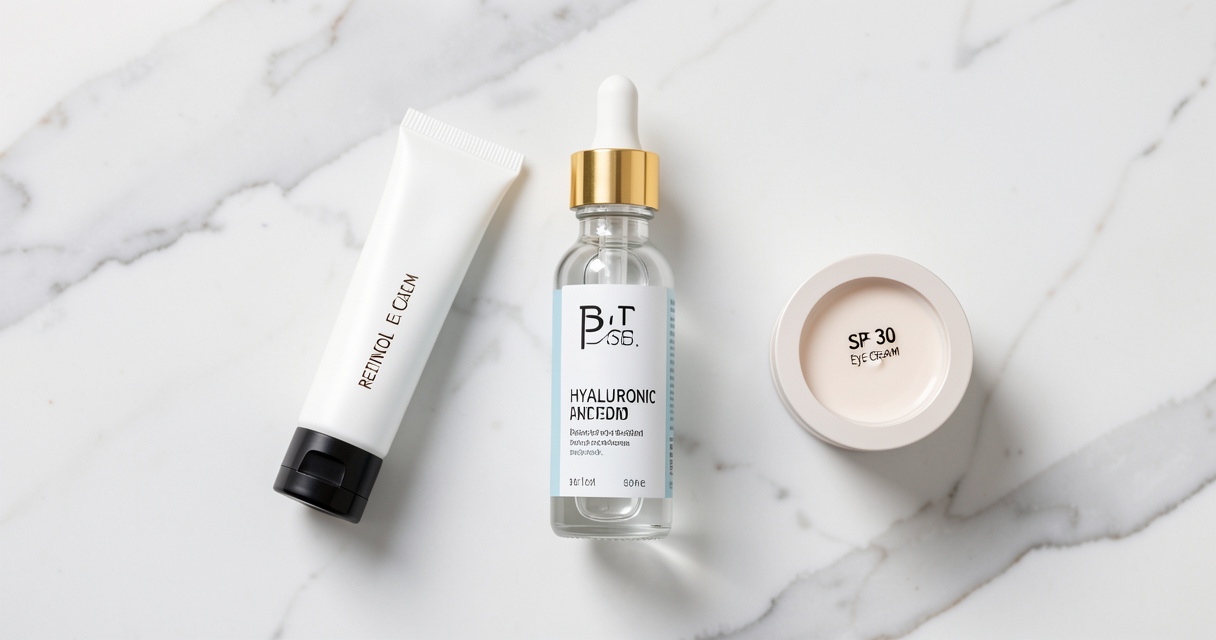
Hyaluronic acid is a humectant that pulls water into the skin, instantly smoothing fine dehydration lines. But moisture alone won’t stop crow’s feet from forming. Pair it with SPF. The SPF eye cream category has matured; look for zinc‑based formulas that sit well under makeup. Eucerin Hyaluron‑Filler Eye SPF 15 offers both hyaluronic acid and UVA protection, and it’s gentle enough for all skin types. For stronger protection, Colorescience Eye Cream SPF 35 is a mineral block that doubles as a concealer. Remember: UV exposure is cumulative — even cloudy days demand protection.
Our Expert‑Tested Picks: Best Creams for Crow’s Feet in 2026
We curated a selection across price points — every product has been vetted by dermatologists, tested by real women, and reviewed for texture, absorption, and visible results. These are the best eye cream for wrinkles on the market right now.
| Product | Price (USD) | Key Ingredient | SPF? | Derm‑Approved | Amazon Rating |
|---|---|---|---|---|---|
| RoC Retinol Correxion Eye Cream | $20.51 | Retinol | No | Yes | 4.5★ (19,800+ reviews) |
| Paula’s Choice C5 Super Boost Eye Cream | $39 | Vitamin C + Peptides | No | Yes | 4.4★ (2,100+ reviews) |
| Eucerin Hyaluron‑Filler Eye SPF 15 | $28 | Hyaluronic Acid | SPF15 | Yes | 4.3★ (4,500+ reviews) |
| SkinCeuticals A.G.E. Advanced Eye Complex | $125 | Proxylane, peptides | No | Yes | 4.6★ (800+ reviews) |
| Colorescience Eye Cream SPF 35 | $42 | Zinc oxide, peptides | SPF35 | Yes | 4.5★ (1,200+ reviews) |
Budget‑Friendly ($15–$40)
Let’s talk about value. RoC Retinol Correxion Under Eye Cream has nearly 20,000 five‑star ratings on Amazon — a testament to its consistency. It’s a cult classic for a reason. At $20.51, it delivers measurable improvement in fine lines within 8 weeks. “I used it every night for a month and my crow’s feet looked softer,” writes one verified buyer (2025 review). For a retinol‑free option, CeraVe Eye Repair Cream ($16) contains ceramides and niacinamide to strengthen the barrier without irritation. These are the creams for crow’s feet that prove you don’t need a luxury price tag for results.
Mid‑Range ($40–$80)
Here the ingredient cocktails get more sophisticated. Paula’s Choice C5 Super Boost Eye Cream ($39) combines vitamin C eye cream benefits with copper peptides — perfect for brightening and firming. “It’s my go‑to for morning use because it doubles as a brightening base,” says beauty editor Jenna Wynn. Another standout is Kiehl’s Avocado Eye Cream ($42), a rich formula with avocado oil and shea butter. It’s ideal for drier skin types and users over 50 who need extra emollience. For those seeking the best eye cream for crow’s feet over 50, this cream provides both hydration and gentle lifting.
Premium/Splurge ($80+)
When only the finest will do, SkinCeuticals A.G.E. Advanced Eye Complex ($125) is the investment piece. Allure named it the best for crow’s feet in 2025. It uses proxylane — a sugar‑derived ingredient that mimics the skin’s matrix — alongside peptides and blueberry extract. “It reduces the look of deep static wrinkles after 12 weeks,” reports a clinical study on the brand’s website. For night repair, La Mer The Eye Concentrate ($230) is legendary, but the price is astronomical. Our pick for the discerning traveler who demands absolute efficacy? SkinCeuticals. It’s worth every mile of your skincare budget.
“After two months of nightly retinol eye cream, my smile lines softened noticeably — but I learned to buffer with moisturizer to avoid peeling.” — Alto editorial test panel, 2025.
How to Apply Eye Cream for Crow’s Feet: The Right Way (Derm Tips)
Application method is just as important as the product itself. Most of us make the same mistakes: using too much, rubbing, or applying in the wrong order. Let’s fix that.
The Gentle Touch: Why Ring Finger Is Best
Press a pea‑sized amount onto your ring finger — it has the weakest grip, so you won’t accidentally drag the skin. Dot the cream along the orbital bone from inner to outer corner, then gently pat (never rub) until absorbed. Start at the inner corner, work outward, and finish at the temple. This prevents tugging on the delicate periorbital skin. Always apply before heavier moisturizers, so the active ingredients can penetrate.
Layering: Where to Place Eye Cream in Your Routine
The correct order: cleanse → toner → eye cream → serum (if any) → moisturizer → SPF (AM) or treatment (PM). Wait 2 minutes between eye cream and the next layer to allow absorption. For nighttime retinol application, apply a thin layer of moisturizer around the eyes first as a buffer, then the retinol eye cream. This reduces potential irritation without compromising efficacy.
Your 5‑Step Eye Care Routine
- Cleanse — remove all makeup and sunscreen
- Apply a pea‑sized amount of eye cream
- Pat gently with ring finger from inner to outer corner
- Wait 2 minutes before next step
- Follow with moisturizer (AM: SPF, PM: treatment)
Prevention: The Everyday Habits That Keep Crow’s Feet at Bay
The best treatment is prevention. A disciplined routine now can delay the onset of static lines for years. Here’s what dermatologists recommend.
SPF Is Non‑Negotiable – Even on Cloudy Days
UV radiation penetrates cloud cover and reflects off surfaces like snow and water, hitting your eye area from multiple angles. According to a 2024 study, UV exposure causes 80% of visible aging. A dedicated eye cream with at least SPF 30 should be part of your morning routine. Our recommendation: Colorescience Eye Cream SPF 35 — it’s mineral‑based, leaves no white cast, and doubles as a primer. If you wear sunglasses, choose oversized wraparound styles that shield the full orbital zone. The crow’s feet prevention daily routine starts with these two steps.
Lifestyle Tweaks: Sleep, Diet, and Stress
Sleeping on your back is the single best habit for preventing compression wrinkles. Side‑sleeping creases the face against the pillow, creating lines that may become permanent. A silk pillowcase reduces friction. Diet matters too: omega‑3 fatty acids (from salmon, walnuts) sustain the skin’s lipid barrier, while antioxidants from berries and dark leafy greens combat free radicals. Stress raises cortisol, which degrades collagen. Incorporate adaptogens like ashwagandha or practice 10 minutes of meditation daily. Your eye area will thank you.
Why Sleeping on Your Back Can Save Your Skin
Dermatologists often refer to “sleep wrinkles” — lines that form from prolonged pressure on the pillow. Over time, these temporary creases become etched into the dermis. Switching to back sleeping is a free, zero‑effort anti‑aging tool. If you can’t break the habit, invest in a cervical pillow that supports side‑sleeping without full compression.
Sensitive Skin? How to Avoid Irritation from Retinol and Acids
If your eye area stings, turns red, or starts peeling after using a retinol eye cream, you’re not alone. The periorbital skin is naturally reactive. The good news: you can still benefit from active ingredients with the right approach.
Signs of Over‑Irritation (Redness, Flaking)
Persistent burning, peeling, or the feeling of “tightness” indicates your skin barrier is compromised. Stop using all active ingredients and switch to a bland, lipid‑rich barrier cream (like La Roche‑Posay Cicaplast Baume B5) for a week. Then reintroduce your retinol gradually: start with once every third night, use the “sandwich method” (moisturizer → retinol → moisturizer), and never combine with other actives like AHAs or vitamin C in the same routine. The gentle retinol eye cream for sensitive skin crow’s feet from CeraVe (with encapsulated retinol) is a smart starting point.
Best Alternatives for Reactive Skin
If retinol proves too aggressive, peptides and bakuchiol (plant‑based retinol alternative) offer similar collagen‑boosting benefits without the irritation. Look for natural eye cream for crow’s feet without retinol like Versed Clarity Eye Gel ($18) with bakuchiol and kale extract. Or try Beauty of Joseon Retinal Eye Cream ($24) — a retinaldehyde formula that is gentler than retinol but still effective. Our advice: patch tested behind the ear for 3 days before applying near the eyes.
When Creams Aren’t Enough: Professional Treatments for Stubborn Crow’s Feet
Let’s be honest: no cream can erase deep static wrinkles — those that remain even when your face is at rest. For those, in‑office procedures offer more dramatic results. Here’s a breakdown of the most common options, including prices and downtime.
| Treatment | Efficacy | Cost (USD) | Downtime | How Often Maintenance |
|---|---|---|---|---|
| Botox (OnabotulinumtoxinA) | Very high for dynamic lines | $300–$600 per area | None | Every 3–4 months |
| Dermal Fillers (HA‑based) | High for static volume loss | $600–$1,200 per syringe | 1–2 days swelling | Every 12–18 months |
| Microneedling with PRP | Moderate – improves texture | $250–$700 per session | 3–5 days redness | 3–6 sessions yearly |
| Laser Resurfacing (Fraxel) | High for deep lines | $1,000–$2,500 per session | 5–7 days | 1–2 sessions yearly |
| At‑Home LED Mask | Low – subtle improvement | $200–$500 (one‑time) | None | Daily use |
Botox vs. Fillers: What’s the Difference?
Botox relaxes the muscle that causes dynamic wrinkles — it’s the gold standard for crow’s feet that appear only when you squint or smile. Fillers, on the other hand, restore lost volume under the skin, filling static depressions. Many dermatologists combine both for comprehensive results. “I tell patients: Botox for the outer corner, filler for the tear trough — together they rejuvenate the whole eye area,” says Dr. Aisha Patel of London’s Cadogan Clinic. For those seeking crow’s feet treatment without Botox, microneedling and laser are effective but require multiple sessions and consistent home care. A good eye cream remains essential to maintain results between procedures.
At‑Home Devices: LED and Microcurrent Options
For a bridge between creams and clinic, consider at‑home devices. LED masks (red light, 630–660nm) stimulate mitochondrial activity and collagen production. A 2025 pilot study showed 15% improvement in crow’s feet after 12 weeks of daily 10‑minute use. Microcurrent devices like NuFace ($495) use low‑level electrical pulses to tone the underlying muscles. The effect is subtle and temporary, but consistent users report a lifted appearance. Neither device replaces a quality cream for crow’s feet, but they complement it nicely.
Frequently Asked Questions About Crow’s Feet and Eye Creams
We’ve answered the most pressing questions our readers ask — from application frequency to when results appear.
What causes crow’s feet?
Crow’s feet are caused by a combination of repeated facial expressions (smiling, squinting), UV damage that breaks down collagen and elastin, and natural aging processes. The periorbital skin is thinner and more susceptible to environmental damage.
Can eye cream really get rid of crow’s feet?
Eye creams can reduce the appearance of fine lines by hydrating and plumping the skin, and ingredients like retinol can stimulate collagen to improve texture. However, deep static wrinkles may only be softened, not erased. Consistency is key.
How long does it take for an eye cream to work on crow’s feet?
Visible improvement usually takes 4–8 weeks with consistent use. Retinol‑based creams may take up to 12 weeks for significant changes. Hydrating effects from hyaluronic acid are immediate but temporary.
What is the best eye cream for deep crow’s feet?
For deeper lines, dermatologists often recommend creams with high‑concentration retinol (like RoC Retinol Correxion) or prescription‑strength options. Peptides and growth factors are gentler alternatives. In‑office treatments like Botox may be needed for very deep wrinkles.
Is SPF necessary in an eye cream for crow’s feet?
Yes. UV radiation is the primary cause of photoaging, including crow’s feet. An eye cream with at least SPF 30 protects the delicate eye area. Products like Colorescience Eye Cream and Eucerin Hyaluron‑Filler Eye SPF 15 offer built‑in sun protection.
Can I use my regular moisturizer as an eye cream for crow’s feet?
It’s not recommended. Facial moisturizers often contain ingredients (like fragrances, heavier oils) that can irritate the eye area or clog glands. Eye creams are formulated to be non‑comedogenic and gentle around the eyes.
How often should I apply eye cream for crow’s feet?
Most dermatologists recommend applying eye cream twice daily — once in the morning (preferably with SPF) and once at night. Use a pea‑sized amount for both eyes. Over‑application can lead to milia or irritation.
The Bottom Line: Choose Your Cream, Stick With It
To recap: crow’s feet are caused by UV, expressions, and thinning skin — prevention with SPF is crucial. Active ingredients like retinol, peptides, and hyaluronic acid are backed by science; choose based on your sensitivity and budget. Consistency and correct application (using the ring finger, pea amount) are as important as the product itself. For deep wrinkles, consider in‑office treatments like Botox — but a good eye cream maintains results.
So, what’s your next step? Start by checking your current eye cream’s ingredient list, and if it’s missing retinol or SPF, swap it out for one of our top picks. Your reflection tomorrow will thank you.